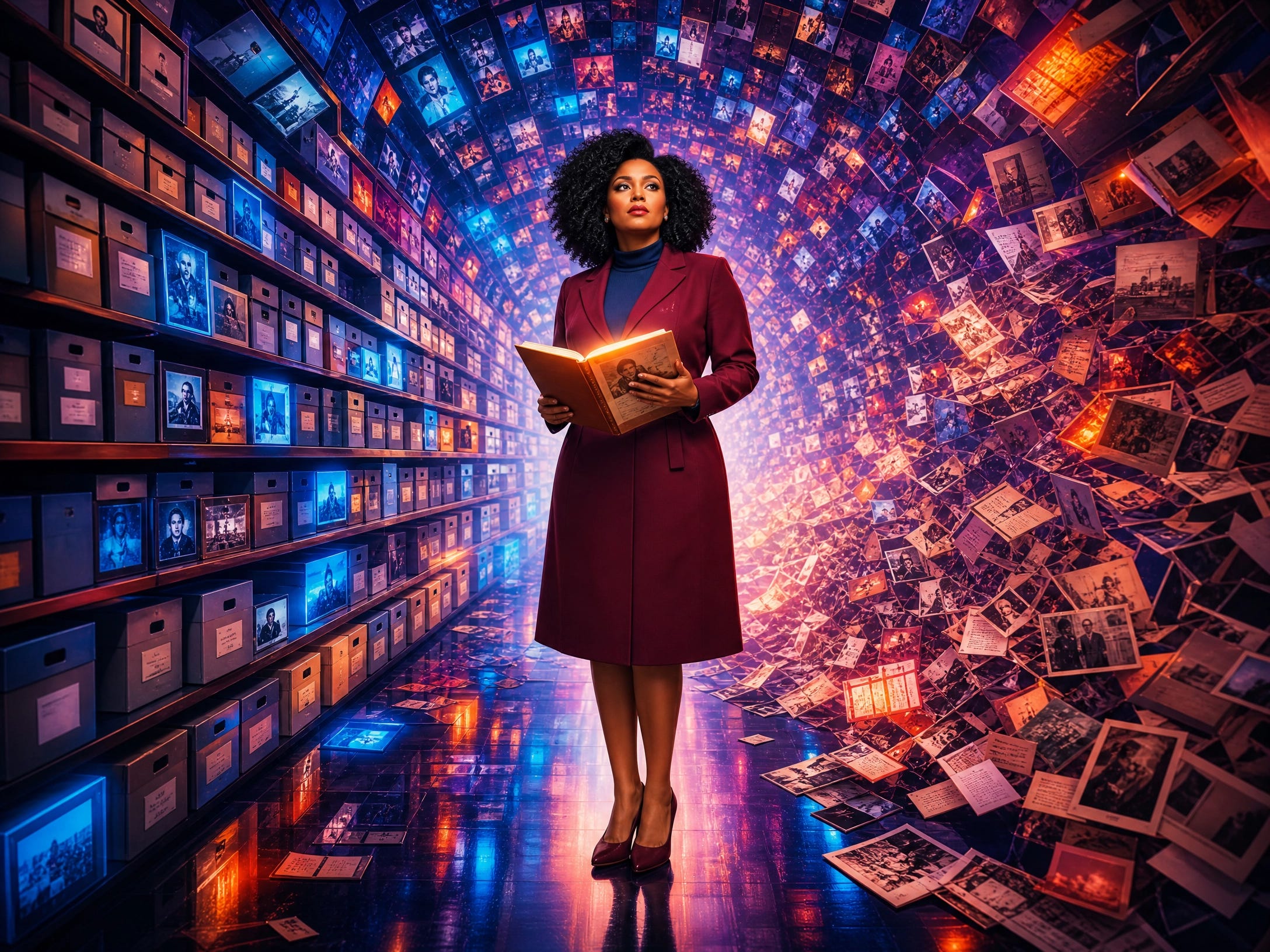
There is a peculiar contradiction at the centre of modern life. Humanity has never been better at remembering, and yet I increasingly suspect that we are becoming worse at building memory.
I do not mean biological memory in the narrow sense of whether we can remember a telephone number or navigate somewhere without Google Maps. I mean something much larger: the systems through which human beings decide what is worth preserving, give it structure, connect it to other knowledge, and make it available to ourselves and to people who come after us.
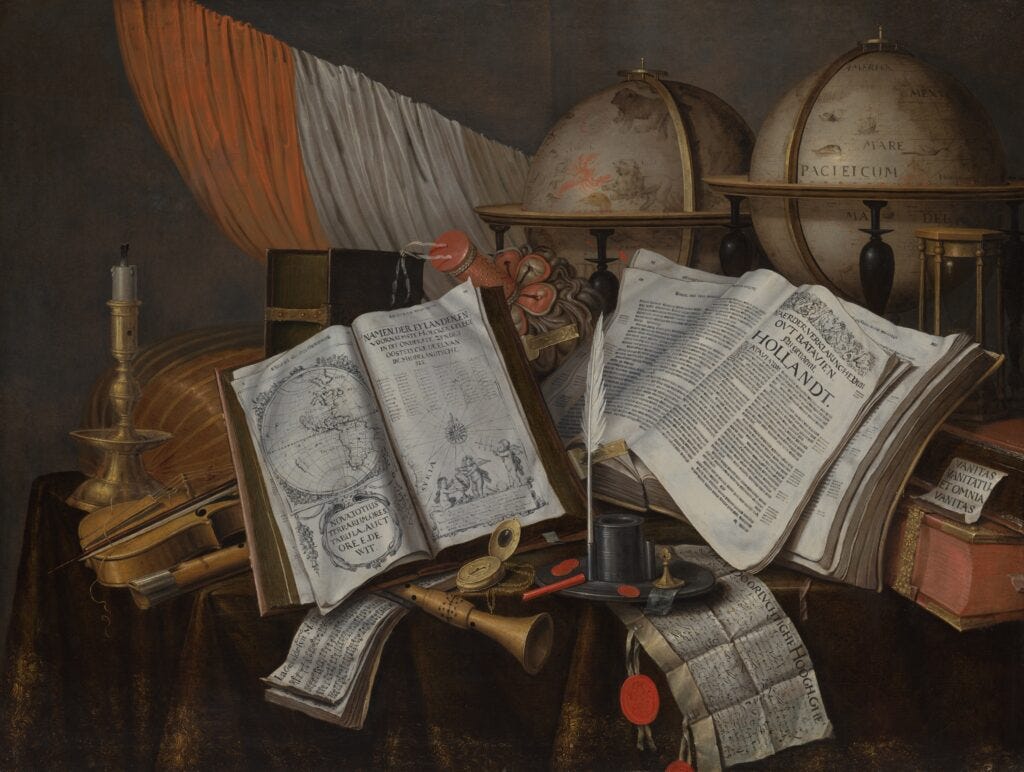
Look at the last few thousand years of human civilization from this perspective and much of our progress starts to look like a long project in externalizing memory. Human beings discovered ways of allowing thought to survive the person who thought it. Writing meant that an idea no longer had to die with its author. Manuscripts allowed knowledge to travel through generations. Libraries brought separate pieces of knowledge into organized systems. Printing made those systems reproducible at enormous scale. Photography preserved moments that language could not adequately capture. Recorded sound preserved voices. Film preserved movement. Scientific journals created an organized memory of discovery. Computers made information reproducible at effectively zero marginal cost. The internet connected those repositories, and search engines made enormous portions of them retrievable within seconds.
Then came the cloud.
From the perspective of preservation, this is an extraordinary achievement. An archive no longer needs to exist in one physical location. A fire can destroy your house without destroying your photographs. You can move from Addis Ababa to New York while decades of documents, correspondence and images simply move with you. Copies can exist simultaneously across geographically separated machines, and the marginal cost of making another copy is almost nothing. Something that would once have required an archive building, filing system and dedicated staff can now sit inside a device weighing a few hundred grams.
There is no sensible argument that the old system was simply better. It wasn’t. The interesting question is what happened because the new system became so good.
For most of history, preserving information was expensive. Scarcity therefore forced selection. If you had thirty-six exposures on a roll of film, taking a photograph was a small decision. Developing the film cost money. Printing the photographs cost money. Someone then decided which photographs deserved a place in an album. The resulting family archive might contain only a few hundred photographs, and it was dangerously fragile. A flood or fire could erase it permanently. But something else was happening inside that constraint. Someone was constantly making judgments about significance, deciding which photograph mattered, which document should be kept, which things belonged together, what happened before what, and ultimately what was worth carrying forward.
The archive was therefore doing more than preserving information. It was organizing meaning.
Now consider the equivalent life today. A person can easily accumulate tens of thousands of photographs alongside years of emails, WhatsApp conversations, iMessages, screenshots, browser bookmarks, Instagram saves, voice notes, PDFs, Google Drive folders, Slack conversations, Notes documents and conversations with artificial intelligence. Almost everything survives, and that is precisely where the paradox begins.
We became extraordinarily good at storing information while becoming progressively less dependent on constructing archives.
There is an important difference between the two. Storage means that something still exists somewhere. Archiving means that I can locate it, understand why it was preserved, recover its context and connect it to everything else I know. Think about how often you remember an excellent article someone sent you eighteen months ago. You remember the argument. You may even remember where you were when you read it. What you cannot remember is whether it arrived through WhatsApp, Telegram, email, Instagram, Slack or some other channel, or whether you saved it as a screenshot, placed it in Notes, bookmarked it in a browser or discussed it with ChatGPT.
The information almost certainly still exists. In an earlier civilization, losing something meant that the physical object might genuinely have disappeared. Today we experience a stranger form of loss: the object survives, but its location in our cognitive world has disappeared. The archive has become enormous while its topology has become increasingly difficult for the individual human mind to perceive.
This distinction matters because civilization itself can be understood as an information accumulation system. Individual human beings have short biological lives, yet civilization can become progressively more sophisticated because knowledge can survive the biological substrate that produced it. Newton did not need to rediscover Euclid before doing physics. Einstein did not need to reconstruct Newtonian mechanics from observations of falling objects. A medical researcher today inherits centuries of accumulated anatomy, chemistry, statistics and experimental technique before conducting a single experiment.
This cumulative property is one of the extraordinary characteristics of Homo sapiens. We do not merely learn within a lifetime. We inherit learning accumulated across lifetimes. The archive is therefore not some clerical apparatus sitting beside civilization. It is part of the machinery that makes civilization cumulative.
For most of this history, an archive had to solve several problems at once. It had to preserve information, select what mattered, organize it, locate it, contextualize it and eventually retrieve it. Digital technology has become astonishingly good at preservation and retrieval, but precisely because preservation became so cheap, the pressure to select weakened.
When taking another photograph costs essentially nothing, there is little reason to decide whether the photograph matters before taking it. When an email can remain indefinitely without occupying any meaningful physical space, there is little incentive to delete it. An interesting article can be saved with a single tap without requiring us to decide why we are saving it, where it belongs or how it relates to anything else we know. The same applies to documents, messages, screenshots and notes. Because almost everything can remain somewhere indefinitely, we no longer have to construct an explicit hierarchy among the things we preserve.
The rational response to abundant storage is therefore often to keep everything and assume that search will rescue us later. From a technological perspective, this makes perfect sense. Storage is cheap, duplication is nearly effortless, and search has become remarkably powerful. The question is whether the same logic works for human cognition. The constraints imposed by older forms of storage were inefficient, but they also forced acts of judgment: deciding what mattered, what could be discarded, where something belonged and how it related to what was already there. As those constraints disappeared, some of the cognitive work they once forced us to perform disappeared with them.
Human memory itself appears to operate according to almost the opposite principle. The brain does not preserve an equally weighted, high-resolution recording of everything that enters it. It forgets enormous amounts. It compresses experience, abstracts patterns from repeated events, strengthens some associations and allows others to disappear. What remains is an extraordinarily lossy representation of reality, but that lossiness may be part of what makes cognition possible.
Forgetting, in this sense, is not simply a failure of memory. It is a form of information management. A mind that assigned equal importance to every face, sentence, advertisement, sound, notification and physical sensation encountered during a day would not necessarily possess better knowledge of the world. It would be overwhelmed by it. Intelligence requires some mechanism for deciding what deserves weight.
Our technological memory systems increasingly face the opposite incentive. Storage is cheap enough that they can simply retain everything. We have therefore created an unusual mismatch between near-infinite machine retention and finite human attention.
This becomes even more consequential when we move from storage to information consumption. A book ends. A lecture ends. A newspaper has a final page. An album has a final photograph. Even the early internet was substantially organized around pages and destinations. You went somewhere, consumed something and left.
The feed introduced a different information architecture because it does not need to end. There is always another video, another post, another headline, another argument, another photograph or another person explaining something. The marginal cost of moving to the next piece of information has been reduced to a movement of the thumb. That matters because endings create opportunities for compression. Reaching the end of a book or a lecture at least creates the possibility that we stop and consider what we have just learned, what the argument was, whether anything changed in our understanding, and how the new information relates to something we already know. An infinite feed contains no natural point at which that cognitive operation must occur. The system can present the next object before the mind has assimilated the previous one.
The consequence is not necessarily that people know less. In many respects we know far more. The average person with a smartphone has access to quantities of information that would have been unimaginable even to powerful institutions a few generations ago. The issue is the relationship between information and cognition.
For most of human history, information was scarce enough that acquiring it required effort. People had to remember, take notes, decide what mattered and organize material because retrieving it later was difficult. They often had to synthesize several incomplete sources into a mental model because no machine could instantly reconstruct the answer for them. Many of those constraints were inefficient, and removing them has produced enormous benefits. But constraints also create behaviour, and when the constraint disappears, the behaviour it produced can disappear with it.
Generative artificial intelligence may represent the next step in this progression. Until recently, even when information was abundant, we still had to retrieve it. Search reduced the cost enormously, but the human still searched, opened sources, compared them and constructed some version of the answer. Increasingly, we can simply request the reconstruction.
Seen across a sufficiently long historical horizon, the sequence is remarkable. Oral civilization required human beings to remember knowledge directly. Writing allowed us to preserve it beyond the individual mind, libraries organized it, printing distributed it, and the internet made enormous quantities of it searchable. Social media subsequently transformed information from something we primarily sought into something continuously delivered to us. Generative AI now introduces another possibility: knowledge can increasingly be reconstructed on demand without the human having to locate and assemble all of its constituent pieces.
Each transition reduces the cost of accessing accumulated human knowledge, and that is genuine progress. Yet each transition can also remove a piece of cognitive labour that the previous system demanded from the human being. This is why I am hesitant about the increasingly common claim that technology is simply making us stupid. It is too crude. A person using modern digital systems can access, calculate, translate, compare and analyze things that would have required an entire institution a century ago. The cognitive leverage available to an ordinary person has increased enormously.
The more interesting possibility is that the bottleneck has moved.
For thousands of years, one of humanity’s central problems was whether we could preserve enough knowledge for it to survive us. As preservation improved, distribution became a major constraint: knowledge could exist and still remain inaccessible to most people. Printing radically altered that equation. Much later, the internet attacked distribution at another scale, while search engines addressed the growing problem of finding something inside an increasingly enormous body of information.
We may now be approaching a different constraint. The central question is increasingly whether a finite human mind can construct a coherent model from the amount of information available to it. Preservation capacity has exploded and retrieval capacity has exploded, while human assimilation capacity has not increased at anything resembling the same rate.
I can ask an artificial intelligence system to explain the monetary structure of the Roman Empire, mitochondrial inheritance, Fourier transforms, Ethiopian political history and the architecture of semiconductor manufacturing before breakfast. The fact that these explanations appeared on my screen does not mean that any of them became part of my model of the world. Access to an explanation is different from understanding it. Retrieving information is different from assimilating it. Storing something is different from constructing an archive, and information does not become knowledge merely because it survives.
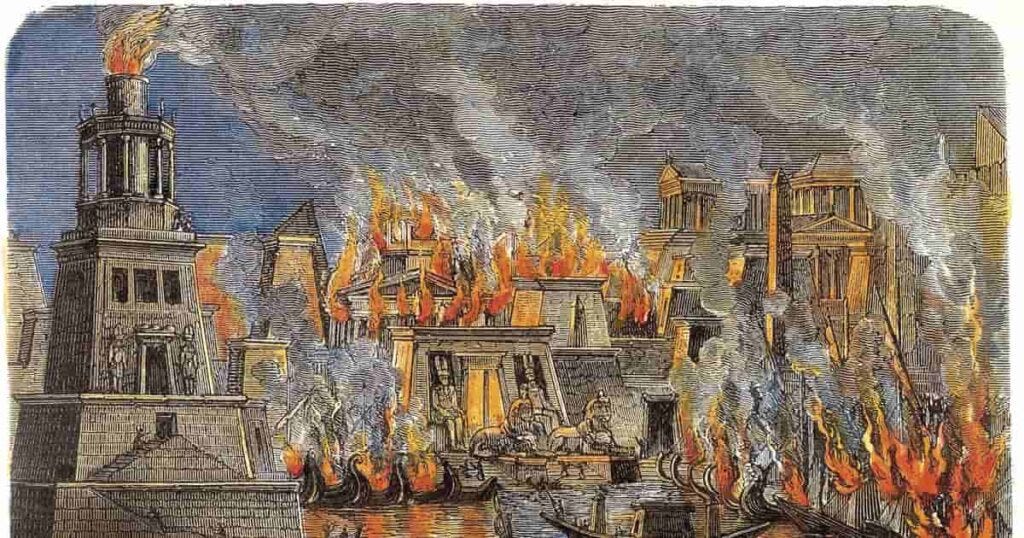
This leads to a peculiar inversion of one of humanity’s oldest problems. For much of history, valuable information disappeared because we could not preserve enough of it. Manuscripts burned, languages disappeared, libraries were destroyed, photographs decayed and oral histories died with the people carrying them. Our emerging problem may be that almost nothing has to disappear.
When everything can be retained, retention itself stops signalling importance. A person with 40,000 photographs may possess a vastly more complete visual record of their life than their grandparents did, but the fact that a particular photograph was preserved tells us almost nothing about how important it was. When thousands of articles are bookmarked, the bookmark itself ceases to represent meaningful selection. When every conversation can remain searchable indefinitely, preservation no longer creates hierarchy. The signal has not disappeared. It has become surrounded by an extraordinary amount of other signal competing for the same finite amount of human attention.
And that may be the deeper cognitive challenge of our age. We spent thousands of years developing technologies that increased humanity’s capacity to remember, and we succeeded beyond anything our ancestors could have imagined. But remembering everything creates a new problem that simply remembering more cannot solve.
We now need technologies, habits and perhaps institutions that restore some of the other functions of an archive: selection, hierarchy, context, connection and synthesis. Artificial intelligence could actually become part of that solution. A sufficiently capable system does not merely have to store our 70,000 photographs. It could understand which twenty photographs represent a particular period of our lives and why. It could reconstruct the evolution of an idea across five years of notes and conversations, notice that something I write today contradicts something I believed three years ago, or connect a paper I read in 2026 with a question I encounter in 2031. Instead of merely increasing the amount of digital residue we retain, such systems could begin turning that residue back into structured memory.
That would represent another important step in the history of the archive, and it is why the answer is unlikely to be a romantic retreat into physical media. Paper burns. Photographs disappear. Libraries are expensive. Human memory is unreliable. Digital redundancy, portability and search are genuine advances, and abandoning them would solve the wrong problem.
The challenge is to build another layer on top of them. For thousands of years, scarcity forced human beings to decide what deserved to survive. Abundance has removed much of that constraint. We can now preserve almost everything, carry it almost anywhere and increasingly reconstruct whatever we need on demand.
The next challenge is learning how to decide what matters.
We solved much of the problem of remembering. We have not yet solved what deserves to be remembered.