Every few years, something is supposed to kill something else.
Television was supposed to kill radio. Video was supposed to kill the radio star. The internet was supposed to kill television. Social media was supposed to kill blogs. TikTok was supposed to kill YouTube. Short-form was supposed to kill long-form. The attention economy was supposed to kill deep thinking entirely.
The obituaries keep getting written. The deaths keep not happening.
I’ve grown skeptical of this framing. Not because change isn’t real. Change is constant. But the “X killed Y” narrative misunderstands how media actually evolves. It assumes replacement when the pattern is usually bifurcation. It assumes death when the pattern is usually transformation.
I want to offer a different lens. One borrowed from a parallel that’s already played out. One that suggests the current panic about short-form content destroying our capacity for depth has the timeline wrong and the conclusion backwards.
The parallel is fast food.
McDonald’s opened its first franchise in 1955. By 1965, there were over 1,000 locations. By the early 1970s, Americans were eating a quarter of their meals away from home. By 2012, that number had nearly doubled to 43 percent.
The pattern repeated everywhere McDonald’s expanded. When the chain entered India, meals eaten outside the home jumped from 3 percent to 10 percent within a decade. Japan, Germany, Brazil, the UK. Same curve. Same adoption arc. Fast, cheap, consistent. A Big Mac in Boston tastes exactly like a Big Mac in São Paulo or Singapore.
The arc moved through four phases:
Phase 1: Novelty. Fast food arrives as liberation. Convenient, affordable, democratic. The early adopters aren’t lazy. They’re solving a real problem. The trade-offs aren’t visible yet.
Phase 2: Normalization. Fast food stops being a treat and becomes a default. The format saturates the market. A generation grows up treating it as background noise rather than a choice.
Phase 3: Consequences. The trade-offs become visible. Health impacts accumulate. The conversation shifts from “convenient” to “what are we doing to ourselves.” Documentaries get made. Awareness spreads.
Phase 4: Counter-movement. A premium segment emerges. Farm-to-table. Organic. Slow food. Not a replacement of the default, but a bifurcation. Two markets coexist: mass convenience and intentional quality.
At the time, during Phases 1 and 2, the narrative was familiar. Fast food was killing home cooking. It was killing traditional restaurants. It was killing food culture itself. The convenience economy was flattening everything into homogenized, processed sameness.
Then the arc continued. Not everywhere at the same pace. Not for everyone at the same time. But enough to notice.
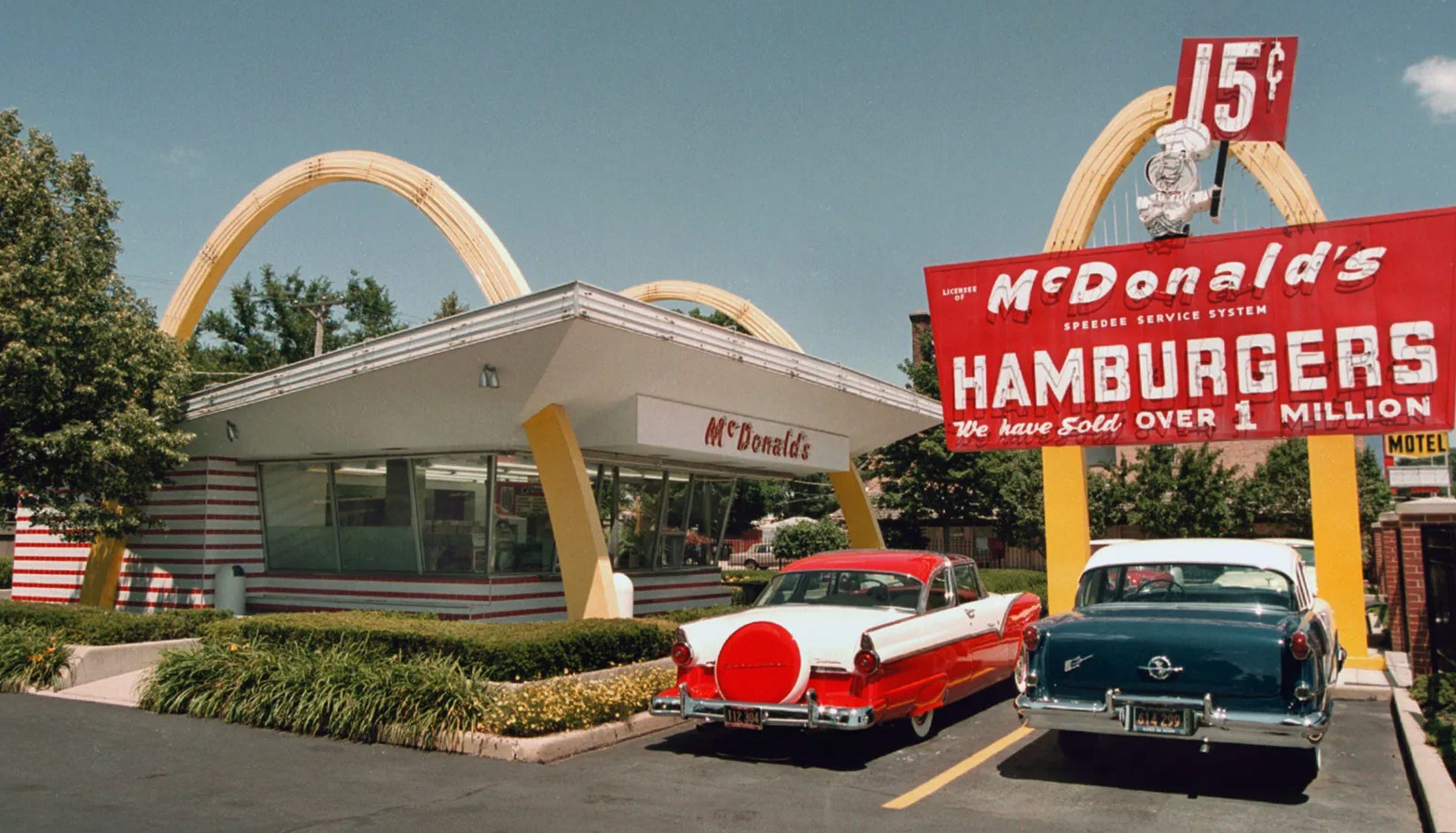
Boomer Parents Thought Fast Food Was a Miracle
The early adopters weren’t lazy. They were liberated.
Before fast food, eating out was formal. You dressed up. You waited. You paid a premium for the privilege of being served. McDonald’s democratized restaurant dining across every market it entered. Hot food in minutes. No reservations. No judgment. Kids were welcome.
Ray Kroc understood something about modern life that traditional restaurants hadn’t figured out: people needed options between cooking at home and committing to a sit-down meal. He filled a structural gap, not a dietary one.
The generation that embraced fast food wasn’t making bad choices. They were making rational ones. Time was scarce. Convenience had value. The trade-offs weren’t yet visible.
Their Kids Normalized It
By the 1980s and 1990s, fast food wasn’t a novelty in the markets where it had taken hold. It had become part of the landscape.
The specific chain varied by region. McDonald’s in the Americas and Europe. KFC gaining ground in Asia and Africa. Local imitators springing up everywhere, replicating the model with regional flavors. The brand mattered less than the format: quick, cheap, consistent, engineered for repeat visits.
In markets where fast food penetrated, school cafeterias contracted with chains. Fast food joints clustered around transit hubs and commercial centers. Advertising budgets exploded. The format showed up in movies, sponsorships, birthday parties, road trips.
For those who grew up in these markets, fast food stopped being a treat. It became background noise. A default. The average consumer in saturated markets was eating fast food multiple times per week without thinking about it.
The portion sizes crept upward. The locations multiplied. The price points stayed low while the calorie counts rose. A generation metabolized fast food as normal without questioning whether normal was good.
In markets where fast food arrived later or never fully penetrated, the pattern is compressed or still unfolding. But wherever the format takes root, the arc looks the same. Novelty, normalization, saturation, consequences, counter-movement.
2000s
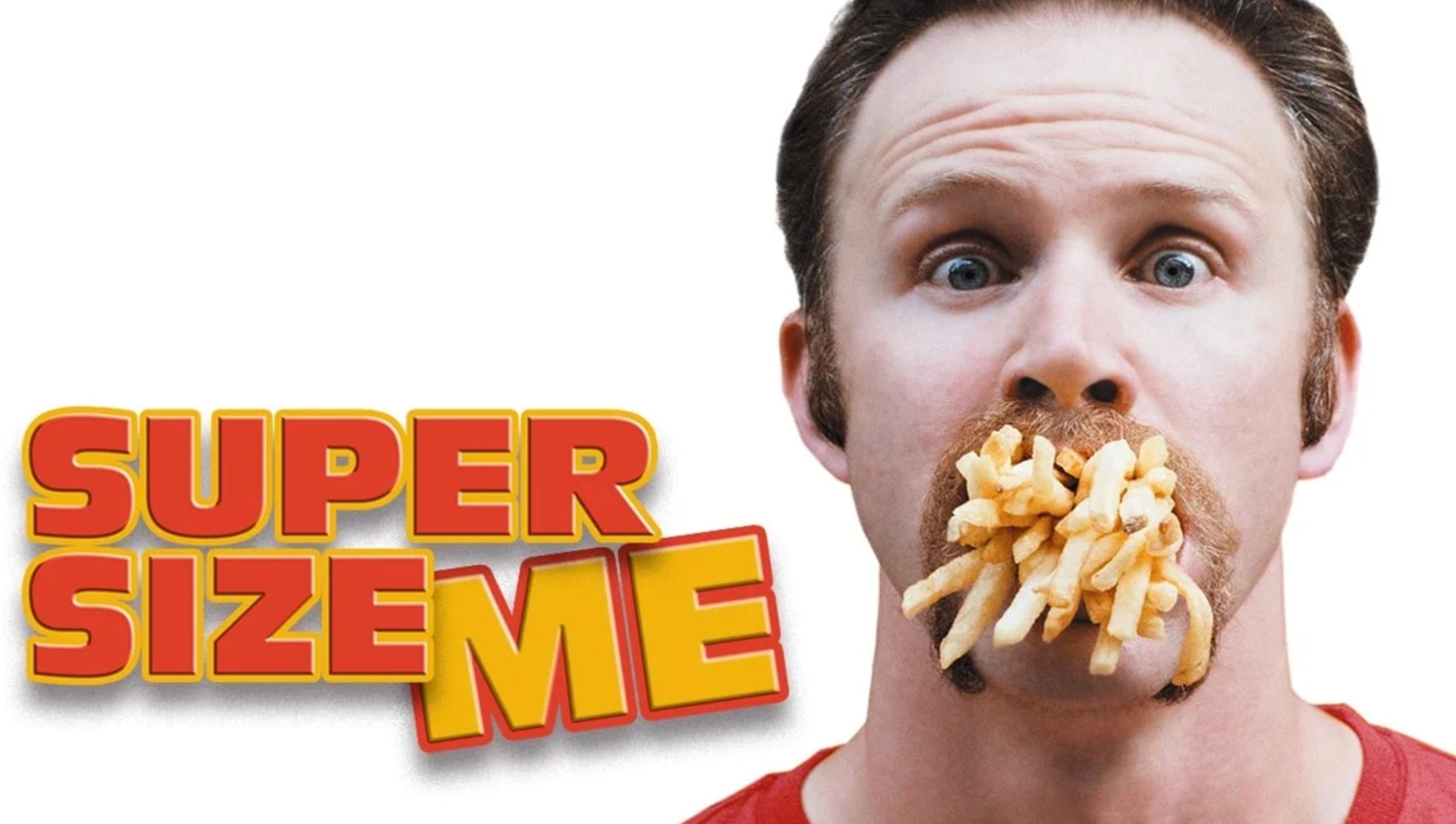
By the mid-2000s, documentaries about fast food became cultural moments. Obesity rates climbed. The conversation shifted from “convenient” to “what are we doing to ourselves.”
Something else shifted too. The children of the fast food generation started paying attention to what they ate.
The data now shows a divergence. Gen Z preferences lean heavily toward sustainability, organic ingredients, and locally sourced food. Nearly two-thirds of Gen Z consumers say they would pay more for products that are sustainable or ethically sourced. Their top restaurant format isn’t fast food at 10 percent. It’s fast casual at 36 percent. They want speed without sacrificing quality.
Now, someone reading this might object: fast food is still growing. McDonald’s operates in over 100 countries with more than 40,000 locations. Revenue keeps climbing. The industry isn’t dying.
That’s true. And it’s also true that organic and boutique food remains a minority of total consumption. Most people still eat fast food regularly.
But that misses the point.
Fast food didn’t kill home cooking. Home cooking didn’t kill fast food. What emerged was a spectrum. And on that spectrum, a premium segment carved out space for people willing to pay more for something that signaled effort, intention, and quality. Farm-to-table didn’t replace McDonald’s. It created an adjacent market that couldn’t have existed without the contrast.
The same bifurcation, I believe, is coming for content.
The “Social Media Killed Content” Narrative
You’ve heard this story. Probably many times.
Social media killed long-form writing. TikTok killed YouTube. Short attention spans killed deep thinking. The scroll killed the article. The algorithm killed quality. Everything is getting shorter, faster, dumber.
The evidence cited is always the same. Average watch times. Scroll velocity. The rise of 15-second clips. The decline of blogs. The supposed eight-second attention span that, as I’ve written before, was fabricated from nothing and compared humans to a myth about goldfish.
This narrative feels true because it captures something real. Short-form content did explode. Attention did fragment. The economics of media did shift toward volume over depth.
But “killed” is the wrong verb. The pattern isn’t death. It’s saturation. And saturation is the precondition for something else.
Now Watch the Same Arc in Content
TikTok launched globally in 2018. By 2024, users were spending an average of 34 hours per month on the app. Some studies put the daily average closer to 95 minutes. The average session lasts 11 minutes. Users open the app 19 times per day.
According to TikTok’s own internal documents, revealed in a multistate lawsuit, it takes approximately 35 minutes of viewing to form a habit on the platform. That’s about 260 videos. Less than a single afternoon.
The Washington Post tracked over 800 users and found that casual users who started at 30 minutes per day were spending over 70 minutes daily within a few months. For some, daily watch time tripled or quadrupled. Power users logged over four hours per day.
Sound familiar?
The 15-second video is the cheeseburger of content. Quick. Consistent. Engineered for repeat consumption. Optimized for immediate gratification at the cost of lasting satisfaction.
The Cognitive Equivalent of Empty Calories
The fast food analogy extends beyond consumption volume. It reaches into what happens after consumption.
Fast food floods the system with calories that spike blood sugar and crash. The energy arrives fast and leaves faster. You feel full but not nourished. Two hours later, you’re hungry again.
Short-form content floods the system with novelty that spikes dopamine and crashes. The stimulation arrives fast and leaves faster. You feel entertained but not satisfied. Two minutes later, you’re scrolling again.
This isn’t metaphor. The neurological mechanisms overlap.
Researchers studying short-form video consumption have documented reduced self-control following viewing sessions. A 2024 study linked TikTok consumption to increased “phubbing,” the tendency to ignore people physically present in favor of screens. The jittery, unfocused feeling after an hour of scrolling has a physiological basis. The brain got what it craved but not what it needed.
The Satiation Curve Applies to Attention
When fast food was novel, each visit delivered high perceived value. As availability increased and novelty decreased, perceived value dropped. The satiation curve follows a predictable formula:
Perceived Value = (Reward Quality × Scarcity) / Effort to Obtain
You read this as: the value you perceive from something equals the quality of the reward multiplied by how rare it is, divided by how hard you have to work to get it.
When McDonald’s was rare, scarcity was high. When it became ubiquitous, scarcity collapsed to near zero. Effort to obtain also collapsed. Drive-throughs, delivery apps, dollar menus. The denominator exploded while the numerator stayed flat.
The same equation governs content. And the same phases apply:
Phase 1: Novelty. Short-form video arrives as revelation. Vine. Six-second loops. Revolutionary, funny, shareable. The democratization of broadcast.
Phase 2: Normalization. TikTok becomes the dominant content format. The average user opens the app 19 times per day. Infinite scroll becomes the default interface. A generation grows up treating it as background noise rather than a choice.
Phase 3: Consequences. The trade-offs become visible. The jittery feeling after an hour of scrolling. The difficulty settling into a book. The research documenting reduced self-control and fractured attention. The conversation starts shifting.
Phase 4: Counter-movement. A premium segment emerges. Long-form podcasts. Newsletters that demand 20 minutes of attention. Depth as signal. Not a replacement of the default, but a bifurcation.
When TikTok was novel, short-form video delivered high perceived value. As the feed became infinite and novelty became constant, perceived value dropped. Effort to obtain collapsed to a thumb swipe. Scarcity hit zero. The infinite scroll made everything equally available, which made everything equally disposable.
I think the generation raised on this content is entering Phase 3. The consequences are becoming visible. The satiation is setting in. Phase 4 is next.
Depth Becomes the New Organic
Go back to what happened with food.
When fast food saturated the market, the counter-movement wasn’t a return to home cooking for everyone. It was the rise of a premium segment that coded scarcity as value. Farm-to-table. Slow food. Organic grocers. Farmers markets. Boutique and gourmet.
Choosing organic over processed communicated something about identity. It marked a departure from the default. It required effort. That effort itself became valuable because it demonstrated investment.
My inference is that content is following the same curve.
What changed in media wasn’t attention capacity. Attention became selective.
The same person who abandons a boring meeting after 30 seconds will watch a compelling documentary for three hours. Same brain. Different content. The variable that matters isn’t the audience. It’s the quality.
We can express this as:
Attention Invested = f(Expected Reward × Engagement Quality × Personal Relevance)
You read this as: attention invested is a function of expected reward multiplied by engagement quality multiplied by personal relevance. When any of those variables increases, attention increases. When they collapse, attention collapses.
Binge-watching would be impossible if attention spans had actually shrunk. People wouldn’t be listening to three-hour podcasts on their commute. They wouldn’t consume seven hours of podcast content per week on average.
But they do.
The Prediction
I’m not claiming short-form content will die. TikTok isn’t going anywhere, just like McDonald’s didn’t go anywhere. The 15-second clip will remain the dominant format for most users, just as fast food remains the dominant format for most eaters.
What I’m predicting is a bifurcation. Not a death.
The “TikTok killed long-form” narrative will age the same way “fast food killed home cooking” aged. Both capture a moment of disruption and mistake it for a conclusion. Both assume the new thing replaces the old thing completely. Both miss the counter-movement that saturation makes inevitable.
Each generation metabolizes the excesses of the previous one. Satiation breeds selectivity. Ubiquity erodes perceived value. The generation that grew up with unlimited fast food is the generation now paying $18 for a grain bowl. Not all of them. But enough to create a market.
If the pattern holds, the generation raised on infinite scrolling will be the one that makes deliberate, slow, crafted content the premium category. Not because they’re wiser. Because they’re saturated.
The first signs are already visible in the data. Substack newsletters averaging 1,200 to 2,400 words have the highest subscriber retention. Podcast listenership passed 500 million globally. The most engaged podcast fans spend seven hours per week listening. Long-form documentary series dominate streaming platforms despite the supposed death of attention.
This could be noise. It could be a niche that stays niche.
But I don’t think so.
The Equation Simplifies
In a world of infinite fast food, organic commands a premium because it signals something fast food cannot: effort, intention, scarcity.
In a world of infinite fast content, depth commands a premium because it signals something short-form cannot: experience, investment, substance.
Let D represent depth. Let S represent surface. Let V represent value.
In the old content economy:
V = D
Depth created value directly. Go deep, win.
In the infinite scroll economy:
V = D / (Cost × Availability)
When cost dropped to zero and availability became infinite, the denominator exploded. Value crashed for everything that could be mass-produced.
But depth stayed scarce. Because depth requires what mass production cannot provide: time invested by someone who actually knows what they’re talking about. Experience that cannot be compressed. Perspective that emerges from doing the work.
The equation simplifies to:
V = Unique Depth
The only content that holds value is content that can’t be easily replicated. The content equivalent of organic produce. The writing that reveals whether the author actually understands the subject. The podcast that earns three hours because it offers something the 15-second clip cannot.
Transformation, Not Extinction
This is my pushback against the “X killed Y” framework.
Radio didn’t die. It found its niche. Television didn’t die. It transformed. Blogs didn’t die. They became newsletters. Long-form didn’t die. It’s becoming premium.
Our parents watched fast food transform how the world eats. Their children normalized it. Their grandchildren are carving out a premium segment that costs more, takes longer, and signals intention. Both markets coexist. Neither killed the other.
I think we’re watching the same arc play out in content. The generation raised on short-form video is not lost. They’re saturated. And satiation is the precondition for selectivity.
The 15-second clip will remain profitable for audiences seeking convenience over quality. That market isn’t going anywhere.
But the premium segment is emerging. The audience willing to pay for depth. The readers who want more than snacks. The listeners who commit hours instead of seconds.
Where This Leaves Us
The land grab isn’t where most people think it is.
Short-form territory is already colonized by platforms with infinite resources and algorithmic advantages no individual or brand can match. Competing for attention in the scroll is competing against TikTok’s engineering budget. That’s not a fight with favorable odds.
The land grab is in depth. And depth is still relatively empty.
Building a reputation for substance now is like opening a farm-to-table restaurant in 2008. The mainstream still thought fast food was the only scalable model. The saturation hadn’t peaked. The counter-movement was just getting started. Those who built early owned the category when demand caught up.
The creators who invest in long-form, high-trust work are building moats their competitors won’t be able to cross once the bifurcation becomes obvious. The brands that fund depth instead of volume are positioning for an ROI calculation that hasn’t fully materialized yet but will. Especially as AI collapses the cost of surface-level content to zero, the only defensible position becomes substance that signals actual expertise. Substance that can’t be generated. Substance that requires having done the work.
For the rest of us, the ones consuming rather than creating, the implication is simpler but not easier. Your attention is being treated as a commodity. The scroll is engineered to extract time, not deliver value. Recognizing the empty calorie problem doesn’t mean deleting TikTok or swearing off short-form forever. It means noticing the difference between snacking and eating. It means choosing depth intentionally rather than arriving at it accidentally.
That ability to choose is becoming a skill, not a default. The environment doesn’t reward it. The platforms don’t encourage it. The algorithms actively work against it.
Those who develop the skill will compound knowledge. Those who don’t will compound consumption. The gap between those two trajectories widens over time.