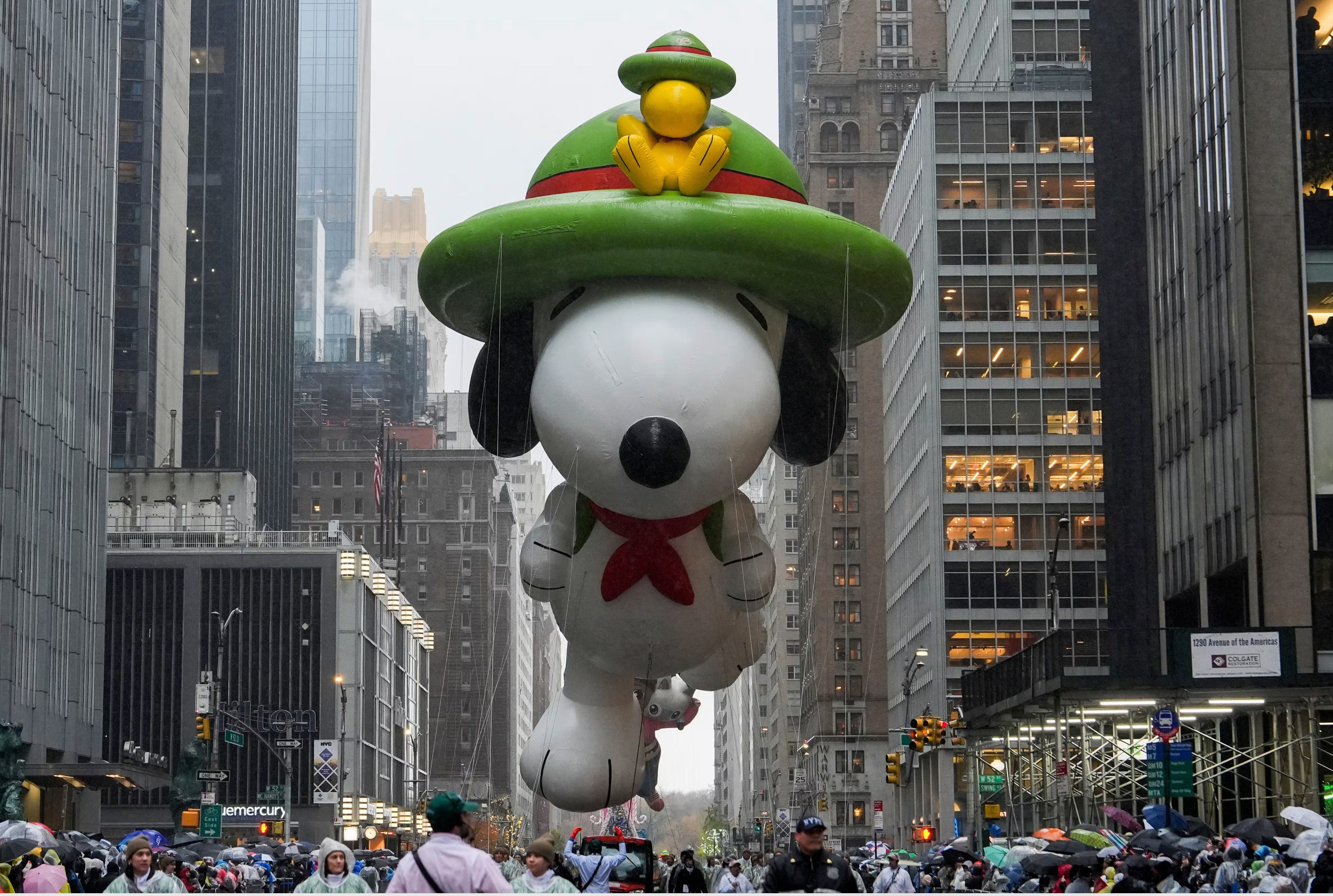
This article began on a street corner in Manhattan during Thanksgiving.
I do not come from a Western Thanksgiving culture. I had underestimated the street parade. Really underestimated it. I was trying to cross the road when the Macy’s parade materialized right next to me. Eleven blocks! That is how far I had to walk just to cross to the other side.
During that walk, I watched them float by. Endlessly. A three-story Snoopy. A building-sized SpongeBob. Pikachu the size of a city bus. Thousands of people lined up in the cold to watch inflated drawings drift through the canyon of skyscrapers.
And then it started to hit me. How did we get to like these things? These are not real. They do not resemble anything in nature. A kid from Ethiopia and a kid from Japan have nothing in common except, apparently, an inexplicable affection for the same impossible creatures. Would a dog like a cartoon plaything? What is causing this? Is this affinity for the “unreal” a glitch in our software, or a feature installed by commerce?
Well, turns out that Disney, Studio Ghibli, and Pixar didn’t teach us to love these shapes. They found the backdoor to our biology and kicked it open.
(If at this point your brain is saying, “…this is too Western of a topic and doesn’t apply to someone growing up in a village somewhere in an emerging market” - please scroll down to the end of the article and then perhaps return here)
The Biological Hack
In the 1940s, Konrad Lorenz identified Kindchenschema, or “baby schema.”
Lorenz was an ethologist, a scientist who studies animal behavior in natural environments. He was interested in why animals do what they do, not in a laboratory, but in the wild. He spent years observing geese, ducks, and other species to understand how instinct shapes behavior. This work eventually won him a Nobel Prize.
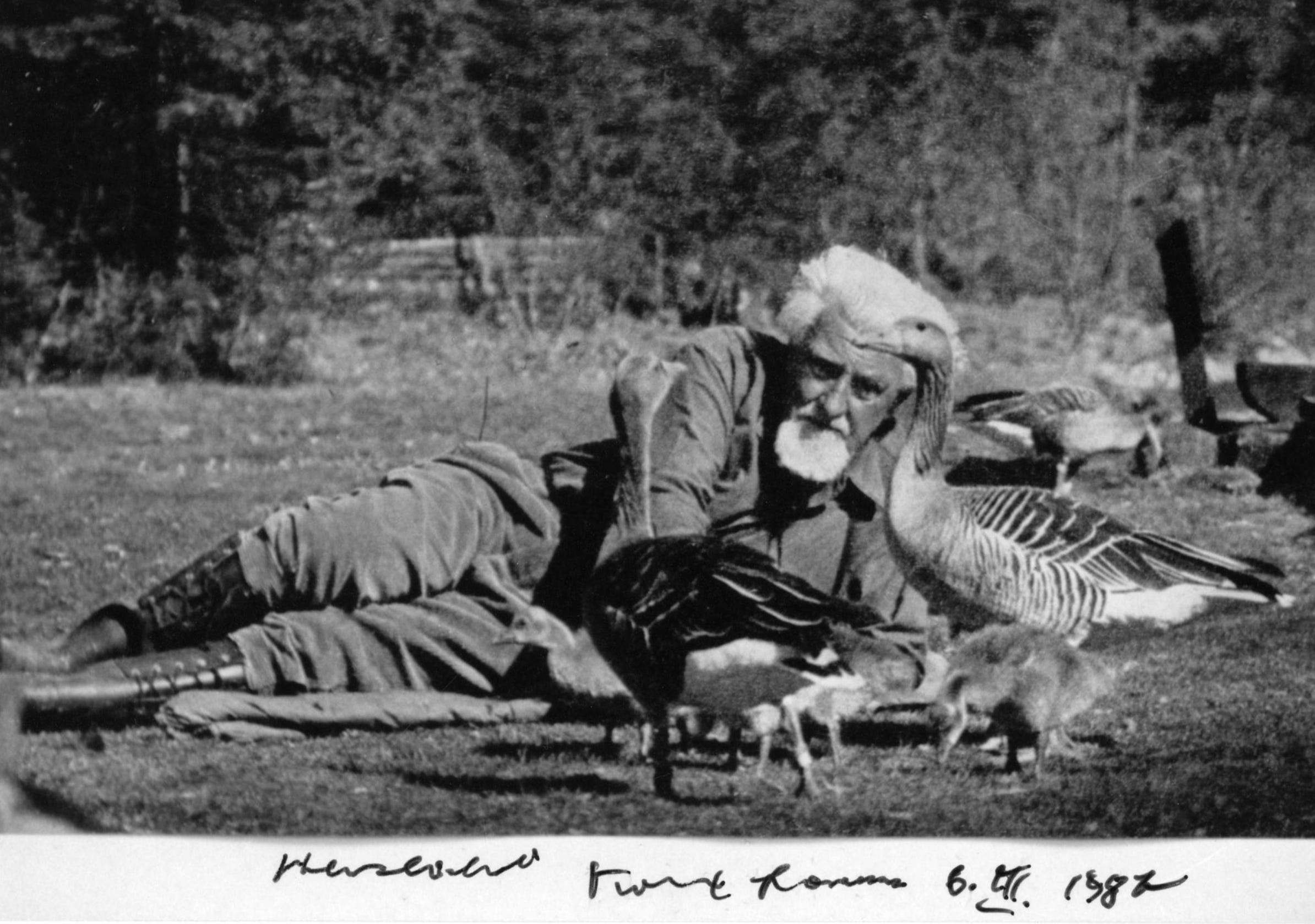
What Lorenz realized was that humans are hardwired to respond to a specific set of geometric coordinates: a large head relative to the body, low-set eyes, and clumsy limbs. When we see this pattern, our brains dump a specific cocktail of dopamine and oxytocin into our system.
We use these words a lot, but it is important to understand exactly what this cocktail does to you.
Dopamine is the “seeking” drug. It is the chemical of motivation and reward. It is the same spike you feel when you smell pizza, win a bet, or hear a notification ping on your phone. It screams: Pay attention to this.
Oxytocin is the “bonding” drug. It is the chemical of trust and attachment. It is the warm, heavy feeling you get during a long hug, after intimacy, or when a dog falls asleep on your lap. It whispers: Protect this.
When you see a baby (or a cartoon), nature hits you with both at once. It forces you to pay attention (Dopamine) and it forces you to care (Oxytocin).
This is not just theory. In 2009, researchers at the University of Pennsylvania put this to the test using fMRI brain scans. They showed women photographs of infant faces that had been digitally manipulated to have more or less “baby schema” features (bigger eyes, rounder faces versus narrower faces, smaller eyes). The results were striking. The more “baby-like” the features, the more the nucleus accumbens lit up. This is the same brain region that activates when you win money, eat chocolate, or experience romantic attraction. The baby schema does not just make us feel warm. It triggers the same reward circuitry as addiction.
But why did we build this mechanism? The answer lies in how helpless human babies are.
In the animal kingdom, many species are “precocial.” A baby horse can stand up and run within hours of birth. Humans, however, are “altricial.” Our infants are born underdeveloped. They are helpless resource drains that require constant protection for years.
From an evolutionary standpoint, a human baby is a massive liability. To prevent parents from abandoning these high-maintenance creatures, nature had to bribe us. It evolved this chemical override. We don’t just “like” these features. We are biologically enslaved by them to ensure the survival of the species.
Animation is essentially a “super-stimulus” of this survival instinct.
This is where the hack happens. Our brains are not designed to look for realism; they are designed to look for the signal. If the signal for “baby” is big eyes, the brain assumes that bigger eyes mean more baby. It is a volume knob. Nature sets the volume at 5. Animators crank it to 11.
Japan mastered this hack long before the West fully industrialized it. They call it Kawaii. It is an entire economy built on the optimization of vulnerability. Whether it is Hello Kitty or Pikachu, the design philosophy is the same. Remove the threat. Amplify the helplessness. Exaggerate the eyes.
Commerce didn’t invent the preference. It optimized the dosage. We are essentially tricking our ancient survival instincts into nurturing a drawing.
The Trap of the “Real” Animal
You might think that if cartoons are unreal, we should just make the animals look 100% real.
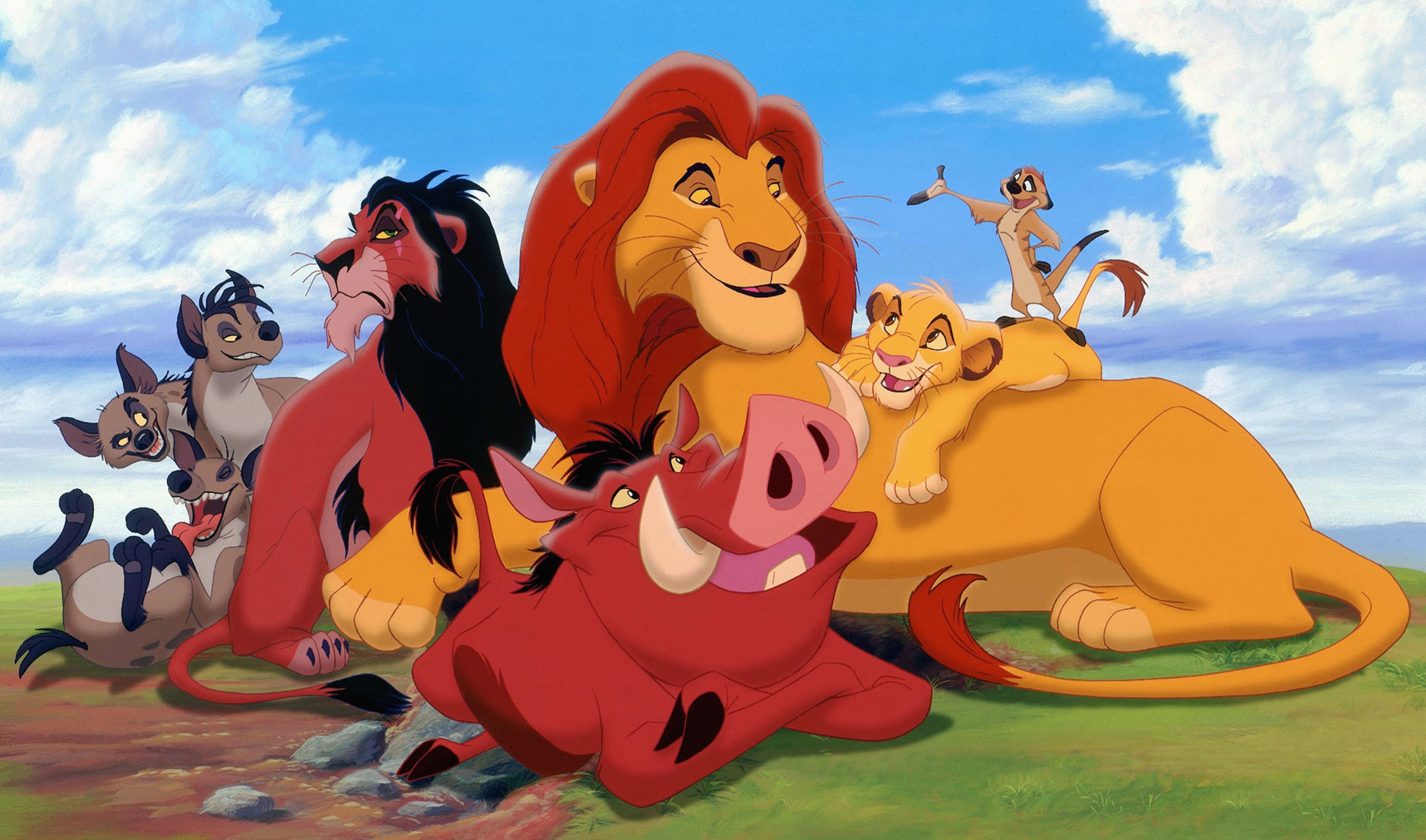
This was tried recently. Think of the 2019 Lion King remake. It failed precisely because of the biology we just discussed.
First, there is the Smile Problem. Real animals do not smile. They do not have eyebrows to furrow when they are angry. If you make a photorealistic lion behave like a real lion, it looks emotionless.
Second, there is the Creep Factor. If you take a photorealistic lion and force it to smile with human lips, it enters the Uncanny Valley. This is a psychological zone where something looks almost real but not quite. It triggers a “revulsion” response similar to looking at a corpse or a zombie.
You can’t use “real” animals because you lose the emotional signal. You need the exaggeration. You need the anime eyes and the cartoon eyebrows to bridge the gap between human emotion and animal form.
The Technology of Abstraction
But why do we relate to these simple drawings more than real people?
To understand this, we have to look at the history of art, specifically the difference between a portrait and an icon.
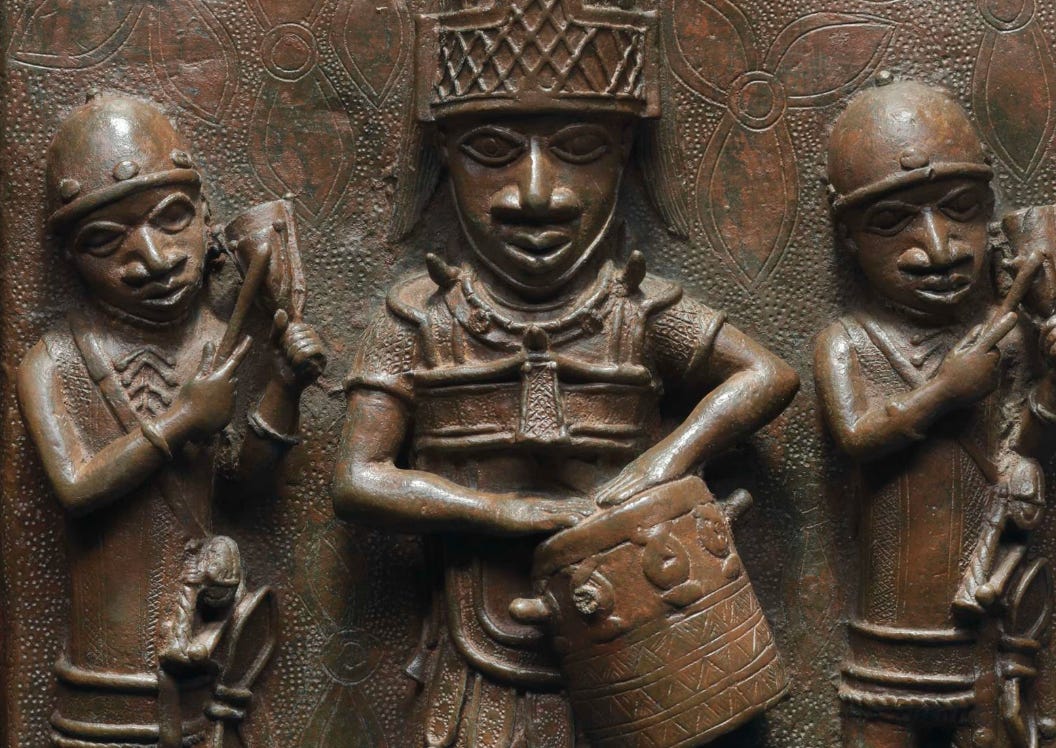
If you look at classical West African sculpture, specifically ritual masks, you see a deliberate rejection of realism. For a long time, Western critics misunderstood this as a lack of skill. They thought these artisans couldn’t carve a realistic face. They were wrong. The Ife heads of Nigeria prove that African sculptors could achieve hyper-realism centuries ago.
They didn’t carve abstract masks because they couldn’t. They did it because realism doesn’t work for rituals.
In many animist traditions, the goal of a masquerade is transformation. The wearer must cease to be a man and become a spirit. If you carve a mask that looks exactly like a specific neighbor, the illusion fails. The viewer sees “Uncle Musa,” not the Spirit of the Harvest.
Realism anchors the image to one specific person. Abstraction liberates it.
By stripping away the human details, the wrinkles, the specific nose shape, the blemishes, the artist creates a “universal face.” This allows the spirit to enter the vessel.
Scott McCloud, a cartoonist and theorist whose 1993 book Understanding Comics became the definitive text on how sequential art works, calls this the “Mask Effect.” McCloud wrote an entire treatise on comics in comic form, and his central insight was this: It is the exact same mechanism used in cartoons.
A detailed face is “The Other.” An abstract face is “The Self.”
When a girl in Addis Ababa sees a photorealistic photo of a boy, she sees a stranger. When she sees a simple stick figure or a manga character, the walls come down. Because the character has no specific identity, she projects her own soul into it.
The African mask was designed to be a vessel for a spirit. The cartoon character is designed to be a vessel for the audience.
We Are All Cartoons Inside
There is a deeper reason we connect with these simplified faces. It is how we view ourselves.
When you look at another person, you see them in high definition. You see the pores on their nose, the gray in their beard, the asymmetry of their smile. You view others as portraits.
But you do not see your own face. You live inside your head. When you are angry, you don’t see the specific furrow of your brow or the tightening of your eyelid. You just feel the general concept of “ANGER.” When you smile, you don’t see the crinkles by your eyes. You just feel “HAPPY.”
We view ourselves as cartoons. Our internal self-image is abstract, simplified, and iconic. Two dots and a line
: )looks more like how we feel on the inside than a photograph does.
This is why the “unreal” character resonates from Tokyo to Timbuktu. It bypasses the visual cortex and speaks directly to the internal self-image. When a child watches a realistic movie, they are watching a character. When a child watches a cartoon, they are wearing the character.
Barbie
There is one massive outlier to the “Cute” rule. Barbie.
Barbie is not an abstract vessel. She is a hyper-specific human. She breaks the “Mask Effect” entirely, yet she remains a titan of industry.
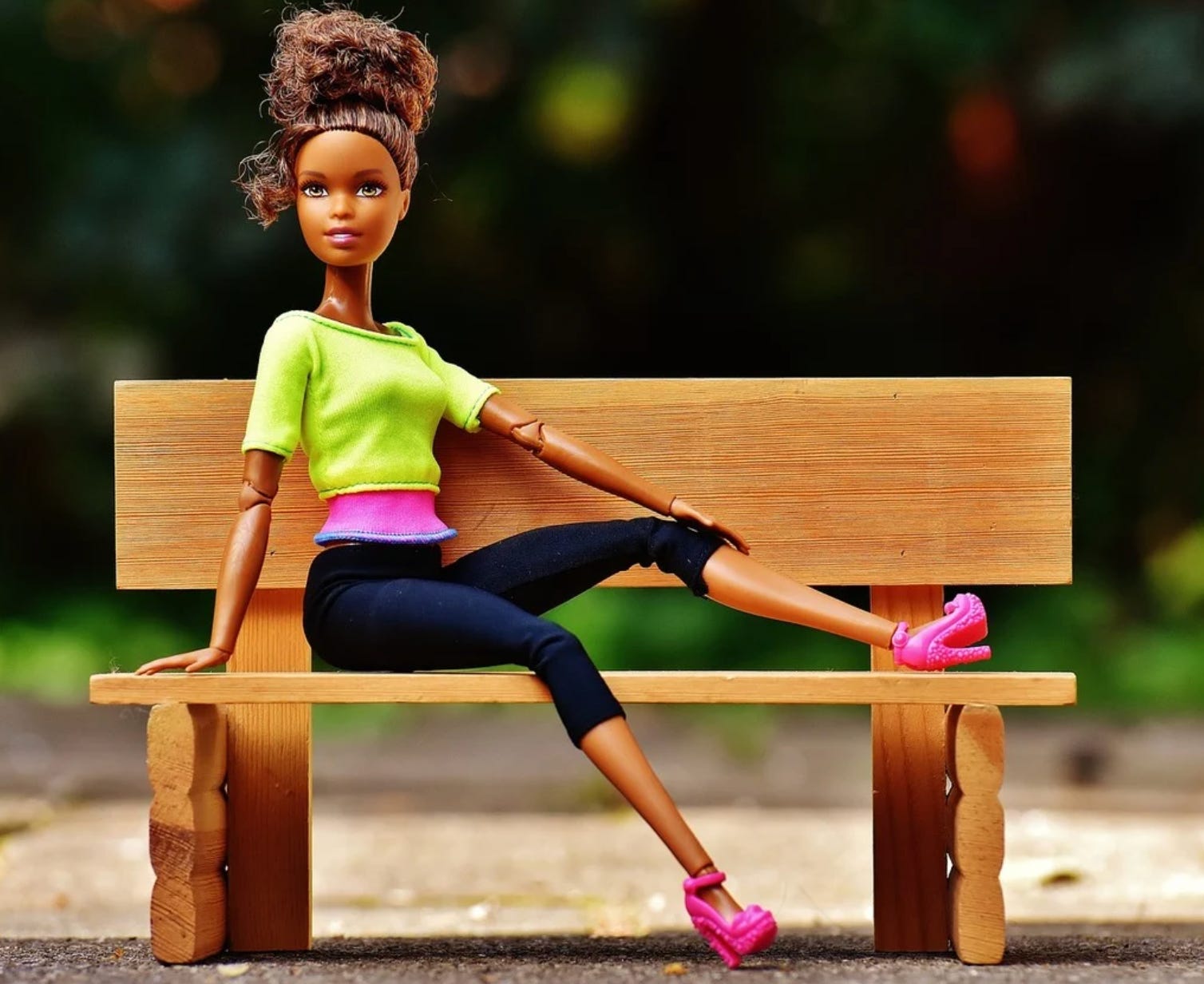
One might argue she defies evolution. After all, she lacks the big eyes and clumsy limbs that trigger our caregiving instincts. But Barbie doesn’t defy evolution; she just targets a later stage of it.
Psychologists call this the shift from Survival to Rehearsal.
In our “altricial” years (ages 0-4), we are biologically programmed to seek attachment. We crave safety. We love the teddy bear and the cartoon mouse because they signal “harmless” and “comfort.”
But around age five, a new evolutionary drive kicks in: Competence.
We stop just wanting to survive; we start preparing to thrive. We begin looking for cues on how to be a successful adult within the tribe.
This is universal. The specific vessel changes by culture, but the function is identical.
In America, it is Barbie and G.I. Joe. In Japan, it is the elaborate world of Gundam model kits and anime figures. In India, it is cricket heroes cast in plastic. Across Africa and Latin America, it is the football star on the poster, the wrestler action figure, the Nollywood queen on the notebook cover.
The cartoon character says: “I am safe.” The aspirational figure says: “I am powerful.”
Barbie represents the evolutionary ideal of fitness: symmetry, health, social dominance, and resource abundance (the dream house, the car, the clothes). But so does the muscle-bound action figure. So does the pop star doll with the elaborate wardrobe. The aesthetics shift by geography. The biology does not.
When a child plays with these figures, they are not “parenting” a helpless infant (like they do with a baby doll). They are simulating a high-status adult. They are “trying on” the power and agency they will need in fifteen years.
The toy is a costume rehearsal for the self they hope to become.
We like to think we are sophisticated consumers of media, but we are mostly just monkeys pressing buttons that make us feel good.
We didn’t build this structure of “unreal” characters because corporate boards forced it on us. We built it because reality is exhausting. Real faces are complex. Real emotions are messy.
Sometimes we just need a reflection with no face at all. Just two dots and a line, waiting for us to complete the rest.
Before You Ask About the Village Kid -
Some readers will ask: “Would a village kid in rural Ethiopia react the same way? What about someone who has never seen a Disney movie or held a plastic doll? Isn’t this just Western cultural conditioning?”
This objection actually proves the point.
The baby schema is not about Mickey Mouse. It is about geometry. Big eyes. Round face. Small nose. Clumsy limbs. These proportions trigger the caregiving response whether they appear on a $200 American Girl doll or a rag doll stitched together from scraps in a Cambodian village. The child who has never seen a television will still respond to the same facial ratios. This is why the phenomenon was studied by an Austrian ethologist observing geese, not by a marketing executive in Burbank.
The cross-cultural evidence is overwhelming. Japanese kawaii culture, West African mask traditions, Mesoamerican figurines, and European folk dolls all independently converged on the same exaggerated infantile proportions. No culture had to “learn” this from another. They each discovered the same biological cheat code separately. When completely unconnected civilizations arrive at identical design principles across thousands of years and thousands of miles, you are not looking at cultural diffusion. You are looking at a species-wide neurological constant.
Culture determines which character you see. Biology determines why you care.
Conceptual relationship — not measured data
The Abstract Face and the Audience
A conceptual map of the article’s argument that abstraction lets audiences project themselves into cartoon characters.
Detailed face
A detail-rich representation framed in the article as a specific individual rather than a general stand-in.- Detailed face → Abstract face: is contrasted with
A detailed face is “The Other.” An abstract face is “The Self.”
Limits: Scope: a conceptual map of the author’s discussion in the supplied article, published 2025-11-29. It is not measured data or a causal estimate. Dates, examples, and any figures mentioned in the article are quoted from the author only, not live or independently verified financial, scientific, or cultural data.
Read the original articleFull figures and source notes
Quoted source text
A detailed face is “The Other.” An abstract face is “The Self.”
When a girl in Addis Ababa sees a photorealistic photo of a boy, she sees a stranger. When she sees a simple stick figure or a manga character, the walls come down. Because the character has no specific identity, she projects her own soul into it.
The African mask was designed to be a vessel for a spirit. The cartoon character is designed to be a vessel for the audience.
This is why the “unreal” character resonates from Tokyo to Timbuktu. It bypasses the visual cortex and speaks directly to the internal self-image. When a child watches a realistic movie, they are watching a character. When a child watches a cartoon, they are wearing the character.