
This is an article about naive realism, which may be the most consequential idea in psychology that almost no one outside the field hears often. It explains why disagreements between people harden into feuds, why disagreements between departments harden into wars, and why both sides of any conflict walk away convinced that they were reasonable and the other side was not. Once you understand it, a large share of what happens inside companies stops looking like a mystery of difficult personalities and starts looking like the predictable output of a machine.
Let me begin with a football game.
Two schools watch one game and see two games
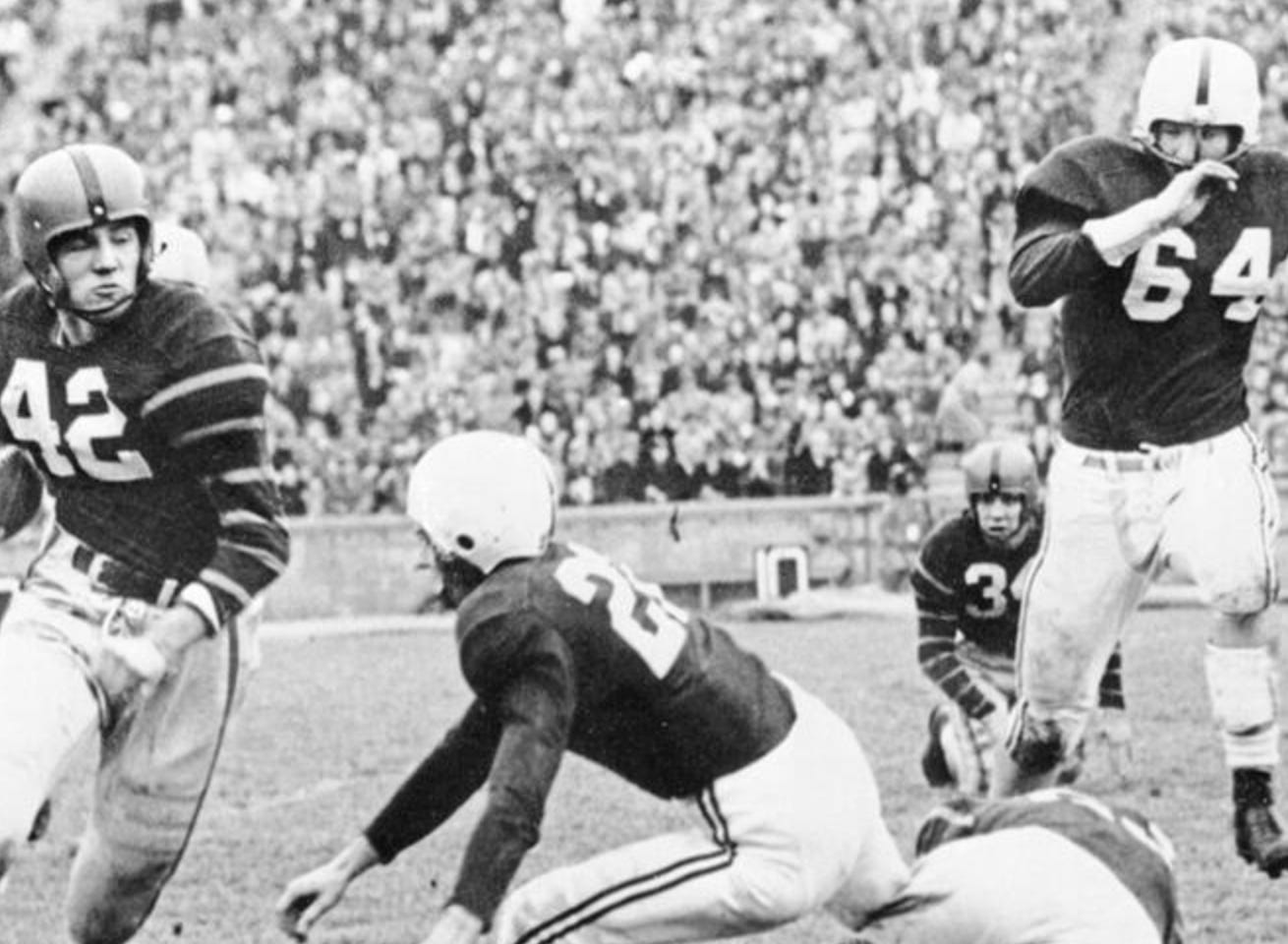
In 1951, Princeton and Dartmouth played a famously ugly football match. Players were injured on both sides, penalties piled up, and the newspapers of each school spent the following week accusing the other side of dirty play. Two psychologists, Albert Hastorf and Hadley Cantril, saw an opportunity. They took a film of the game and showed the same footage to students from both schools, asking them to count the infractions committed by each team
The students were not asked for opinions. They were asked to count observable events on a screen, the closest thing social science has to asking people to read a thermometer. Princeton students, watching the film, saw the Dartmouth team commit roughly twice as many infractions as the Dartmouth students saw their own team commit. Same footage, same instructions, same task. The two groups did not interpret the game differently after seeing it. They saw different games.
The researchers’ conclusion was more radical than it sounds: there is no such thing as a game existing “out there” that people then form opinions about. Each viewer’s loyalties reach into perception itself and assemble a different event. And every person in that study would have passed a lie detector test, because none of them were lying. Each honestly reported the game their eyes delivered.
Hold onto that study, because it is the seed of everything that follows. Decades later, a Stanford psychologist named Lee Ross gave the underlying condition its name. Ross was not a theorist working at a distance from real conflict. He co-founded the Stanford Center on Conflict and Negotiation and spent years inside actual disputes, including work in Northern Ireland and the Middle East, trying to understand why intelligent people on both sides of a conflict could not find agreements that outside observers could see plainly. The trap he kept finding, underneath every dispute at every scale, was the one the football study had exposed. He called it naive realism.
The three beliefs
Naive realism is the conviction, held by essentially every human being, that we see the world as it actually is. Not as an interpretation shaped by our history, our incentives, and our position. Just reality, plainly perceived. Ross broke this conviction into three beliefs that each of us carries without ever having examined them.
The first belief: I see the world objectively. My views come from the facts. Where others have biases, backgrounds, and agendas, I have simply looked at the evidence.
The second belief: because I see the world objectively, any other reasonable person who has the same information will reach the same conclusions I have reached.
The third belief follows from the first two with the force of logic, and it is where all the damage happens: if someone has the same information I have and still disagrees with me, then something must be wrong with them. There are only three possibilities. They are missing something, meaning they are uninformed. They cannot process it, meaning they are not very bright. Or, the most corrosive option, they see the truth perfectly well and are choosing to ignore it, meaning they are biased or acting in bad faith.
Notice what this three-step logic does to any disagreement. It converts the other side’s dissent into evidence against their character. And notice something worse: both sides run the same three steps at the same time. Each side concludes, through what feels like careful reasoning, that the other side is either ignorant, foolish, or corrupt. Neither side experiences this conclusion as bias. Each experiences it as the reluctant verdict of an honest observer.
The pull of this trap is so strong that it survives even in people trained to spot it. A psychologist named Emily Pronin, working with Ross, documented what they called the bias blind spot: people readily agree that human judgment is distorted by dozens of well-documented biases, and readily detect those biases in others, while rating themselves as considerably less biased than the average person. We see the machinery clearly. We just believe we are standing outside it.
Takeaway: the feeling of being objective is not evidence of being objective. It is simply what being a person feels like from the inside. The other side of your dispute is having the identical feeling with the identical intensity, and their feeling is exactly as sincere as yours.
The letterhead experiment
If naive realism only made us overconfident, it would be a manageable flaw. What makes it destructive is a downstream effect that Ross demonstrated with one of the cleanest experiments in the history of social psychology.
During the Cold War, his research team showed Americans a proposal under which both superpowers would sharply reduce their nuclear arsenals. Every participant read the identical document. Half were told the proposal came from President Reagan. The other half were told it came from the Soviet leader, Mikhail Gorbachev. Among those who believed the proposal was Reagan’s, 90 percent judged it favorable or even-handed toward the United States. Among those who believed it was Gorbachev’s, 44 percent did. The same words lost half their support when the author changed.
Ross named this reactive devaluation: an offer loses value in our eyes the moment it comes from the other side, because naive realism supplies the reasoning automatically. If they are proposing it, and they are biased or self-interested, which the third belief has already established, then the proposal must somehow serve them and cost us, even if we cannot see how. The suspicion requires no evidence. The source is the evidence.
The result was later replicated in a setting with far higher stakes. Researchers took actual peace proposals from Israeli-Palestinian negotiations and switched the labels, showing Israeli citizens a Palestinian-authored proposal marked as Israeli, and an Israeli-authored proposal marked as Palestinian. The citizens preferred the Palestinian proposal when it wore the Israeli label over their own side’s proposal wearing the Palestinian label. The content of a peace plan mattered less than the flag on the envelope.
In 1985, Ross and colleagues showed identical television news coverage of the war in Lebanon to viewers who supported Israel and viewers who supported the Palestinians. Both groups judged the same broadcast as biased against their own side. This became known as the hostile media effect, and it completes the picture: naive realism does not just make us discount the other side’s offers. It makes neutral information look like enemy propaganda, because anything that does not match the reality we plainly see must have been distorted by someone.
Naive realism inside a company
Everything above describes individuals and nations. Here is why it applies with special force to departments.
A department is not just a team. It is an environment that shapes what its members see, day after day, until the members of different departments are, in a real sense, living in different worlds. This is not a metaphor, and it has been measured. In 1967, two Harvard Business School professors, Paul Lawrence and Jay Lorsch, went into companies and studied how departments within a single firm differ from one another. They found the differences ran deep: departments differ in how far into the future they think, in what they treat as success, in how formal their working style is, and in how they price risk. And the differences were not flaws. Each department’s mindset matched the environment it had to survive in.
Think about what daily life teaches a salesperson. The strategist Roger Martin has a line that every executive should have framed on the wall: you can control costs, but you cannot control revenue. Every other department in the company manages the controllable side of that sentence. Sales manages the uncontrollable side. A budget can be cut by decree. A revenue target can only be pursued, deal by deal, through customers who owe you nothing and can walk away at any moment for reasons you will never learn. And while the pursuit runs, the clock runs with it. Every week a deal sits in review is a week the customer’s attention drifts, a competitor circles, a budget holder on the other side changes jobs, a quarter closes. A salesperson looking at a stalled contract is not seeing paperwork. They are seeing a living thing with a decay rate, and they are the only person in the building whose name is attached to its survival. The world, as experienced from inside sales, does not merely reward speed. It punishes delay with losses that never appear on anyone else’s ledger, because a deal that dies in review is recorded nowhere as a cost. It simply becomes revenue that never existed, and the only person who carries its ghost is the one who watched it die.
Now think about what daily life teaches a lawyer or a financial controller. Ninety-nine contracts reviewed without incident earn no notice, because disasters that never happen are invisible. The single contract that goes wrong can be catastrophic, and its cost lands entirely on them. Nobody has ever been promoted for a lawsuit that never happened. The world, as experienced from inside legal, genuinely rewards caution and punishes haste. Neither department is imagining its world. Each is accurately perceiving the environment it lives in.
And notice the cruel symmetry that sets up the collision: both departments are haunted by invisible losses. Legal is haunted by the lawsuit that has not happened yet. Sales is haunted by the deal that will never appear in any report because it evaporated in a queue. Each side’s ghost is real, each side’s ghost is invisible to the other, and naive realism ensures that each side experiences its own ghost as obvious reality and the other side’s ghost as an excuse.
Here is the collision in full:
Naive realism tells every one of us that what we see is not “a” reality but “the” reality. So when sales and legal meet over the same deal, each side arrives carrying a world that its daily experience has verified thousands of times, and each side’s world announces a different right answer. The salesperson sees an obvious opportunity being strangled by fine print while its decay clock runs. The lawyer sees an obvious risk being waved through by someone who has never sat through a lawsuit. Both perceptions are honest. Both are locally correct. And naive realism now runs its three-step logic on both sides simultaneously. We see clearly. Any reasonable person would agree. They do not agree. Therefore they are blind, foolish, or serving their own agenda.
This is the moment a solvable disagreement becomes an unsolvable one, because the subject changes. The dispute stops being about the deal and becomes about who is seeing straight. And no one concedes a dispute about who is seeing straight, because conceding would mean accepting the third belief pointed at yourself: that you are the uninformed one, the foolish one, the biased one. People will accept losing a decision. They will not accept that diagnosis. So instead of resolving, the conflict escalates in the specific ways naive realism predicts. Proposals from the other department get marked down on arrival, exactly like the Gorbachev proposal, which is why an idea rejected in March sails through in September once an outside consultant carries it in. Neutral parties get pulled into the war, because a department steeped in the hostile media effect experiences even the impartial analysis from the data team as tilted toward the enemy. And every meeting becomes the Princeton film session: both departments watch the same quarter unfold and honestly see different quarters.
The organizational psychologist Karen Jehn documented the final stage. Her research distinguishes disagreements about the work from hostility between the people, and shows that the first converts into the second with depressing ease. Naive realism is the conversion mechanism. Once the other side’s disagreement has been framed as a defect in them, every future interaction is read through that explanation, and it is taught to new arrivals who never witnessed the original dispute. They inherit the verdict without the trial. Ask anyone who joined a company recently how they know that finance blocks everything or that product cannot be trusted. They do not know it. They were handed it, the way children in divided regions are handed grievances about events from before they were born.
The escalation follows a proportionality:
Perceived bad faith ∝ (Size of disagreement × Certainty in your own view) / Exposure to the other side’s constraints
You read this as: how corrupt the other side appears to you grows with how far apart your positions are, multiplied by how certain you are of your own, and shrinks with how much direct exposure you have to the pressures the other side lives under. A finance analyst who has never sat in a sales negotiation, evaluating a large discount request from a sales team that is completely confident in its read of the customer, sits at the maximum of this equation: big disagreement, total certainty, zero exposure. Divide by a number near zero and perceived bad faith runs toward infinity. The same analyst after two days riding along on customer visits is not a different person, but the denominator is no longer zero, and the equation calms down. Most companies try to shrink interdepartmental hostility by working on the top of the fraction, urging people to be less certain and more aligned. The denominator is the only part that reliably moves.
Takeaway: departments do not fight because they see the same situation and want different things. They fight because they see different situations, and naive realism forbids each side from believing that the other side’s situation is real. The dispute you are watching is almost never about the decision on the table. It is about which side’s reality gets to be the official one.
What can be done about naive realism?
The honest answer is: nothing, permanently.
Naive realism cannot be removed, because it is not a habit or an attitude. It is the texture of having a point of view at all. Telling people about it does not work, or rather, it works on exactly the wrong target. People educated about naive realism become sharper at diagnosing it in the other department while remaining certain they stand outside it themselves. The bias blind spot guarantees this. Awareness training hands both armies better binoculars.
The interventions that do produce movement all share one feature: they force exposure to the constraints the other side lives under. Ross, in his mediation work, used a strikingly simple one. Before arguing your own case, you must state one point from the other side’s position that you consider genuinely legitimate. Not a summary, which people deliver as caricature, but something you actually concede is right. The exercise works because it attacks the third belief directly: the moment you have found something legitimate in the other side’s view, they can no longer be purely ignorant, foolish, or corrupt. Inside a company, the same principle takes physical form. A finance analyst spends a week inside a sales cycle and learns what a decaying deal feels like. An engineer sits in the support queue and hears the anger firsthand. Note that the exposure must be to constraints, not outcomes, because outcomes are noisy. A rushed deal can close cleanly and a blocked deal can turn out to have been a trap, and naive realism reads every lucky draw as a verdict. The side that wins a round banks it as proof that its reality was the true one all along, and its certainty grows. Constraints are luck-proof. Scoreboards are not.
But every one of these interventions decays. The rotation ends, and within months the analyst has re-acclimated to the world of finance, because that is the world that now supplies their daily evidence. The concession exercise softens one meeting, and the next lucky quarter refills the certainty it drained. New employees arrive already carrying the inherited verdicts, faster than any program can neutralize them. Even the most famous peace in social psychology was conditional. In the 1950s, the psychologist Muzafer Sherif turned two groups of summer camp boys into enemies and then into friends by engineering problems neither group could solve alone, a stuck food truck that took every boy pulling one rope. The hostility genuinely dissolved. But it dissolved because the truck was stuck. The peace was rented, and the rent was the shared problem.
This is why the framing of “fixing” interdepartmental conflict is wrong at the root. Naive realism behaves like friction in the physical sense.
No engineer speaks of curing friction. It is a permanent property of the system, and you pay energy against it for as long as you want the machine to run. Stop paying, and it does not negotiate or taper. It returns in full, immediately, because it never left.
Frequent readers will be familiar with the formula I use:
Value ∝ (Existing Demand × Relevance) / Friction
You read this as: the value anything delivers grows with how much the receiver already wants it, multiplied by how well it fits their situation, and shrinks with how much effort stands between them and acting on it. Naive realism sits in that denominator as a permanent resident. It adds no information and changes no facts. It simply eats, and it eats forever. A company can have real demand for a decision and a proposal perfectly relevant to it, and still watch the value run toward zero, because the two departments involved are no longer debating the proposal. They are debating whose eyes work. The companies that handle this best have not solved anything. There are no unusually open-minded people, present company included, and there are no organizations that have escaped the machinery. There are only organizations that have accepted the rent and pay it on schedule, through rotations that will need repeating, exercises that will need rerunning, and shared problems that will need replacing when they are solved, and organizations that believe they paid once, years ago, and cannot understand why the war came back.
Somewhere in your company right now, two departments are sitting in the same meeting and attending two different meetings. Both accounts of what happened in it are honest. Both will survive any audit of good faith, because there was no bad faith to find. This cannot be fixed, and I would be suspicious of anyone who claims otherwise. People arrived with this equipment and they will leave with it. What a company can do is keep paying against it: run the rotation again, rerun the exercise, find the next shared problem when the last one gets solved. It is unglamorous and it never ends, which is exactly why so few companies keep doing it. Most pay once, declare the matter closed, and then act surprised when the same two departments are back at war three months later. They were never at peace. The rent had just been paid that month.
If this piece gave you a useful lens, subscribe to STRATEX by Naz for more on the cognitive, behavioral, and biological foundations of how people, organizations, and markets work.