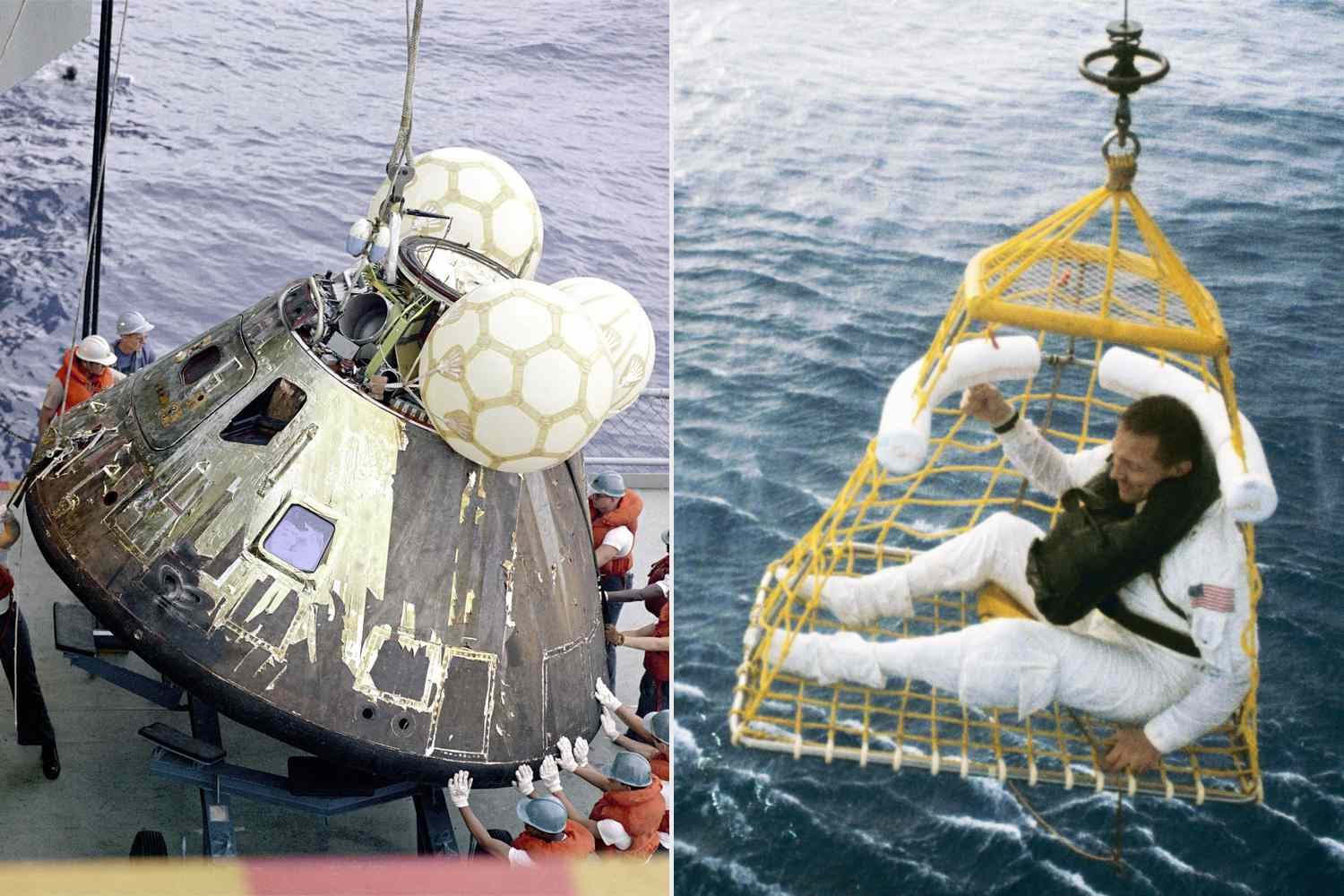
Two days out from Earth, on April 13, 1970, an oxygen tank ruptured on Apollo 13’s service module, and three men moved into a lunar lander built to keep two people alive for two days. NASA had a room of simulators on the ground, built to train astronauts and controllers across every phase of the mission. Controllers took the telemetry coming back from the damaged spacecraft, altered the simulators to match the condition of the real vehicle, tested procedures against the updated copy, and sent up the ones that survived.
Traffic ran in both directions there, which is the part worth holding onto. Measurements from the object corrected the model, and decisions from the model changed the object. A researcher named Michael Grieves put that arrangement into a 2002 presentation at the University of Michigan about product lifecycle management, on a slide titled Conceptual Ideal for PLM that already contained every element of what would later be sold as a product category. The name came from John Vickers, a NASA technologist working with him, who called it a Digital Twin around 2010. Grieves has spent years since correcting the Apollo origin story, on the grounds that those ground units were physical copies of the spacecraft rather than digital ones, and he is right on the facts without disturbing the criterion, which is the loop rather than the medium.
Every job with real consequences already runs on simulation
An airline pilot does not learn engine-out procedures on a Tuesday flight to Dubai with two hundred passengers behind them. They learn it in a full-motion box in a hangar, where the left engine fails on climb-out over a runway that does not exist, and if they get it wrong the instructor resets the scenario and it happens again. Firefighters burn down purpose-built houses to practice going into them. Surgeons work on cadavers and simulators before they work on you. Militaries run war games. Even a school fire drill is a low-fidelity model of a building emptying, run to find out where the queue forms at the stairwell before smoke makes the question urgent.
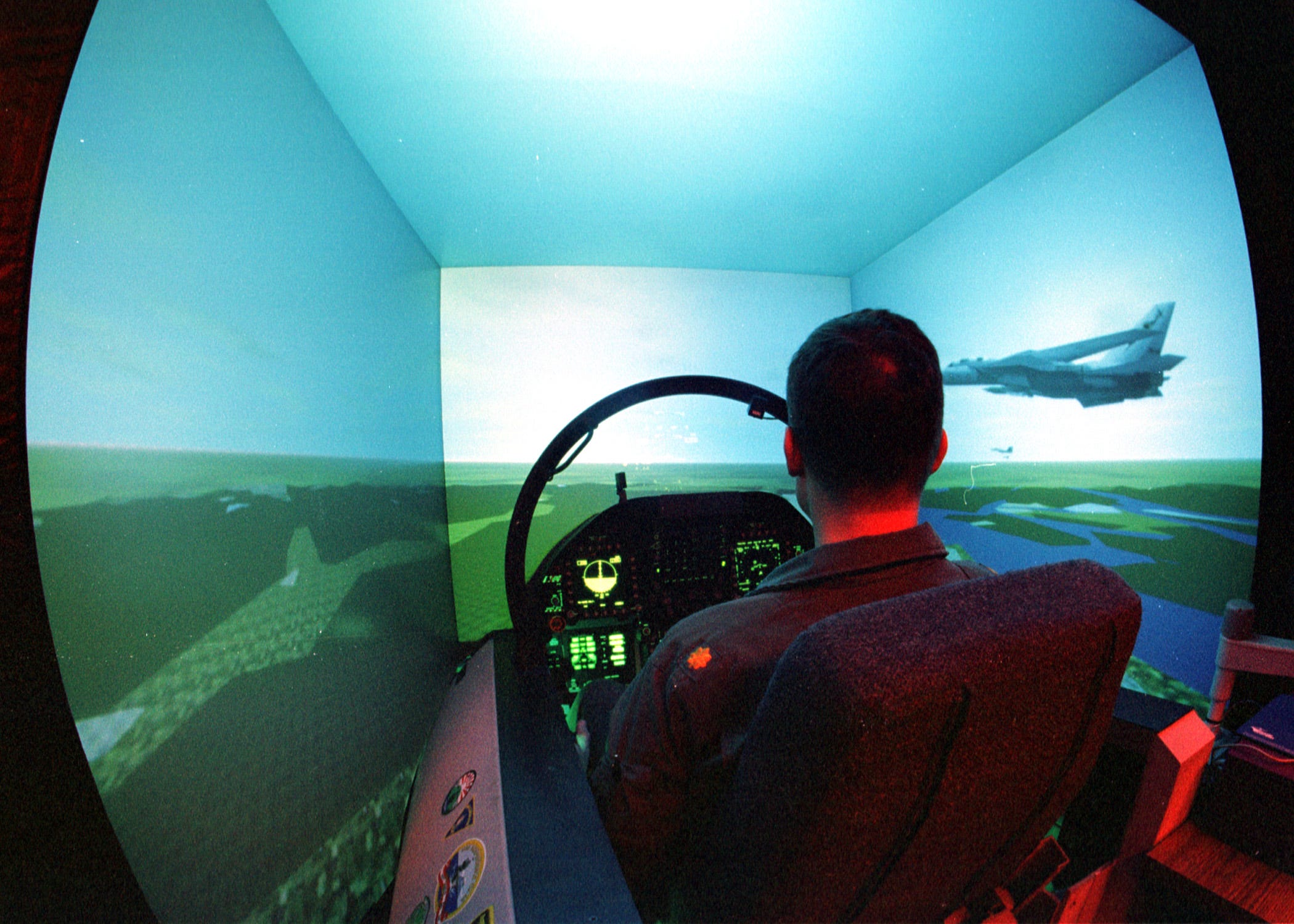
A pilot flies that failed engine forty times across a career because the simulator hands out the repetitions. A city gets one attempt at a World Cup. The tournament that finished on July 19 ran 104 matches across 16 host cities in three countries over 39 days, put 6,810,966 people through the turnstiles, and held stadiums at 99.7 percent occupancy from the opening match to the final. Fan festivals outside the stadiums drew more than 5.5 million on top of that, with the one in Mexico City taking over 200,000 people in a single day. The Federal Transit Administration put $8 million to $10 million into each host city to strengthen public transport for it, and the planners spending that money in Atlanta or Vancouver or Guadalajara had exactly one shot at emptying a stadium of eighty thousand strangers, most of whom had never seen the local rail map, into a network built for a Tuesday commute.

Carnival gives a city an annual rehearsal, which is why Rio’s road closures and crowd routing look nothing like a first attempt. A pandemic gives you one every few decades, by which time the officials who ran the last one have retired or died and the paperwork sits in a basement nobody has opened. Learning by doing needs the doing to repeat inside a working life. Heatwaves that break a grid, a chemical fire upwind of a reservoir, a currency collapse, a stadium crush, a hundred-year flood arriving in year sixty: all of them get decided in the first ninety minutes by people who have never done it before and will never do it again.
Agentic chatbots and daily image prompts sit at the far opposite end. Those interactions run hundreds of millions of times a day, every one producing a correction, which is why they improved so quickly. How often an event happens determines how much you can learn from experience, and the events that most deserve rehearsal are the ones that hand out the fewest repetitions. Simulation is the only source of practice for situations that arrive once, and a water utility serving four million people has for most of its existence had none, no place to ask what happens if pressure drops in the eastern district tonight, no way to run the decision fifty times before running it once.
Games practiced this for thirty years with nothing attached
Long before anyone wired a model to a spacecraft, the question of how to represent a system that talks back was being worked out by a man who grew up without electricity. Jay Forrester was born in 1918 on a cattle ranch in the Nebraska Sandhills, and as a high school senior he built a twelve-volt wind-driven electric plant out of discarded automobile parts, which gave the ranch its first power and ran the radio, the house lights, and the motors in the workshop. He went to MIT, built real-time computing for air defense in the early 1950s, then turned the same control-theory instincts onto companies and cities and founded the field he named system dynamics. His first case came out of a supply chain puzzle, where violent swings in inventory and orders turned out to be produced by managers reacting to the delayed consequences of decisions they had made months earlier. Work with former Boston mayor John Collins led him to Urban Dynamics in 1969, which argued that most American urban policy of the period was worsening the conditions it targeted, and the argument underneath was about people rather than cities: we read direct cause and effect well, and we read delayed circular feedback badly. Forrester’s city existed as columns of numbers with no picture attached to any of it.
The picture came from someone with no interest in urban policy at all. Will Wright had already won an illegal cross-country road race by then, driving New York to California in a little over 33 hours in 1980, and he would later collect Soviet space program hardware and build a BattleBots machine that wrapped its opponents in tape until the tactic was banned. In 1984 he was building the level editor for a helicopter shooter, found the map tool more absorbing than the shooting, went looking for a theory of how cities actually grow, and landed on Forrester. He used the theory to turn static maps of buildings and roads into a metropolis that grew on its own, and eventually understood that his test city was the game. SimCity shipped in 1989 with land value, pollution, traffic, tax rates, and crime wired to one another, so a zoning decision came back at you as movement in something you had never touched. Wright later did the same thing to a household and called it The Sims.
That year produced a second version of the idea out of Guildford, from a company that existed because of a clerical error. Peter Molyneux and Les Edgar were running Taurus, which exported baked beans to the Middle East and wrote the occasional database, when Commodore Europe called to discuss porting their software to the Amiga. Molyneux sat through the whole meeting assuming they meant the database, and only at the handshake realized Commodore thought Taurus was Torus, a networking company. He shook the man’s hand, ran out of the office, and kept the free Amigas. They renamed the operation after a ceramic frog sitting in the office. Molyneux himself was chain-smoking, hyperactive, and so comfortable with the British Amiga press that he once gave an interview about a trip to Japan while sitting on the toilet. Bullfrog released Populous within weeks of SimCity, handing players terrain, weather, and a population that bred, migrated, and fought under rules you could nudge but never command, and the genre got its name, god-game. Molyneux matters here for a second reason, which is the teenager he was about to hire.
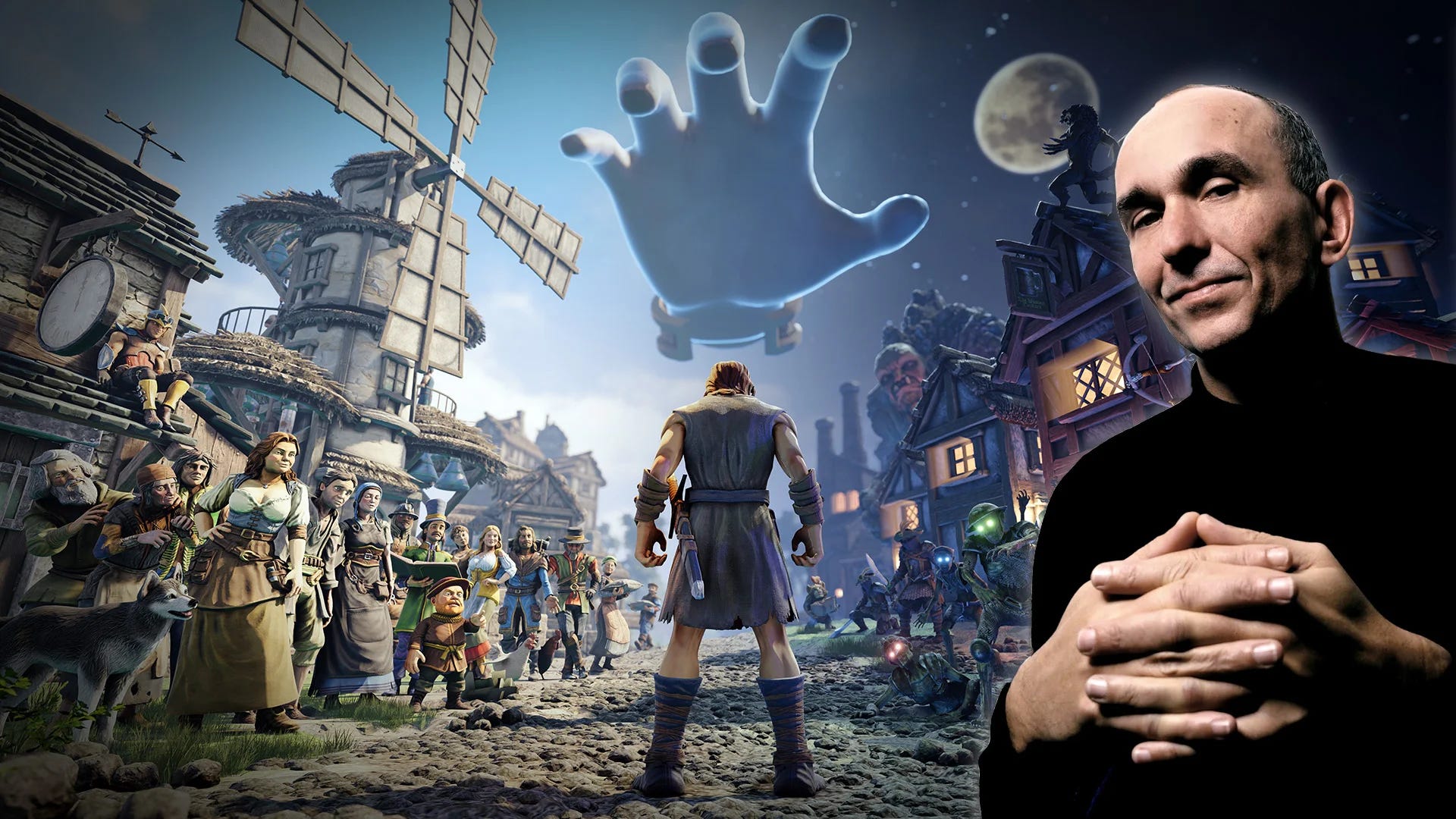
In August 1992, Amiga Power ran a competition called Win-a-job-at-Bullfrog, and an entry called Chess Invaders came third, scored by Molyneux himself at eight for originality, five for implementation, six for sound. Third place was enough. Cambridge had told the applicant to take a gap year because he was too young, so he went to Bullfrog instead, playtested Syndicate, and at seventeen was co-designing and lead-programming Theme Park, released in 1994 and sold in the millions. Molyneux remembers a slender kid you would walk past in the street without noticing, and a bus ride to the Bullfrog Christmas party spent talking about why winning appeals to the human psyche and whether a machine could be given the same appetite. The two of them invented a card game they called Dummy, at which the teenager beat Molyneux thirty-five times in a row.
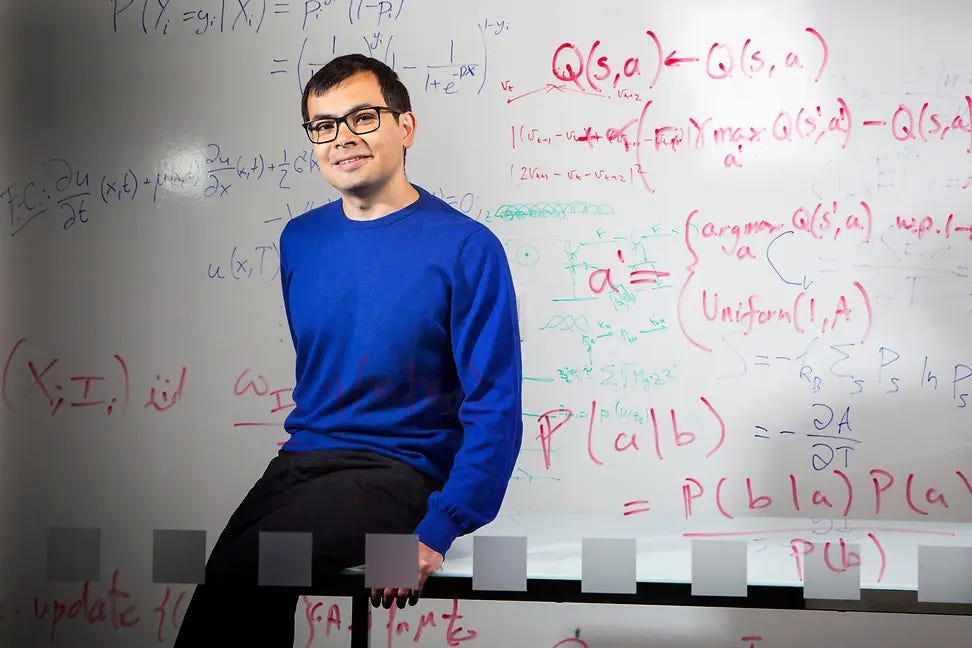
The teenager was Demis Hassabis, who most readers now know as the co-founder of DeepMind, a Nobel laureate in chemistry for using AI to predict protein structures, knighted for services to artificial intelligence. Molyneux offered him a seven-figure sum to stay in games, and he turned it down.
Theme Park’s visitors walked, queued, tired, bought chips, and left when the line got long, with ticket prices, staff wages, and ride placement all feeding each other. None of them were thinking. Game AI of that period ran on finite state machines and hand-written if-then rules, so the guests followed branching scripts instead of forming intentions, a low ceiling for someone who had spent his childhood reading chess positions. Hassabis went to Cambridge, came back to work with Molyneux again at Lionhead as lead AI programmer on Black & White, where the creature the player raises learns its behavior from what it observes and what it gets rewarded for rather than from a script, then founded Elixir Studios and made two more simulation games before closing it in 2005 and leaving for a PhD in cognitive neuroscience. DeepMind opened in 2010 and started with Atari rather than language or driving, feeding a network raw pixels and a score to maximize with no rules supplied.

Every one of those worlds ran cheaply because nothing was attached to it. Bankrupt the park and you reload, and no actual queue forms anywhere. Wire the same machinery to twenty thousand pressure meters buried under a real city, let the readings correct the model every few minutes, then let the corrected model decide which valve to throttle tonight, and the reload button disappears along with most of the fun.
Working systems produce no evidence
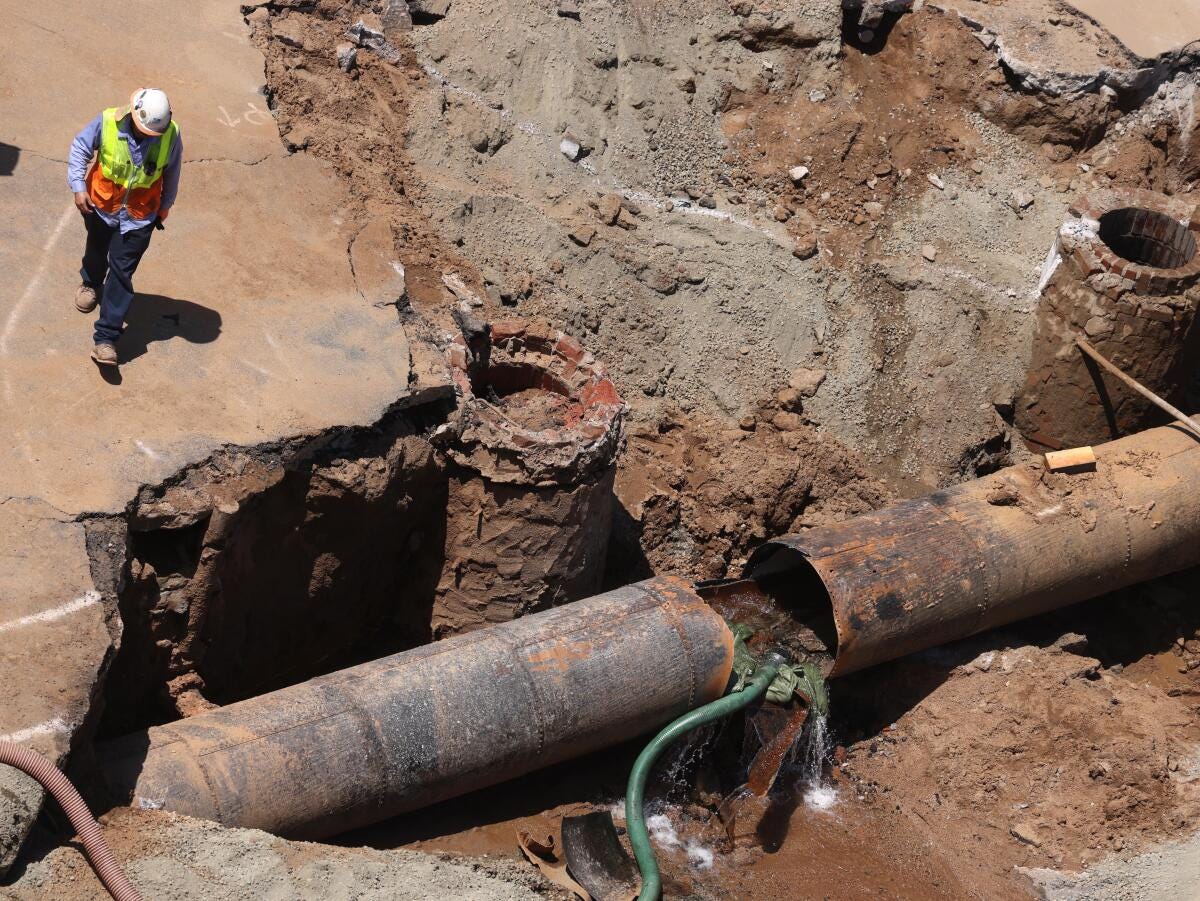
Meters are where the whole approach stalled for half a century, since a model that receives no news from the object is a game, and the objects in question were laid down long before anyone thought to instrument them. The water that came out of your tap this morning traveled through pipe somebody specified, funded, and buried before you were born, and if they did it well you have no way of knowing, because a network that holds generates no news and no line item to defend at a budget hearing. Nobody writes a memo about the roof that did not leak.
A leak two meters down announces itself when it reaches the surface, and functioning pipe announces nothing at all. There is a water main break in the United States roughly every two minutes and about six billion gallons of treated water lost every day. Globally, close to a third of the drinking water put into distribution never reaches a paying customer, some 346 million cubic meters a day. Very little of that arrives in front of the people who set budgets, and none of it on a schedule that matches anyone’s term of office.
How long you wait for a verdict varies far more than the usual complaint about short-termism allows. Change pressure management across a district and break rates move within a season, sometimes two. Send a crew out on acoustic detection and you know inside a month whether they dug in the right place. Choose which two kilometers of main to replace out of four hundred and the answer takes five years, or twenty, or never comes at all, because the burst you prevented leaves no record anywhere. Engineering talent sorts itself toward the fast end of that range the way water finds low ground.
Ductile iron main gets specified for eighty years or more against political terms that run four, putting the person who authorizes the cost and the person who collects the benefit in different generations. In 1977 the federal government covered 63 percent of capital spending on drinking water in the United States; by 2017 it covered 9 percent. The 2025 ASCE report card gave American infrastructure a C, its highest grade since the series began in 1998, alongside a projected $3.7 trillion gap between planned investment and a state of good repair.
Takeaway: Money and talent flow toward problems whose wins and losses can be seen, whose verdict arrives quickly, and whose returns land soon. A water network fails all three tests, and the neglect that follows is a sorting rule doing what it was built to do rather than anyone deciding the pipes do not matter.
Retrying a prompt costs you nothing
Set against those waiting times, the loop that several hundred million people now run daily is almost a different physics. Ask a model to size a market and the number comes back wrong. You rephrase, it comes back better and still wrong, you paste in a source, ask again, get something usable, and move on. Nowhere in that exchange do you see a token count, a joule, or a dollar. It cost you four minutes and some compute billed to a balance sheet you will never open.
Run the same interaction against a bridge. The model produces a design, the deck goes up, the piers go in, traffic crosses for eighteen months, and the span drops into the river at 8:40 on a Tuesday morning. The interface returns: sorry about that, would you like me to redraft the bridge before we break it again? Nobody is retrying anything. The cost was collected from people who never opened the application.
Cost of Error = Irreversibility × People Exposed × Hours Before Detection
Irreversibility runs from 0 to 1, where 0 means you can undo it completely and 1 means you cannot undo any of it. Put the wrong paragraph through it: near-total reversibility, so call it 0.01, one reader exposed, caught in about a minute, which is 0.02 hours. The three multiply out to 0.0002. Now the pressure setting that fatigues a main under a hospital district: the water already gone and the pipe already stressed are not coming back, so call it 0.9, four thousand people exposed, three weeks before a meter reading gives it away, which is 500 hours. That multiplies out to 1.8 million.
The numbers are mine and illustrative, and you should argue with them. What survives any argument is the gap between them, roughly nine billion to one, which is why habits formed in the first case travel so badly into the second. Costless Retry names the condition on the cheap end, where correction happens through repetition and the price is time plus compute nobody displays.
Correction by repetition only works when you can check the output by looking at it, which trains a specific blindness. Somebody who watches ten thousand chess games without ever learning the rules gets good at spotting a losing position, cannot name the fork or the pinned knight, and cannot play a single legal move. Control rooms sit in that position when they carry live readings and no model of what the readings imply about next week, and so do boards reading dashboards that report state without carrying mechanism. Call it Consequence Blindness, the capacity to render a condition accurately with no way to produce the next one. Molyneux’s park guests had the reverse problem, running on mechanism with no perception at all, which is why Hassabis found them unsatisfying at seventeen.
Playing the city instead of watching it
Parks and toy cities have taken us as far as they can, and the board that actually matters is the one everybody is already standing on. Water, power, telecom, health, transport. Losing on that board looks like a boil-water notice across three districts, a blackout in August, a clinic running out of oxygen, a network that drops during the one hour a family needed it. Nobody reloads.
Picture the SimCity screen again, except the map is your actual city, the buildings are the ones you drove past this morning, and the numbers running underneath come from meters that reported five minutes ago. Reservoir levels, pump energy draw, chlorine residual at the far end of the network, the pressure wave from a valve someone closed in a district three kilometers away. A player in that view can hover over the eastern trunk main, ask what happens if it goes at 6am on a weekday, and watch the outage spread through hospitals, schools, and a food processing plant, then rewind and ask again with a different valve configuration. Eighty thousand people leaving a stadium at once becomes a scenario you run in March for a match in June.
I have had the privilege of sitting with engineers and scientists who have been building exactly this for a decade, well before physical AI turned into a phrase people put on slides. They work at Sand Technologies, founded by Fred Swaniker, and the man is peculiar in every direction. He answers from Texas at what should be the middle of his night and from Kigali the next morning with the same speed and the same recall, to the point where you start wondering whether he runs a digital twin of himself. He also has quite the memory: a matters-arising item from a board meeting a year old, a net tuition revenue figure from five years back, the shape of a client engagement from before that, and then pulls PDF slide decks mid-conversation while walking Central Park with his dog Barny.
The habit of running things too early started at eighteen, when his mother, an educator, asked him to run the small school she had founded in Botswana, and he became its headmaster barely out of high school, managing teachers and teaching children between five and twelve. He had already lived in four African countries by then, his family having fled Ghana after the 1979 coup when he was four. Sand came much later, and he started it because the conversation around artificial intelligence had organized itself around the technology rather than around anything the technology could repair, with his stated intent being to build for cities, climate, health and connectivity instead of chatbots, entertainment, and poems.
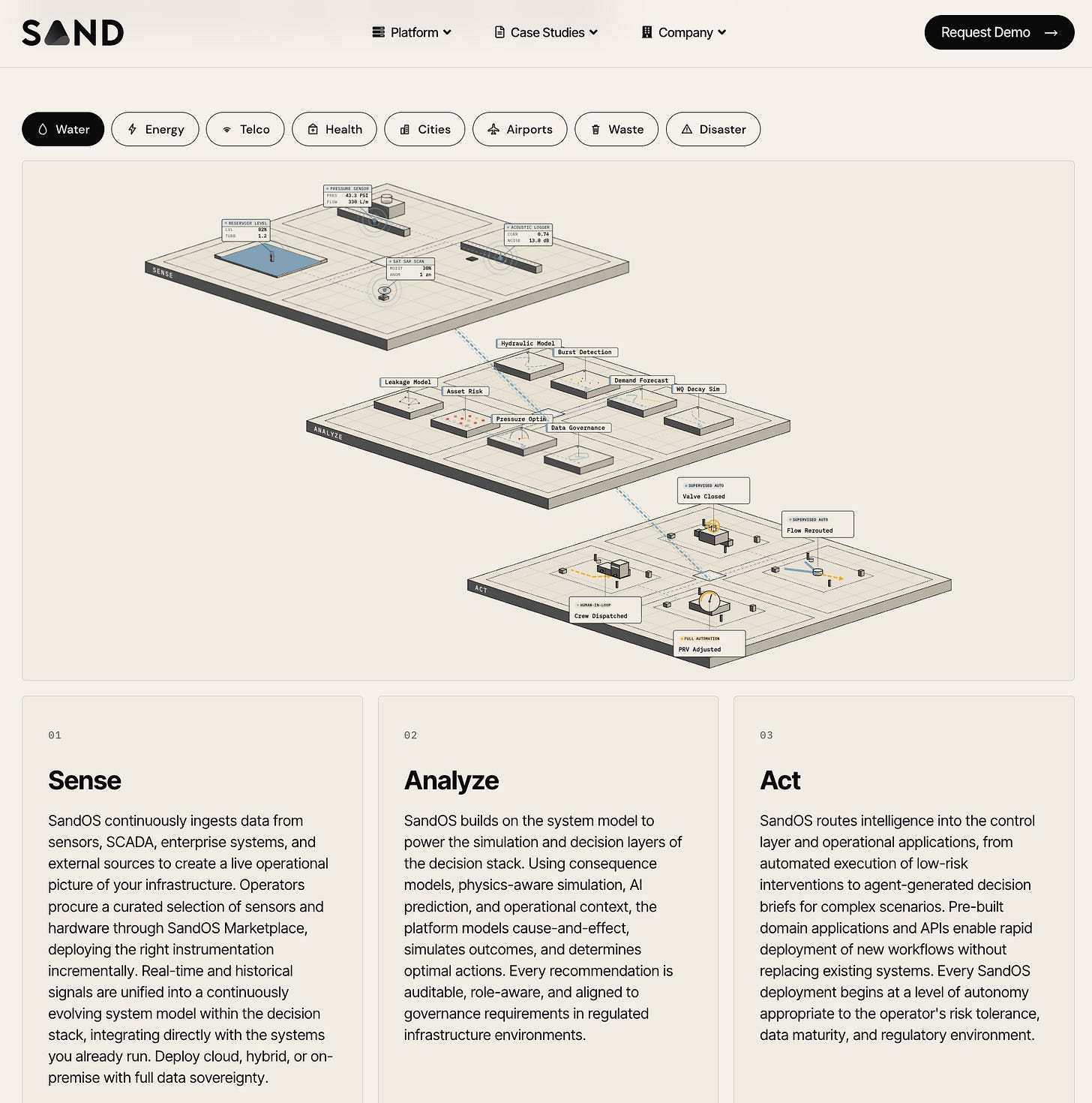
Symmetri, the platform that came out of the company, runs across water, energy, telecom, health and government deployments in more than 18 countries, organized around sensing, then analyzing, then acting, with named autonomy levels governing how much the system decides without a person in the room. London is the fullest version of the loop Apollo controllers were running by hand in 1970. Sand’s systems manage water supply for more than 16 million homes there, working from a digital twin of the network fed by roughly 20,000 sensors, used to predict which pipe bursts next, keep pollution out of rivers, and test investment decisions before the money commits. Sensors in the rivers feeding the city track nitrates, phosphates, turbidity, and plant and animal life, so a resident can enter a home address and see which river supplies their drinking water and what state it is in. Company figures include around £7 million in avoided outage cost and 31,000 kilometers of network under a single view, which are self-reported and read best as directional.
The same loop can run without a single new sensor when the model is good enough. A president whose country had mobile coverage reaching about half its citizens went to Sand with operators ready to build towers and a placement process carrying a 50 percent error rate; the plan on the table would have produced 75 percent coverage, and optimizing the same set of towers reached 96 percent for the same money. No new capital entered the exercise. The concrete was already going to be poured, in the wrong places.
Widen the frame from a water district to a continent and the winning conditions change while the mechanics stay put. Aquifers, harvests, disease spread, migration, grid load, and shipping lanes all run on flows with delays and feedback, exactly the class of system Forrester said human intuition handles badly and exactly the class that hands out one attempt per generation. A civilization able to rehearse those interactions before committing to them plays its position instead of reacting to it, which is the upgrade a pilot gets from a simulator, applied to the systems everyone is standing inside.
Doing hard things is a selection mechanism
Funding work like that turns out to be easier than staffing it, and Swaniker had spent fifteen years on the staffing half before Sand existed. Accepting a TIME 100 honor in New York in 2019, he told the room that people who are healthy, alive, educated and connected have no business solving small problems, and that the only way to justify privilege is by doing hard things. The phrase became the stated mantra at ALX, and the application process was built to be difficult deliberately, with the difficulty named in the welcome video rather than apologized for.
Naming the difficulty out loud does something a recruitment budget cannot, repelling applicants who need a verdict every sprint and keeping the ones who can hold five or ten years without losing interest. Call it a Hardness Filter, a stated difficulty operating as a screening device, giving up the people who require fast feedback in order to retain the people willing to work where exposure is large and the answer is late.
Filling that filter with enough candidates came down to cost. Swaniker’s group bought a Silicon Valley school whose graduates were being hired by Amazon, Apple, NASA and Tesla, where students paid $85,000 a year, and delivered the same curriculum and the same assessments in Africa for about $200 a year. His reading of the continent follows from that arithmetic: the standing mistake is treating Africa as a source of demand when it is a source of supply.
The grid is now the constraint
Compute has walked into the same buried systems it spent a decade treating as beneath it. The International Energy Agency, the Paris-based body that governments rely on for global energy forecasting, has data center electricity consumption reaching about 945 terawatt-hours by 2030 and 1,200 by 2035 in its base case, which is roughly the annual electricity use of a large industrial country arriving as new load. Data centers took around 26 percent of Virginia’s electricity in 2023 and close to 80 percent of Dublin’s. Delivering power to a specific site on a specific date has become the binding problem, with some established hubs carrying no local capacity at all and running formal or informal moratoriums, while lead times on transformers and switchgear have doubled in recent years.
Substations, transmission lines, and cooling water now set the ceiling on what can be trained and served, and every one of them was specified decades ago by engineers whose names appear on no product page and whose successors have been asking for money since 1977. The next piece takes up that arithmetic: what a token costs in joules, what inference does to a regional load curve, and what happens to these economics when energy stops being an assumption and becomes the term that binds.
If you found this useful, subscribe to STRATEX by Naz for more on how people, organizations, and markets actually behave.