
If you watched Oppenheimer, you probably should know Werner Heisenberg. Except you probably don’t. Unless you are a physicist, unusually curious about the history of science, or the sort of person who pauses a film to look up the scientists orbiting its main characters, Heisenberg may simply be another German name buried somewhere in twentieth-century physics.
Heisenberg was one of the young physicists who helped dismantle humanity’s comfortable understanding of how reality worked. In his twenties, he made foundational contributions to quantum mechanics and formulated the uncertainty principle that would permanently attach his surname to physics. By his early thirties, he had received the Nobel Prize in Physics. Oppenheimer, incidentally, never did.
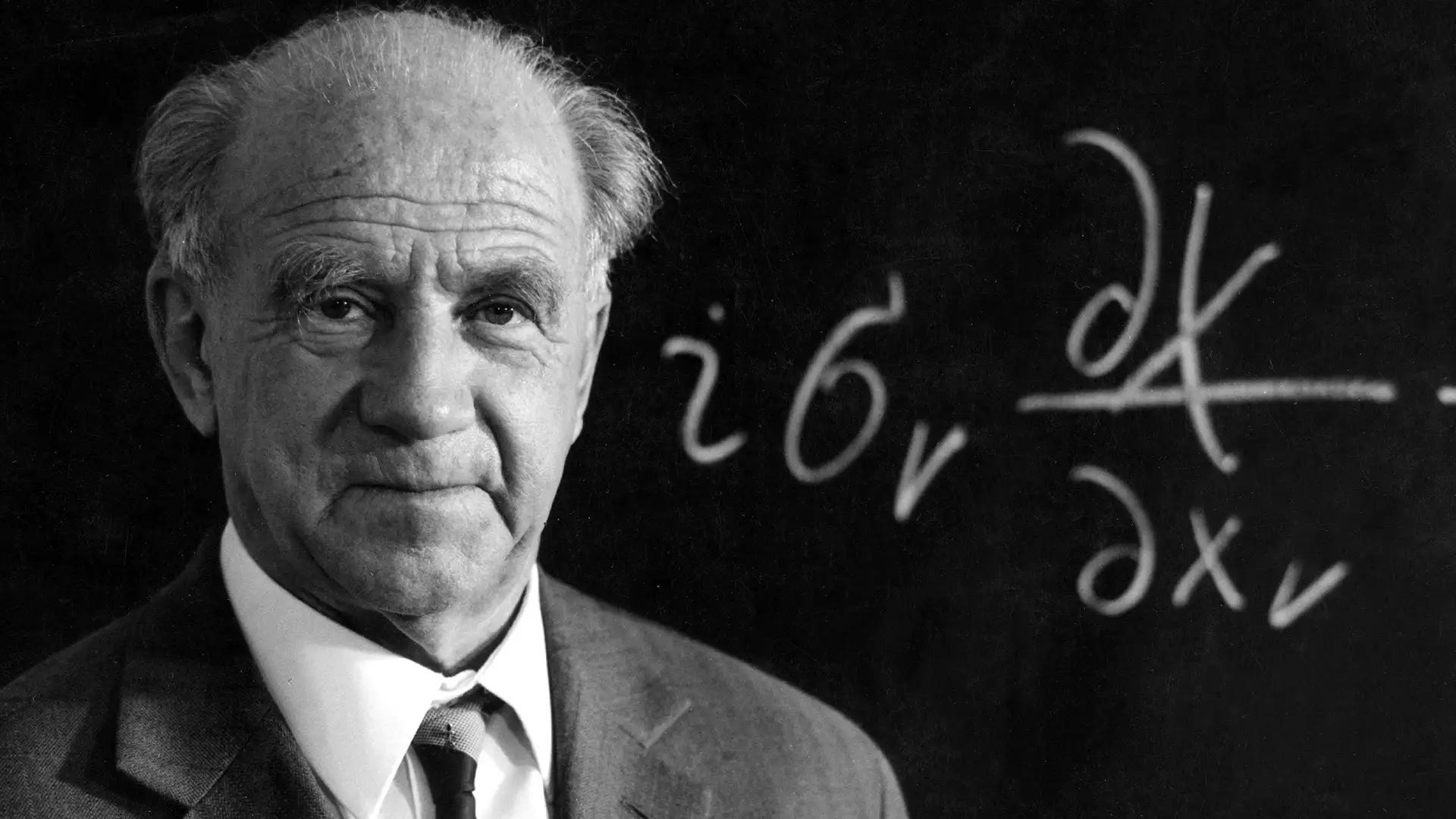
During the Second World War, their lives took very different paths. Oppenheimer led Los Alamos and the American effort that produced the atomic bomb, while Heisenberg became one of the central physicists associated with Germany’s nuclear research. The Americans became sufficiently concerned about what Heisenberg might know that the Office of Strategic Services sent someone to investigate him. Their choice was extraordinary: Moe Berg, a former Major League Baseball catcher who had become an American spy.
In 1944, Berg travelled to Switzerland to attend a lecture by Heisenberg carrying a pistol. His instructions included killing Heisenberg if what he heard convinced him that Germany was close to developing an atomic bomb. Imagine the assignment: a former baseball player sitting in a physics lecture, listening to one of the greatest theoretical physicists alive, trying to determine from his words whether he should kill him before he could help change the outcome of a world war.
Berg decided not to shoot. The episode later became part of the story told in the 2018 film The Catcher Was a Spy.

Long before an American spy sat in his lecture carrying a pistol, Heisenberg had been working on a different problem: how much can we actually know about the physical world?
In 1927, his answer changed physics.
A Tiny Bit of Quantum Physics
There is an old physics joke about Heisenberg. He is driving down the highway when a police officer pulls him over and asks, “Do you know how fast you were going?” Heisenberg replies, “No, but I know exactly where I am.” The officer tells him, “You were doing 120 kilometres per hour.” Heisenberg looks horrified and replies, “Great. Now I’m lost.”
At the scale of ordinary life, the joke makes little sense. A car can be at a particular location while travelling at a particular speed, and both can be measured with considerable precision. At the quantum scale, things become stranger.
Take an electron. We want to know exactly where it is and exactly how it is moving. Heisenberg’s relationship is written:
Δx · Δp ≥ ℏ/2
Stay with me. We can dismantle this until every symbol means something.
Start with Δ, the little triangle. It is the Greek letter delta. In mathematics and physics, delta is often used when we are interested in a change, difference or spread in something. You might, for example, see ΔT used for a change in temperature.
In this equation, x represents the position of the particle along a spatial direction. Position simply answers: where is it?
So:
Δx = the spread in possible positions
Imagine closing your eyes and trying to find a tennis ball inside a salad bowl. You do not know exactly where the ball is, but the area in which it could be hiding is tiny. Reach into the bowl and you will probably find it immediately. That is a small Δx.
Now put the same tennis ball somewhere in a living room and blindfold yourself. It could be beside the sofa, underneath the table, near the television or somewhere behind you. The ball has not become larger. The spread of possible locations has.
That is a large Δx.
Then comes p, which represents momentum. Momentum describes how much motion an object carries and depends on both mass and velocity:
p = mass × velocity
A tennis ball and a truck can travel at the same speed while carrying radically different momentum. You could stop the tennis ball with your hand. Trying the same experiment with the truck would end rather quickly because vastly more mass is moving.
So:
Δp = the spread in possible momentum
Now return to Heisenberg:
Δx · Δp ≥ ℏ/2
In ordinary language:
spread in where the particle could be × spread in its momentum ≥ a minimum set by nature
The ℏ, pronounced “h-bar,” is related to Planck’s constant. We do not need its numerical value. It simply puts a floor beneath how small the combination on the left can become.
Make Δx extremely small and you have pinned down position very precisely. Δp cannot simultaneously become arbitrarily small. Pin momentum down extremely precisely and the possible positions become more spread out.
Remember the speeding joke at the beginning part of this article? Now the joke makes sense. The police officer gives Heisenberg precise information about his motion and Heisenberg complains that he has lost precision about where he is. Cars do not behave this way at any scale relevant to a speeding ticket, but the joke captures the intuition.
Physical measurement also sometimes requires interacting with the thing being measured, and that interaction can alter its state. Physics calls this the observer effect. It is separate from Heisenberg’s uncertainty principle, but the two ideas give us something useful to carry forward: observation does not necessarily deliver unlimited certainty, and obtaining information can sometimes alter what happens next.
Congratulations. If you entered this section having never touched quantum mechanics, you have now survived position, momentum, delta, Planck’s constant and the Heisenberg uncertainty principle. That is enough graduate-level physics for one article.
Now we are going to do something much less responsible with it. We are going to apply it to humans.
Think of us as very large, very complicated electrons, except considerably more troublesome because electrons do not have egos, moods, WhatsApp, performance reviews, childhoods, hormones, mortgages or the ability to notice that someone is measuring them.
That last property changes everything.
Let’s leave the physics laboratory and put our two very complicated electrons inside an ordinary company. Call them Dave and Jenny.
The Executive Who Became Unhappy
Dave runs a business and Jenny is one of his strongest executives. She is normally vocal in meetings, challenges assumptions and has enough confidence around Dave to tell him when she thinks an idea is terrible.
Then Jenny becomes quieter.
Nothing has actually gone wrong at work. Her performance remains strong, and deadlines are being met. Perhaps she is tired. Perhaps something is happening at home. Perhaps she is simply having one of those weeks when a person has less to say.
Dave notices and asks, “Everything okay?”
“Yeah, everything is fine.”
Two days later Jenny contributes less than usual in another meeting. Dave asks again. “You’ve seemed a little disengaged lately. Everything good?”
Jenny is slightly surprised. “Yeah, honestly. Everything is okay.”
Now Dave has noticed it twice, so he begins paying closer attention. At the next meeting Jenny says “fine” to something she would normally debate. Afterwards Dave asks a more consequential question: “Jenny, are you still happy here?”
Jenny had not been thinking about leaving.
Now she is.
Why is Dave asking me that? Does he think I am disengaged? Is he unhappy with me? Has someone said something? Is something changing around here that I don’t know about?
Jenny enters the next meeting more cautiously because she now knows Dave is watching her engagement. Dave notices the caution and reads it as further confirmation of his original intuition. Dave becomes more watchful. Jenny notices. Conversations that were previously effortless acquire another layer.
A few weeks later a recruiter calls Jenny. Six months earlier she might have declined immediately. This time she takes the meeting.
Three months later, Jenny resigns.
Dave remembers those first quiet meetings and thinks, I knew it.
Jenny really was quieter. Dave detected the change correctly. What he did not know was why.
By acting on his explanation, he introduced new information into Jenny’s world. Her behavior changed partly because Dave was measuring it.
Dave thought he was measuring Jenny.
Jenny was measuring Dave right back.
Measuring What We Cannot See
Suppose another person has some internal state, which we will call S.
S = actual state
We cannot observe S directly. Nobody comes with a dashboard showing 72 percent happy, 18 percent tired, 7 percent irritated and 3 percent hungry. We infer internal states from tone, facial expressions, messages, response times and behavior.
Call what we observe O.
O = observed signal
Then:
O ≠ S
Someone can be exhausted and sound angry. Someone can be distracted and appear uninterested. An employee can be quiet because they slept badly. Observable behavior is an imperfect proxy for whatever is happening underneath.
Once we start asking questions, measurement becomes part of the system. Let M represent the intensity of measurement and D(M) the disturbance produced by measuring:
O = S + D(M)
Or simply:
what I observe = what was already happening + whatever my measurement caused
A tired person becomes unusually quiet. Someone asks whether everything is okay. The answer is yes. The question comes again: “Are you sure?” Mild irritation appears. The irritation is observed as confirmation that something really was wrong. More questioning produces defensiveness, which provides still more apparent evidence.
uncertainty → checking → disturbance → new uncertainty → more checking
Forty minutes later, two people can be discussing the health of an entire relationship or working arrangement that began with one person simply being tired.
Humans also interpret why someone wanted to measure them. An employee who hears “Are you still happy here?” has learned that someone in authority is contemplating the possibility that they are unhappy. That information did not exist inside the employee’s world before the question was asked.
False Positives Can Become Real Problems
People who navigate complicated environments often become very good at detecting weak signals. An employee who normally challenges everything suddenly says “fine.” A client who usually responds within ten minutes takes four hours. An investor who normally says “great” suddenly says “interesting.”
Some deviations contain real information. Others are noise.
Imagine a smoke detector sensitive enough to detect every actual fire while also sounding whenever someone makes toast. Its sensitivity is excellent, but its ability to distinguish danger from ordinary variation is poor.
Humans can develop the same problem. We notice every deviation and gradually begin treating detection itself as evidence that the detected event matters. Acting on a false positive can then change subsequent behavior:
False signal + intervention → real signal
Banks occasionally demonstrate this at enormous scale. Depositors hear rumours that a bank may be unstable. A few withdraw money. Others see the withdrawals and become concerned, so they withdraw too. The withdrawals weaken the bank, creating stronger evidence that something is wrong. Eventually a bank that was initially capable of meeting its obligations can face a genuine crisis because enough people behaved as though the crisis already existed.
Information changed behavior, behavior changed the system, and the changed system produced new information.
Dave and Jenny are doing the same thing on a much smaller scale.
Sampling Too Frequently
Observation can mislead even when we never interact with the person we are observing. We can simply observe too often.
Suppose we record New York’s temperature every ten minutes for a single afternoon. Every measurement may be perfectly accurate. Hundreds of legitimate observations still tell us surprisingly little about New York’s climate because we have sampled a highly variable system across a very short interval.
People fluctuate just as dramatically. Someone can be enthusiastic in the morning, irritated before lunch, distracted in the afternoon and cheerful again by dinner. Fatigue, hunger, stress, workload, sleep, hormones, an argument with someone else or a difficult phone call ten minutes earlier can all move behavior temporarily.
Observe an employee across six months and you may see someone consistently committed, thoughtful and productive. Observe the same employee every thirty minutes and the picture becomes wildly unstable. Enthusiasm, irritation, distraction, brilliance and boredom appear and disappear throughout the day. The employee has not necessarily changed. We have increased the resolution at which we are watching them.
Digital communication has pushed this sampling frequency to an extraordinary level. Someone has not replied at 10:00, so we check again at 10:15. Still nothing at 10:30. At 10:45 we check once more. Four checks can begin to feel like four pieces of evidence even though almost nothing has changed. We may still have only one observation: one message has not yet received a response.
I sometimes think about how radically different this is from the communication environment in which many of us grew up. When I first arrived in Toronto at 16, alone, I wrote letters to my family. A reply could take a month, sometimes two, to reach me by mail. That was only about two and a half decades ago. The people I loved could disappear from my informational field for weeks without that absence automatically becoming evidence that something had changed between us.
I wonder what that lower sampling frequency did to human relationships. You could miss someone intensely, worry about them and wonder what they were doing while having no mechanism for checking every fifteen minutes. There was no last seen, blue tick, read receipt, online indicator or location sharing. Uncertainty had to be tolerated because technology offered no alternative.
Today we can sample one another almost continuously. We know when messages arrive, when they are read, when someone appears online, when they post something and sometimes where they physically are. We have dramatically increased the resolution of human observation without necessarily increasing our ability to interpret what we see.
The clock can move while the evidence barely does.
Human Weather and Human Climate
New York might reach 31°C on a summer afternoon. The measurement is perfectly correct, but it tells us very little about the city’s climate.
Human behavior has the same temporal structure. A short message, distracted afternoon, difficult meeting, irritable Monday or unusually affectionate morning can all be real observations without representing fundamental changes in the person underneath them.
Trust, loyalty, friendship, commitment and love emerge through patterns. If someone is unusually quiet once, they were unusually quiet once. If they become unusually quiet every time a particular subject appears for six months, we have learned something.
Observe the pattern.
Time allows temporary fluctuations to disappear while persistent behavior survives. A strange afternoon becomes irrelevant three weeks later. A behavior that keeps returning becomes increasingly difficult to dismiss.
Stop Marking Humans to Market
Public companies are continuously marked to market. Every new piece of information can change the price even when the underlying business has changed very little.
People sometimes receive the same treatment. An enthusiastic morning raises our estimate of someone’s commitment. A short afternoon response lowers it. A missed call causes a selloff. An unexpectedly warm conversation produces a rally. A quiet dinner leads to a downgrade.
The underlying human being may barely have changed.
Analytical people can be particularly vulnerable because gathering information usually improves decisions. Businesses become easier to understand when we have more data. Scientific models improve through observation. Operational systems become more manageable when measured frequently.
People contain too much short-term variance for that instinct to transfer cleanly. Watch closely enough and everyone becomes volatile.
Digital technology has made marking humans to market almost effortless. Last seen. Read. Online. Typing. Active twelve minutes ago. Story posted. Message unanswered. Each becomes another tiny movement in our estimate of what someone thinks, feels or intends.
Yet commitment, loyalty, trust, friendship and love usually move much more slowly than the signals through which we try to estimate them. Someone can love you deeply and be irritated with you this afternoon. An employee can be committed to a company and hate Monday morning. A friend can value you enormously and have no desire to answer your message tonight.
Patience improves the measurement. Notice deviations without immediately promoting them into explanations. Allow another observation to arrive. Persistent signals eventually distinguish themselves from temporary noise.
Back to Heisenberg
We started with a 25-year-old physicist trying to understand an electron and ended up with Dave accidentally making Jenny consider quitting her job.
Heisenberg would probably object to what we have done with his physics, and rightly so. Human beings are not quantum particles, and the uncertainty principle does not provide an equation for determining whether Jenny is disengaged, whether a friend is upset or whether someone loves you.
But borrowing ideas across disciplines can expose structures that are otherwise difficult to see.
Heisenberg gives us limits to precision. The observer effect shows that measurement can disturb a system. Statistics reminds us that high-frequency observations contain noise. Human beings add feedback because we continuously interpret and respond to one another.
Dave observes Jenny. Jenny observes Dave observing Jenny. Dave responds to what he thinks he sees. Jenny responds to Dave’s response. Dave now has new evidence. Within a few iterations, neither person is responding entirely to the situation that existed at the beginning.
Sometimes we do not intervene at all. We simply observe so frequently that ordinary fluctuations begin looking like fundamental change.
None of this requires us to ignore weak signals. Perceptive people often notice genuine changes before everyone else does. Jenny really may be quieter. A friend really may be communicating differently. Someone close to us really may be behaving unusually.
Detection tells us that something changed.
It does not automatically tell us why.
A strange interaction can therefore remain a strange interaction for a while. Another observation will come, and then another. If something is genuinely changing, the pattern will eventually become difficult to miss. If nothing is changing, the original fluctuation will disappear into the much larger dataset of who that person actually is.
Perhaps our old communication technologies forced us to understand this better. When a letter took a month to arrive, we had no choice but to tolerate the space between observations. Today technology has removed much of the waiting while leaving human uncertainty intact.
We can now measure one another almost continuously.
We should probably become much more disciplined about what we conclude from those measurements.
Heisenberg taught us that there are limits to certainty even in the physical universe.
We probably should not expect the people around us to be easier to measure than an electron.
For the physicists reading this who are offended by my gross simplification of a Nobel Prize-winning piece of physics, I apologise. Although I suspect that if you have spent enough time genuinely immersed in physics, you already understand what I have done here: borrowed a beautiful idea, respected where the analogy breaks, and used it to think about something else.
If you are a pretend physicist, however, and have spent the article becoming increasingly agitated about my treatment of Heisenberg, I empathise.
And I apologise to you especially.
You probably suffered the most.
Conceptual relationship — not measured data
How Checking Changes the Signal
A conceptual feedback loop in which uncertainty prompts checking, checking can disturb behaviour, and that disturbance creates fresh uncertainty.
Uncertainty
An ambiguous change or incomplete understanding that invites interpretation.- Uncertainty → Checking: prompts
uncertainty → checking → disturbance → new uncertainty → more checking
Limits: Scope: a conceptual rendering of this article’s discussion, published 2026-09-14, only. This network is not measured data or a causal estimate. It contains no plotted figures; any dates, counts, timings, or other figures mentioned in the article are quoted by the author, not live or independently verified data.
Read the original articleFull figures and source notes
Quoted source text
uncertainty → checking → disturbance → new uncertainty → more checking
Information changed behavior, behavior changed the system, and the changed system produced new information.
Physical measurement also sometimes requires interacting with the thing being measured, and that interaction can alter its state.