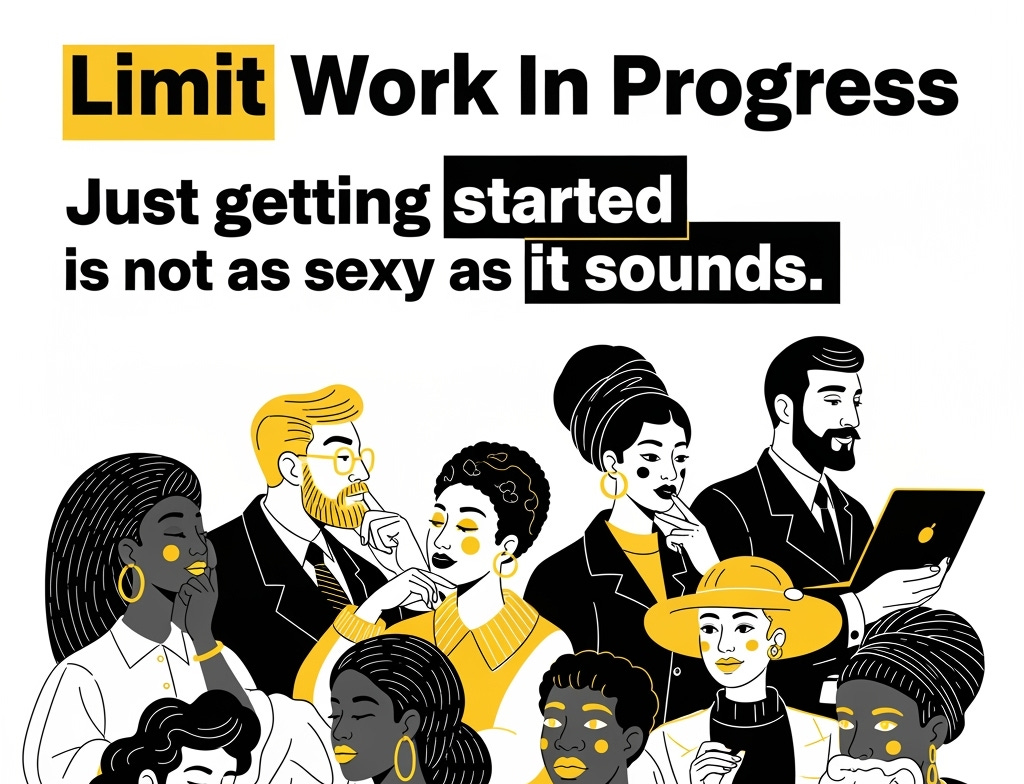
AI has made it easy to start. A proposal, a dashboard, a campaign can be generated in seconds. But starting is not finishing. Toyota understood this decades ago. They capped how much work could be in motion at once. Nothing new was started until something old was shipped or stopped. The discipline forced completion. Ten half-built features were worth less than one product that actually launched.
The stakes today are even higher. A recent study found teams using AI believed they were 20 percent more productive. In reality, they were 19 percent less productive. People thought they were faster when they were actually slower. Most of the time went into prompting, waiting, and fixing AI output. Less than half of AI suggestions were used without changes. Managers saw more drafts. Employees felt busier. The business saw decline.
The companies that avoid this trap in 2025 will do three things.
One project, one number
Procter & Gamble runs billion-dollar brands with this principle. Every initiative has a single measure of success. A sales process is judged by conversion rate. A marketing campaign is judged by attributed revenue. Not ten KPIs. Not a balanced scorecard. One project, one number. Features are motion. Metrics are progress.
Controlled, time-bound trials
UPS learned this through route optimization. They ran site pilots and measured miles per route. Only after proving routes were six to eight miles shorter did they expand. The result now saves 100 million miles each year. AI tools deserve the same treatment. Define success first. Test in controlled groups. Roll out only when the number improves.
This is where the danger hides. Are you finding yourself caught in the web of starting? The rabbit hole of prompting and watching lines appear on a screen? It feels like work. It feels like speed. But beginning is not the same as progress.
I have fallen into this while leading Kana TV. Faced with competition and pressure to innovate, it was tempting to keep starting. Not just new projects, but new strategies within projects. Different approaches. Extra variables. Each one created the illusion of forward movement. The only real progress was toward exhaustion. My teams and I paid for it with burnout and scattered focus. What looked like momentum turned into chaos.
From that, I learned to think slow, act fast. The slow thinking strips away distractions. It forces the hard questions about what truly matters. When you do act, it is decisive and focused. Speed comes not from having many initiatives in flight, but from reducing noise and finishing the few that matter. Today at Kana our big metrics are cost per hour and revenue per hour. Everything we choose to work on has to pass through those gates. If it does not move those numbers, it is noise.
A good friend of mine, the brilliant SelameKristos Belay, often reminds me of the old analogy: the patient is dead but the operation was successful. His point is simple. Do not confuse input KPIs with output KPIs. You can celebrate activity, but if the outcome is failure, the measurement was meaningless.
Do not mistake motion for progress
The temptation with AI is to generate endlessly. Starting is easy. Finishing is what matters. Cap how many things a team can carry. No new work until the old work is resolved. Progress comes from getting shit done and out, not drafting.
And now, more than ever, the barrier to starting is almost flat. With AI, anyone can generate more in seconds. But that should not be confused with progress. As Meta’s old poster put it, “Do not mistake motion for progress.” 2025 will be full of AI-driven activity. Most firms will ride the rocking horse. A few will move forward. The difference will be discipline.