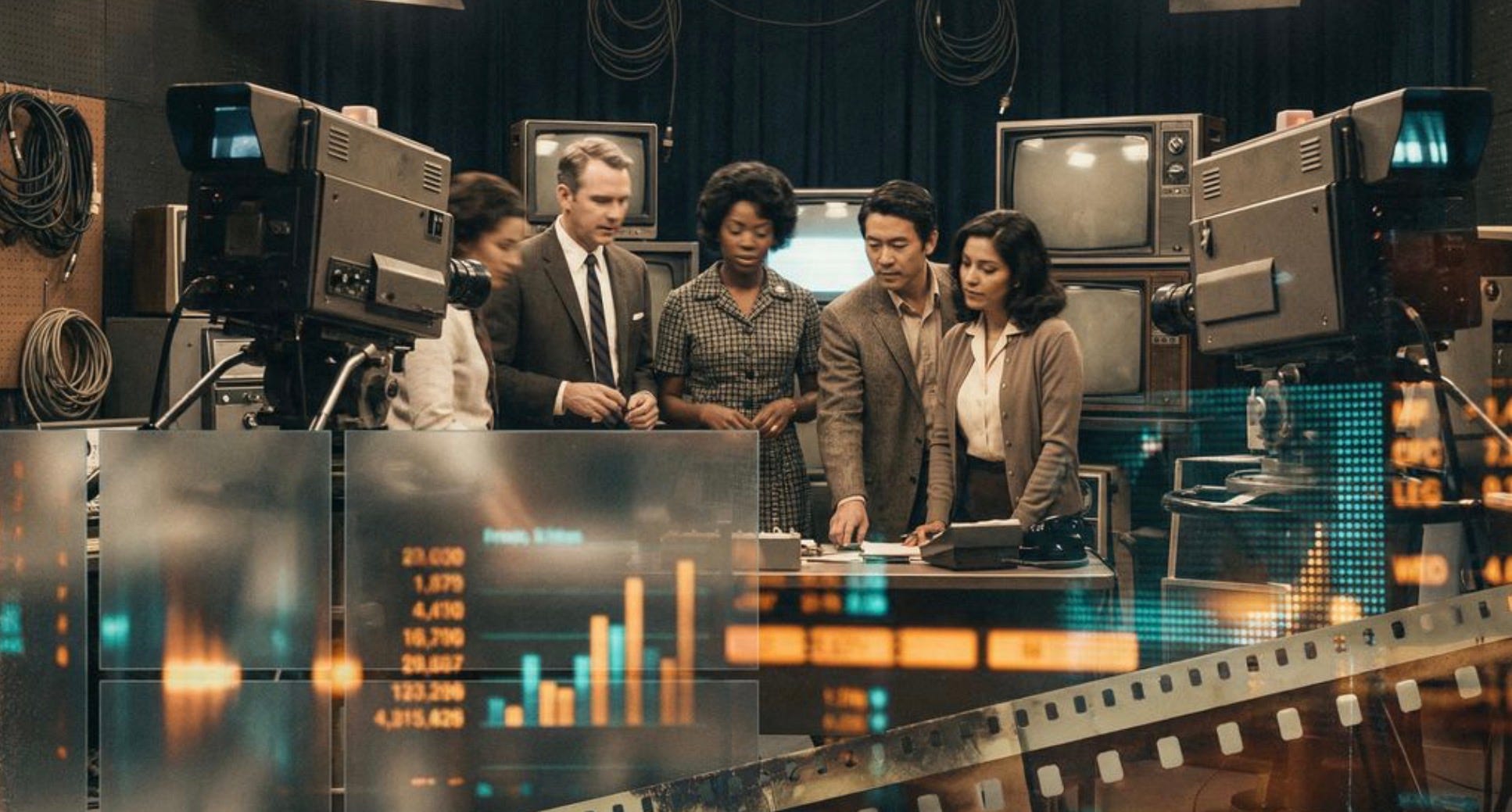
Some ideas reshape industries quietly. Some reshape them loudly. A few come from unexpected places.
This one came from the cable TV business.
You probably know EBITDA. Earnings Before Interest, Taxes, Depreciation, and Amortization. It’s the metric that shows up in every pitch deck, every investor presentation, every acquisition discussion. If you don’t know it, that’s reason enough to read on. But if you do know it, you’re in for a surprise.
Because while EBITDA existed in accounting textbooks, it was an obscure calculation that almost no one used.
Television changed that.
Let me tell you about one dude called John Malone. He’s responsible for the popularity of EBITDA. So much so that it became the standard way businesses are valued today. In fact, he introduced it to Wall Street!
The Backstory
Malone was an American media executive. But not your typical one.
Born in 1941 in Connecticut, he grew up during the golden age of American engineering. By the time he was 32, he had collected degrees the way most people collect business cards. A bachelor’s in electrical engineering and economics from Yale. A master’s in industrial management from NYU. A doctorate in operations research from Johns Hopkins.
He worked at Bell Labs, the legendary research center that invented the transistor and the laser. Then McKinsey, where he consulted on complex business problems. Then General Instrument, a company that made equipment for the cable TV industry.
His mind was wired for systems, optimization problems, and mathematics. He thought like an engineer, not a showman.
In 1973, at 32 years old, he joined a small, struggling cable company called Tele-Communications Inc. (TCI) as president and CEO. The company was heavily indebted and expanding rapidly into a frontier industry that barely anyone understood.
Cable TV in America was a physical infrastructure business. Companies laid coaxial cables underground or strung them on poles to deliver television channels directly to homes. This was subscription television before satellites, before fiber optics, before the internet. You paid monthly to receive dozens of channels through a wire connected to your house.
The business required building miles of cable networks, raising massive debt, and negotiating permits from every local municipality.
Over the next two decades, Malone turned TCI into America’s largest cable company. He became known as the “Cable Cowboy” for his aggressive deal-making and expansion strategy. But his real influence came from a way of seeing, not from a product he sold.
On paper, the business looked weak. The income statements were awful. Traditional profit-and-loss logic punished cable companies for the very investments required to build the industry.
Malone didn’t buy it. He kept asking one question:
If the customers keep paying every month, why are we calling this a bad business?

The World Before Malone
Imagine a bakery that buys expensive ovens. Accounting rules force the bakery to subtract a “loss of value” for each oven every year. Even if customers line up daily and the cash register never stops ringing, the official profit line might look thin or negative.
Investors look at that number and assume the business is weak.
That was cable TV. Huge upfront spending. Beautiful monthly cash flow. Terrible reported profit.
Investors judged the industry through a distorted lens.
The Shift
Malone made a simple move. He took the earnings calculation and stripped out everything that did not reflect daily cash from customers.
No interest. No taxes. No depreciation. No amortization.
Just cash from the core engine.
This became EBITDA.
The formula existed before Malone. Accountants knew about it. But it sat unused in textbooks and technical manuals. No one presented it to investors. No one built valuation models around it. No one made it the centerpiece of corporate strategy.
Malone did all of that. He popularized it, branded it, promoted it, explained it, and forced Wall Street to accept it. He talked EBITDA in every meeting, every investor call, every negotiation.
Investors eventually stopped looking at traditional profit. They started looking at the engine beneath it.
The moment they did, cable TV transformed from a “burdened, low-profit utility” into a “cash-rich growth machine.”
How Television Changed Accounting
When investors began valuing cable companies using EBITDA multiples, something subtle and radical happened:
Television forced Wall Street to adopt a metric that matched the economics of long-lived media assets.
Before cable TV, very few industries required such heavy, long-lived infrastructure: underground networks, signal towers, customer equipment, satellites. The old accounting system treated these assets as if they died in straight lines, year by year.
Television didn’t work like that. Cables in the ground delivered cash for decades. Content libraries monetized for years. Subscriber payments were predictable.
The traditional profit metric simply didn’t capture the vitality of media.
TV forced a rewrite of the lens.
EBITDA spread from cable TV to telecom, broadcast networks, satellite operators, film studios, music catalogs, theme parks, streaming services, hotels, airlines, manufacturing, logistics.
Anywhere you had heavy upfront costs and steady cash flow, EBITDA became the language.
Television was the first domino.
A Simple Example
Imagine a gym owner. He buys treadmills that cost a fortune. Accounting tells him to subtract a chunk of cost every year because the machines are “losing value.”
His profit looks tiny.
But every month people pay their memberships. The treadmills keep spinning. The cash is healthy.
Malone pointed at that healthy cash and said, “Judge the business by that. Not by the depreciation charges.”
Why It Worked
First, investors finally saw the real health of cable TV. EBITDA showed that the business generated strong cash even when profits looked weak.
Second, it explained why cable could handle debt. Predictable monthly payments meant lenders could relax.
Third, it unlocked consolidation. Cable systems merged rapidly because banks now understood the economics.
Fourth, it created a shared language. The entire media ecosystem (content, distribution, infrastructure) could be evaluated consistently.
Malone gave media a metric that matched its reality.
Where It Fails
Every tool has a shadow.
EBITDA hides how expensive the system is to maintain. It ignores the need to replace old cables, servers, or content libraries.
It ignores interest costs in a debt-heavy model. You can look healthy while being structurally fragile.
It smooths volatility. A TV studio can show great EBITDA while failing to produce future hits.
It encourages empire building. If your valuation multiplies with EBITDA, it’s tempting to acquire endlessly.
Streaming is dealing with these consequences now. EBITDA masked the true cost of global content wars for years.
Malone didn’t push a formula. He pushed a perspective.
Judge a business by the cash it generates from customers, not by accounting rules designed for different industries.
He forced investors to see media as a cash-flow machine rather than a profit-and-loss victim.
Television didn’t just entertain. It rewired investor psychology. It reshaped how businesses are judged. It exported a metric to industries far outside media.
An engineer with a doctorate changed accounting because he told a clearer story than the accountants did.
Once that story spread, the world followed.