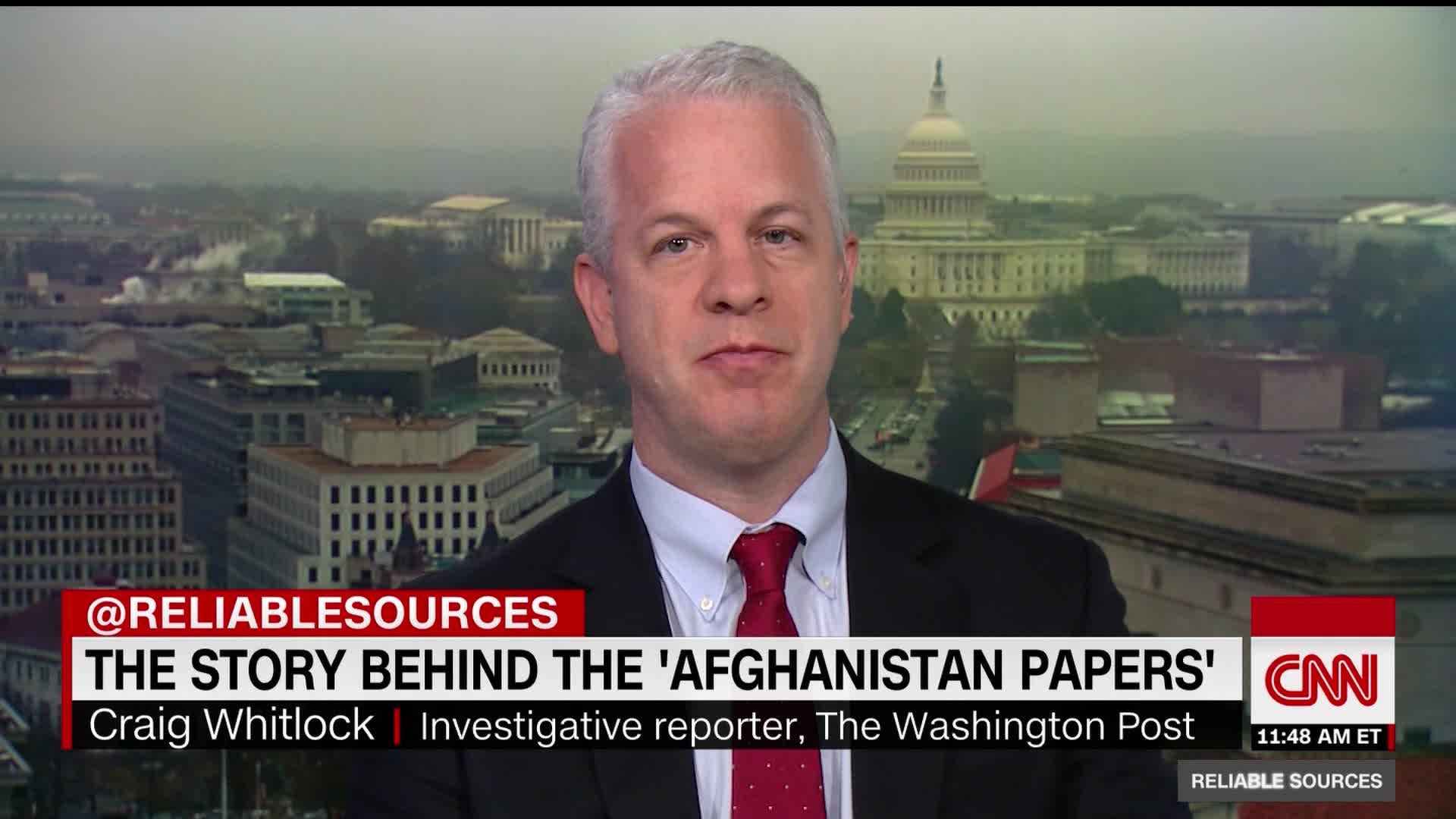
In December 2019, the Washington Post published what it called the Afghanistan Papers: thousands of pages of confidential government documents and internal assessments spanning nearly two decades of the American mission there. The documents captured, in candid language officials had never used in public, a wide gap between what the planning documents described and what the mission was actually doing. The strategy never lacked documentation. The assessments kept coming. The Taliban took Kabul in a matter of days in August 2021.
That is an extreme case, but the substitution it reveals is not extreme at all. It is now the operating mode of almost every organization on earth, and AI has accelerated it into something qualitatively different from what it was before.
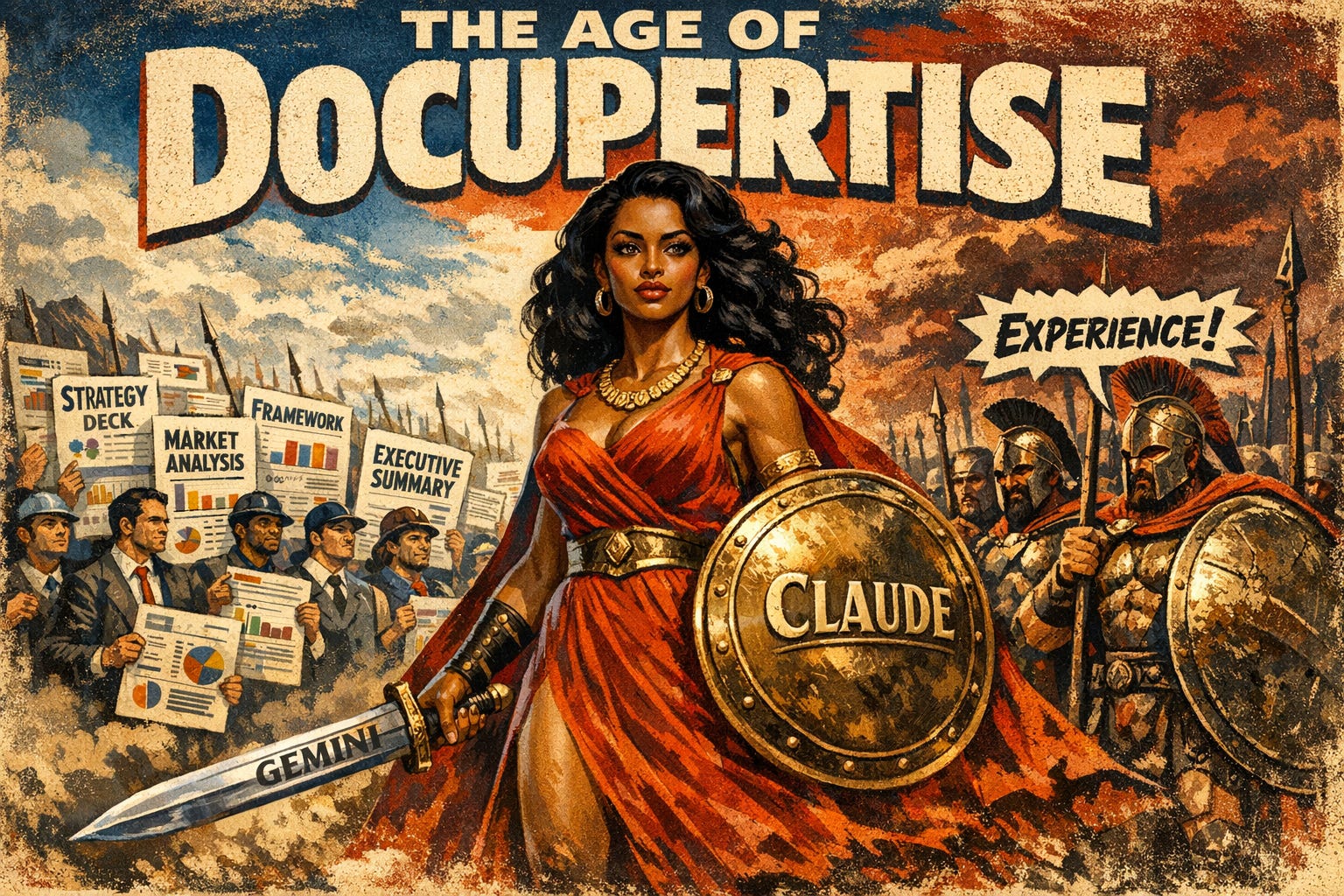
The word for what we are entering is Docupertise, a term I started using because I needed something to name what my own days have turned into. Working across so many organizations, I have quietly become two things: a document reviewer and a document producer. I read decks about the work and I write decks about the work, and somewhere in the last stretch I caught myself wondering when, exactly, I would get to do the work.
And then the harder thought arrived, which is that this is not happening only to me. It is happening at scale, to almost everyone, all at once. This link, that link. This Google Sheet. This Gamma deck. That Claude document with its tasteful “confidential” footnote and its little blue, orange, and red bar columns that all somehow look the same now. We have produced so much of it, so fast, that the volume has started to resemble something like decadence. Not the luxurious kind. The late-empire kind, where the production of artifacts becomes the main activity and the thing the artifacts were supposed to serve recedes quietly into the background.
Docupertise is the expertise that appears to exist because a document exists to represent it. Not expertise built through iteration, failure, and accumulated judgment in a domain. The artifact of expertise, produced without the underlying experience it was supposed to represent. The document that makes its author feel like an expert, and makes observers treat them as one, in the complete absence of the knowledge the document claims to contain.
Writing a credible strategy document once required something real. Domain experience. Organizational memory. The ability to synthesize competing pressures into a coherent argument. A consultant who had spent years in a sector produced documents that looked different, in substance if not always in polish, from documents produced by someone who had not. The effort required to produce them was a rough approximation of the knowledge required to hold the views they contained.
This friction served a quiet but important function. It was a filter. Not a perfect one, but a meaningful one. The sheer labor of producing a well-reasoned document limited how many people could produce one without earning the right to.
That filter is gone.
A large language model can produce a 40-page market entry strategy for a pharmaceutical company in under twenty minutes. A competitive analysis with citations. A go-to-market framework with segmentation and positioning. Formatted. Structured. Footnoted. And completely decoupled from any genuine understanding of the pharmaceutical market, the company, or the competitive dynamics it claims to analyze. The document looks like expertise. It carries all the cues that expertise used to produce. It exists, it is organized, it has a table of contents, and so many people will treat it as evidence of knowing.
Takeaway: The cost of producing a document used to be a tax that only knowledge could pay. AI repealed the tax. The document survives as a credential while quietly losing its connection to the thing it was meant to certify.
What the Brain Does With a Completed Document
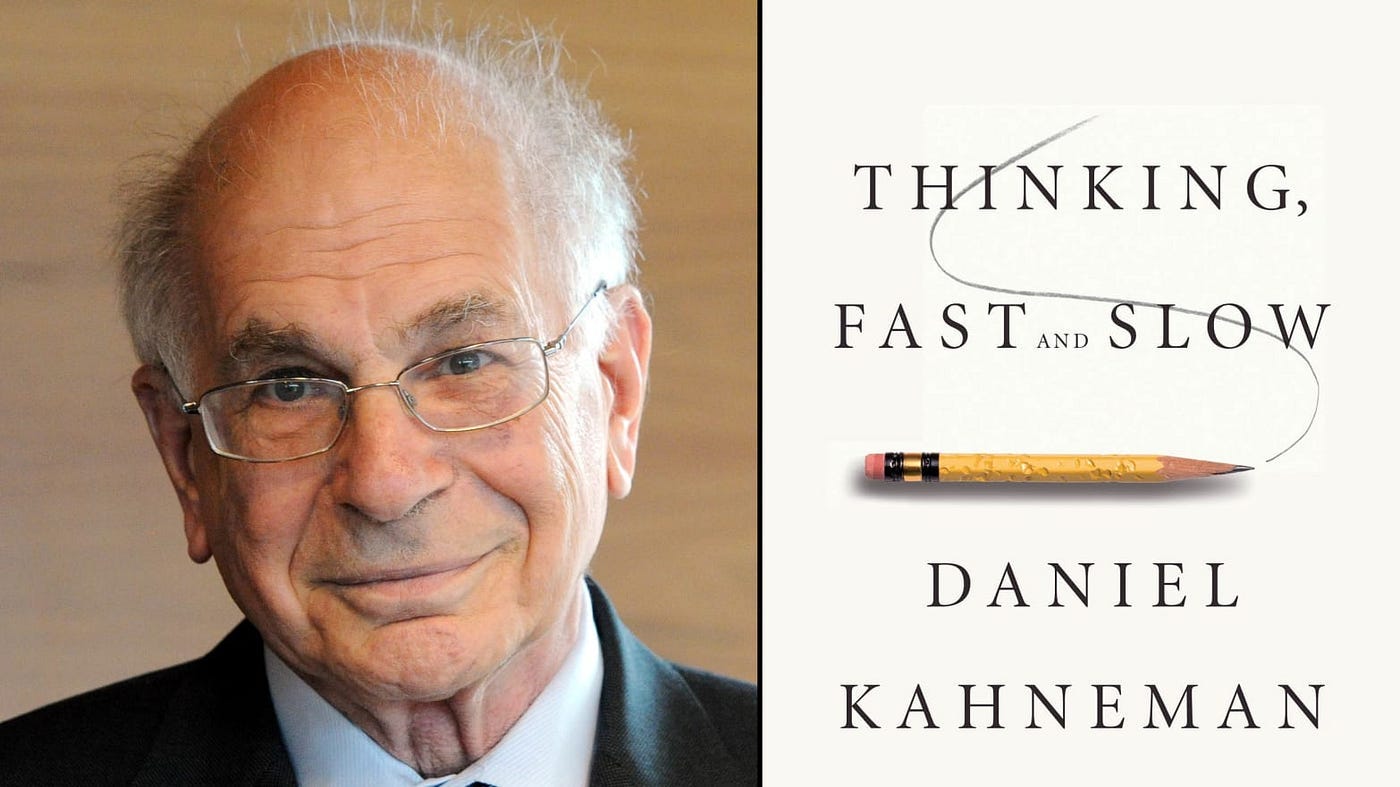
Daniel Kahneman described a cognitive shortcut he called attribute substitution: when the mind faces a difficult question, it often answers an easier one without noticing the switch. The hard question is “what should we do?” The easier proxy is “what document should we produce about what we should do?” The brain processes document creation as progress toward the answer. The sensation of forward motion is real. The forward motion itself is not.
Combine this with what behavioral researchers call completion bias, the disproportionate satisfaction the brain derives from finishing discrete tasks. Writing a document is completable. Strategy is not. Making a decision with real stakes and real accountability for the outcome is not. The brain prefers the completable version. It has always preferred it. What AI has done is make the completable version nearly costless to produce.
You prompt it into existence. The document arrives. The sense of accomplishment arrives with it. The expertise, as always, requires years.
The Math of Divergence
Before AI, producing many documents required spending real time in a domain. The production cost acted as a rough proxy for accumulated knowledge. Now that relationship has broken. Write it this way:
ΔE = α · D
Where ΔE is the gap between how expert someone appears and how expert they actually are, D is document volume, and α is how heavily the environment rewards documents over track record.
You read this as: the Docupertise gap grows in proportion to how many documents can be produced. With AI, D has no natural ceiling, and in most organizations, α has never been higher.
Three Hundred Documents
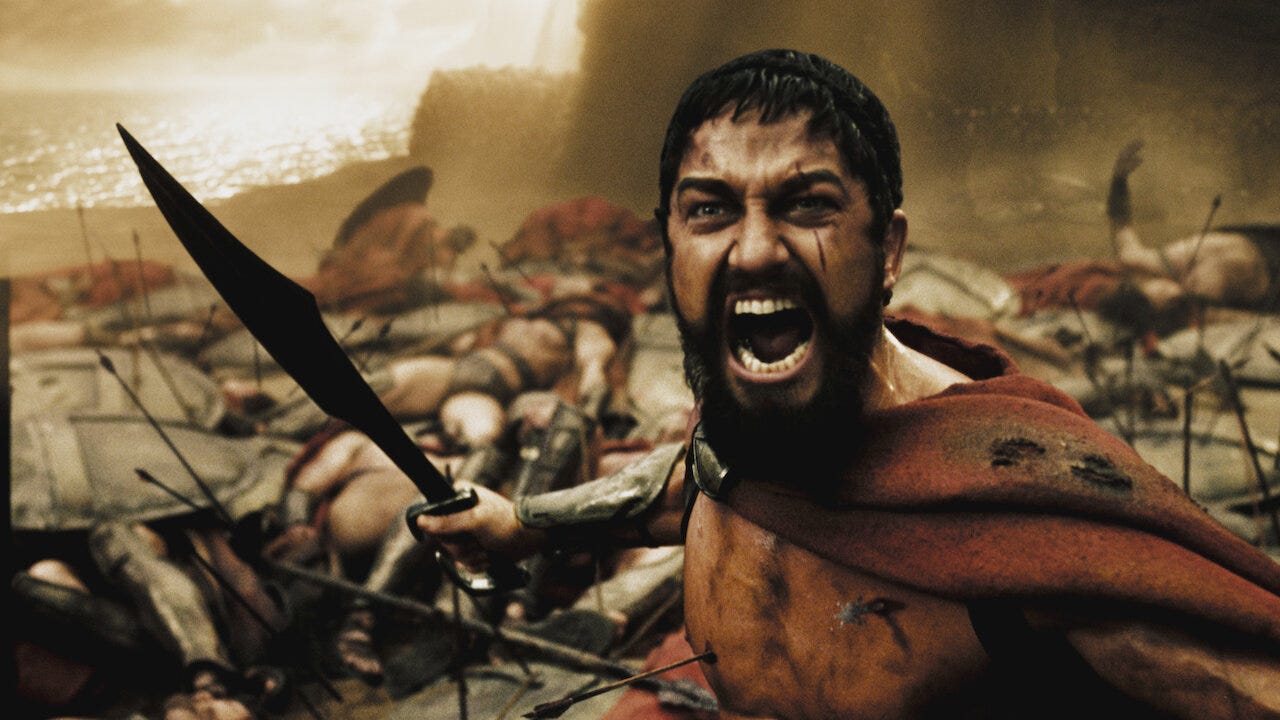
Or rather, Sparta 300. You might recall Gerard Butler, jaw set, abs inexplicably intact, leading three hundred Spartans through the narrow pass at Thermopylae with nothing but a spear, a shield, and roughly two decades of the most brutal military conditioning the ancient world had on offer. Men who had been fighting since they could walk. Who knew the terrain the way they knew their own breathing. Who brought to that battle not a plan, but a body of accumulated, battle-tested, bone-deep capability.
Now imagine Gerard shows up with a strategy deck. A competitive landscape analysis. A stakeholder alignment document. A risk register. All generated the night before. Beautifully formatted. A thorough table of contents. He has not fought a Persian in his life, but the documents are extremely well-structured, and he feels, genuinely, quite prepared.
Thermopylae does not go well.
Every actionable idea that enters an organization today faces a version of that same battle. The three hundred are not Spartans. They are documents. A strategy memo. A risk assessment. A stakeholder feedback synthesis. A process framework. A competitive review. An alignment document. A synthesis of the previous documents. Each one formally correct. Each one presenting itself as necessary work. Together, they form a wall through which very few decisions move cleanly.
This is not inefficiency in the ordinary sense. Inefficiency implies wasted motion toward a goal. Docupertise is different. It produces the appearance of forward motion while the organization stays largely stationary. The documents accumulate. The meetings multiply. The decks stack. And the actual decision, the one requiring someone to commit and be held accountable for a direction, gets deferred behind the next document.
Takeaway: A document is a map. A map drawn by someone who has walked the ground looks almost identical to one drawn by someone who has only read about it, right up until you have to use it to move.
The Dunning-Kruger Acceleration
In 1999, David Dunning and Justin Kruger published a finding that has stuck in the popular imagination: people with low competence in a domain tend to overestimate their competence, partly because they lack the knowledge required to recognize what they do not know. The effect has been argued over since, and some of the original size is probably a statistical artifact, but the directional truth holds. Genuine expertise tends to bring calibration. Ignorance tends to travel with confidence.
AI-generated documents short-circuit the calibration process that would otherwise correct this. A founder who has never built a sales function can produce a 35-page sales strategy document complete with territory maps, quota structures, and compensation models. The document reads like the output of someone who has done this before. The founder now feels, with some justification, like someone who has done this before. The gap between the document and the reality of execution will announce itself loudly at the first hire and catastrophically by the sixth month. But by then, the document has already done its cognitive damage. It has prevented the person from seeking the knowledge they actually needed, because the document already made them feel as if they had it.
This is the real cost of Docupertise. Not the documents themselves. The false confidence they produce in the people who made them, and the organizational deference they receive from the people who read them.
Organizations have responded to the document flood in ways that, with entirely reasonable intentions, deepen the problem.
The first response is to require more documents. If a strategy document is not convincing, ask for a follow-up analysis. If the follow-up raises new questions, commission a working group to produce a synthesis. If the synthesis is inconclusive, request that each function submit its own assessment for alignment. The organization interprets the problem of too many documents as a problem of insufficient documentation.
The second response is to hire people whose primary skill is producing well-structured documents rather than people with domain experience who can produce rough but accurate ones. The latter group’s documents often look messier. They contain more caveats, more acknowledged uncertainty, more specific constraints that do not fit neatly into a framework. The former group’s documents look authoritative and professional and are, in many critical respects, constructed out of organized air.
Procurement panels score polished decks higher. Boards are impressed by comprehensive appendices. The incentive selects relentlessly for the appearance of rigor over the substance of it.
What Breaks the Loop
The antidote to Docupertise is not fewer documents. It is accountability structures that force the gap between document and reality to close faster.
Two mechanisms accelerate this.
The first is decision ownership with named consequences. Not a strategy endorsed by a working group, attributed to no one in particular, reviewed by a committee. A decision made by a named person who will be assessed on what happens after. When accountability is personal and forward-looking, the incentive to hide behind an impressive-looking document weakens considerably. The document stops being a destination. It becomes a liability if it does not reflect genuine judgment.
The second is time compression between document and test. The longer the gap between a document’s claims and the moment those claims are tested against reality, the longer Docupertise can operate invisibly. Organizations that move from document to experiment, from strategy to prototype, from framework to working version in weeks rather than quarters will discover faster what the document got wrong. The faster the feedback loop, the shorter the half-life of performed expertise.
A genuine expert writes a document because they need to communicate what they know to someone who needs to act on it. A Docupertise practitioner writes a document because the document is what action looks like in their organization. The first document ends with a decision. The second one ends with a request for another document.
Takeaway: You cannot inspect your way out of Docupertise, because the fake and the real read identically on the page. You can only test your way out. Reality is the only reviewer that cannot be impressed by formatting.
At this point a reasonable person asks: if AI-generated documents look like real expertise and organizations cannot reliably distinguish them, what exactly is the harm in having more of them?
The harm is the opportunity cost of decisions not made.
Every organization has a finite amount of attention. The quantity of that attention spent reviewing documents whose primary function is to simulate rather than inform is attention not spent on the harder work: speaking to customers, running experiments, making judgment calls with incomplete information, learning from what happened. Docupertise does not just produce bad documents. It displaces the activities that would have produced real knowledge in their place.
And it is self-reinforcing. The more documents an organization produces, the more it comes to believe that documents are how progress is made, the more it structures its processes around document production, the harder it becomes to introduce the idea that maybe, sometimes, you should just try the thing and find out.
Gerard Butler did not defeat the Persians with a deck. He held that ground with thirty years of being made ready for it. Most organizations right now are sending the deck.
Are you overcrediting those who show Docupertise rather than Expertise?
STRATEX by Naz explores the behavioral science, cognitive research, and market dynamics underneath the decisions organizations think they are making freely. Subscribe to receive new essays directly.