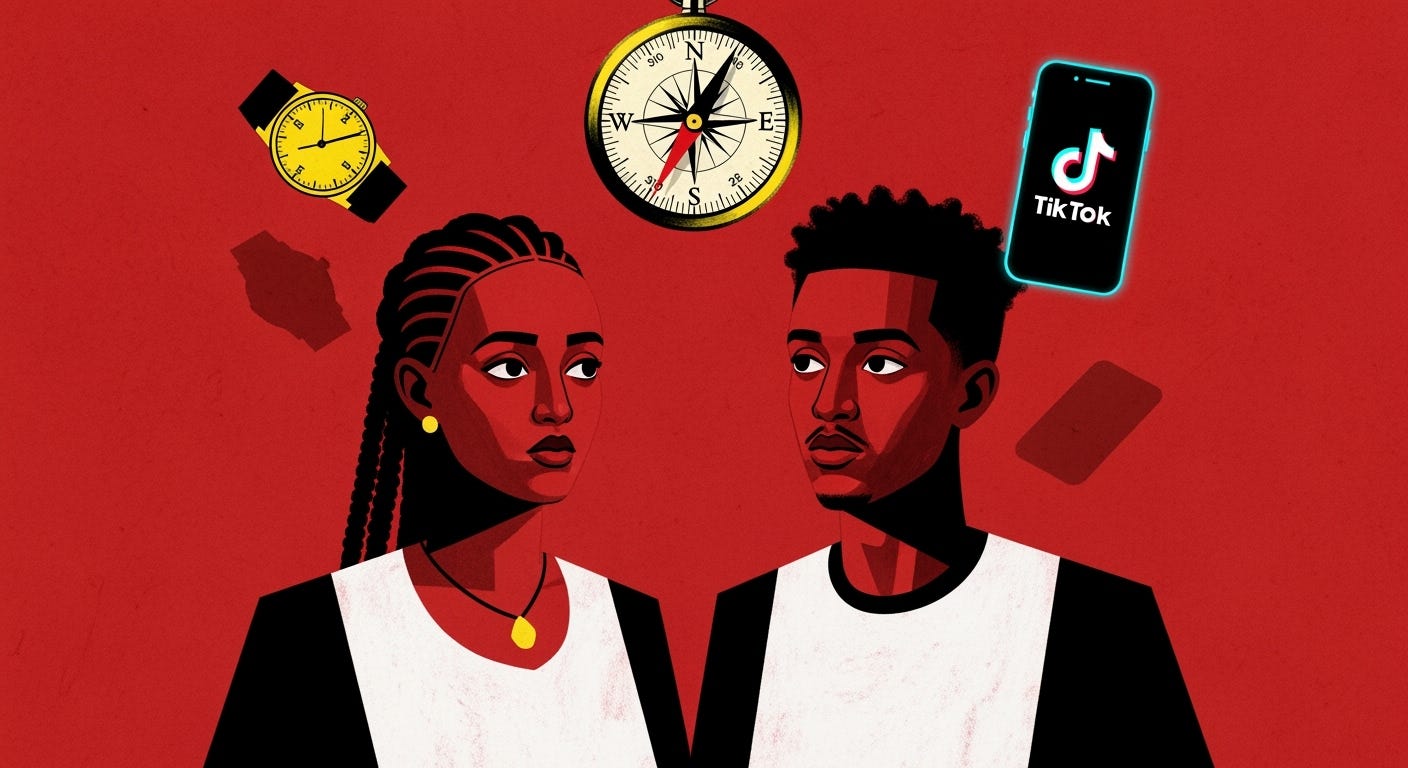
Singapore. 2021. A 17-year-old named Nick Lee spends his evenings watching videos. He discovers the Christchurch massacre footage and manifesto. The algorithm, recognizing his engagement, feeds him more. Videos about the “great replacement theory.” Clips suggesting his own country is under threat. Content designed to provoke fear, anger, belonging.
Within months, Lee has detailed plans to attack five mosques, kill 100 people, and die in the process. When authorities arrest him, they find a teenager who was radicalized almost entirely online—no extremist network, no physical recruitment, just a 17-year-old and an algorithm that learned what held his attention.
Indonesia, 2024. A 19-year-old college student plots a suicide bombing targeting houses of worship in East Java. Arrested during planning stages. Radicalized online.
Between October 2023 and June 2024, nearly two-thirds of terrorism-related arrests in Europe were teenagers. Security analysts report that radicalization processes that once took months or years now happen in days or weeks—largely due to short-form online propaganda optimized for maximum psychological engagement.
What if this isn’t about terrorism? What if terrorism is just the most visible symptom of something larger—a race between algorithmic indoctrination and traditional cultural transmission, where the algorithm is winning?
What if the problem isn’t TikTok itself, but when it arrives?
Ethiopia’s median age is 19.1 years. Nigeria’s is 18.1. Uganda’s is 16.9. Half these populations haven’t reached full adulthood. Now compare that to the United States at 39 years, or Europe averaging above 40, or China at 40.
What happens when the same technology—engineered in California or China, for maximum psychological engagement—hits populations at such radically different developmental stages?
When TikTok launched globally in 2017, Ethiopia’s median age was around 18. What does it mean when your formative years coincide exactly with platforms designed to capture and hold attention at any cost? When you’re absorbing global narratives before local institutions can provide context?
In Nigeria, young people spend 3 hours 49 minutes daily on social platforms. Median educational attainment? Below 10 years. What happens when the medium arrives before the media literacy? When Silicon Valley algorithms are shaping worldviews while local schools struggle with basic resources?
Consider Kenya’s Gen Z protests in 2024. Organizers used TikTok to mobilize thousands without forming committees or appointing leaders. The government hired social media experts to counter with #RutoDelivers. Security forces couldn’t identify who was organizing because there was no one to identify—just algorithmic amplification of organic discontent, spreading through duets and lip-sync challenges.
TikTok played a role here, yes. But was it empowerment? Or was it something else—a generation learning to organize political movements through viral content before learning civic participation?
Radicalization is dramatic. It makes headlines. What about the quieter erosion?
What if traditional African values—respect for elders, communal responsibility, religiosity, delayed gratification, hard work—are being systematically replaced by algorithmically-curated Western individualism before families and communities can transmit their own culture?
In surveys across Nigeria, Kenya, and Ghana, young people increasingly describe traditional African values as “archaic,” “timid,” “of no relevance.” They pursue fashions and values they describe as alien to their own normative customs. They see their traditional life as something to escape, not preserve.
Who taught them this?
Their parents didn’t teach them to reject communal values for individualism. Their elders didn’t teach them that hard work was less important than getting rich quickly. Their religious leaders didn’t teach them that traditional practices were demonic.
But for 3 hours and 49 minutes every day, the algorithm did.
What if we’re watching, in real-time, the first generation whose cultural values are formed more by recommendation algorithms than by family, community, and local tradition? What if the perverse scale of ideological penetration through these platforms is outpacing traditional education by an order of magnitude?
Brazil, with a median age of 34.8, absorbed the same technology but into a population that had already spent decades developing civic habits and cultural grounding. Even there, research shows frequent social media use correlates with decreased self-esteem among young adults.
So what might these effects look like in populations with half the developmental preparation? What happens when teenagers in Addis Ababa absorb global grievance narratives and lifestyle expectations before they’ve learned local civic participation? When youth in Lagos form worldviews through platforms designed to maximize engagement—not wisdom, not cultural continuity, just engagement?
Some countries recognized the danger early.
China, despite a median age of 40, implemented strict controls from the beginning. Chinese users access Douyin, not TikTok—with content moderation aligned to national priorities. The algorithm still operates, but within parameters set by the state to reinforce, not replace, cultural values.
India, median age 29, initially embraced everything. Then in 2020, they banned TikTok overnight. Over 200 million users cut off immediately.
But did it work? Those 200 million users didn’t disappear. They moved to Instagram Reels, YouTube Shorts, domestic alternatives. Young Indians kept consuming short-form algorithmic content, just from different sources. The fundamental dynamic—immature media literacy meeting sophisticated engagement algorithms—remained unchanged.
What if platform-specific bans miss the point entirely?
The question isn’t TikTok versus Instagram. It’s not even about any specific platform. It’s about whether societies can afford to have their youngest generations’ values and worldviews shaped by algorithmic content optimization before those generations have built the capacity to contextualize what they consume.
Are we resilient enough to hold onto the fabric of our cultures?
In European cities, security services now warn about the “TikTok-ification” of extremist content—making ideology viral through aesthetics, brevity, and emotional manipulation. They call it “jihadi cool.” Researchers document how algorithms create “radicalization pipelines” that slot users into categories and reinforce ideas with increasing intensity.
But extremism is just the obvious case. What about the less dramatic but perhaps more consequential shifts?
What happens when an entire generation in Uganda—half the population under 17—encounters global consumer culture, Western relationship models, individualistic success narratives, and algorithmic outrage before encountering their own cultural inheritance at depth?
Is new culture forming? Almost certainly. Culture has always evolved through contact. But this is different. This isn’t gradual cultural exchange through trade routes and migration. This is algorithmic cultural replacement at a speed that outpaces any society’s ability to transmit its own values intergenerationally.
Traditional education takes years. Cultural transmission happens slowly, through stories and rituals and daily example. Building media literacy, civic knowledge, critical thinking—these are generational projects.
But TikTok’s algorithm optimizes in real-time. It learns what captures attention in seconds. It can pipeline a 17-year-old from curiosity to extremism in weeks.
What if the fabric isn’t just slipping away slowly? What if it’s being systematically unraveled at a pace no traditional institution can match?
China and India, despite vastly different approaches, both recognized that timing matters. That developmental stage matters. That you can’t let the most psychologically sophisticated engagement technology in human history have unrestricted access to populations in their most formative years.
But China chose comprehensive control—an authoritarian solution unavailable and undesirable to democratic societies. India chose platform-specific bans—and discovered that blocking one app while leaving the underlying dynamic unchanged achieves little.
So what’s the third option?
What if countries with median ages under 20 could choose strategic pacing—not permanent censorship, but intentional delay? What if they invested the time in media literacy, critical thinking, civic education, and cultural transmission before allowing unrestricted algorithmic access to developing minds?
This isn’t about rejecting technology or preventing cultural evolution. It’s about sequencing. It’s about asking: can we afford to let the algorithm teach values before the family does? Can we let Silicon Valley shape identity before local community can?
What if Ethiopia, Nigeria, Kenya, Uganda—what if they still have a choice?
What if the question isn’t whether young nations will encounter algorithmic media, but when? What if timing isn’t everything, but it’s something we can still control?
The evidence is stark: countries that encountered social media with mature populations weathered the disruption differently than those hit during their most vulnerable phase. China chose comprehensive control. India chose selective restriction and discovered its limitations. Ethiopia, Nigeria, Kenya, and Uganda have largely chosen acceptance—or perhaps, acceptance has chosen them.
But what if it’s not too late to ask whether timing is destiny—or whether destiny can still be timed?
What if we’re not powerless spectators watching culture slip away, but decision-makers who can still choose when to open the gates? What if the race between algorithm and tradition isn’t over, but we’re simply not running?