
Every autumn, the bar-tailed godwit, a relatively unremarkable-looking shorebird, undertakes one of the most extraordinary journeys in the natural world. Some populations migrate from Alaska to New Zealand, crossing more than 12,000 kilometres of open ocean without stopping to feed, drink, or rest on land. To appreciate the scale of this journey, imagine boarding a nonstop flight from New York to Dubai, a distance of approximately 11,000 kilometres that takes a commercial aircraft around 13 hours to complete. Now imagine a bird travelling even farther, entirely under its own power, remaining airborne for approximately eleven consecutive days without a single opportunity to land, feed, or replenish its energy.
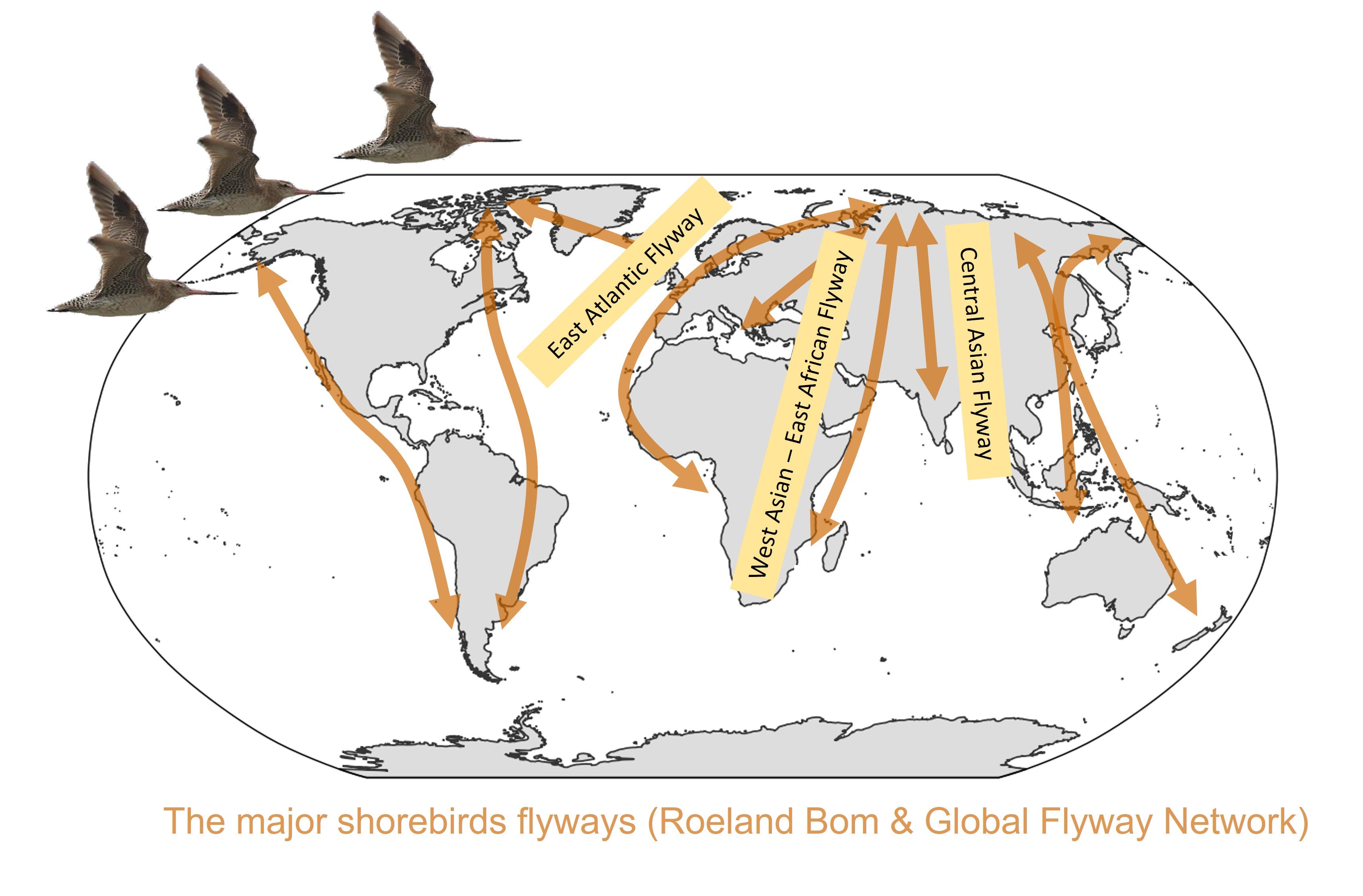
Before departure, the godwit undergoes a remarkable physiological transformation. It accumulates enormous reserves of fat, increases the capacity of certain organs involved in processing food, and prepares its body for an undertaking that would ordinarily seem impossible for an animal of its size. Once airborne, it begins consuming those reserves, while its physiology adjusts to the demands of sustained flight.

Imagine, for a moment, that we placed a corporate finance executive in charge of preparing this bird for its migration.
The executive might begin by examining its weight, identifying what appears to be excessive fat accumulation, questioning the necessity of maintaining certain organs at their current size, and proposing a leaner operating model. After all, additional weight requires energy to carry, and energy consumption is an expense. A lighter bird should, in principle, be more efficient. The resulting spreadsheet might show impressive improvements in the ratio of energy consumed to body mass.
There would be one rather serious problem. The bird might never reach New Zealand.
The fat that appeared excessive was fuel for the journey. The temporary enlargement of certain organs supported the accumulation of that fuel. What looked like inefficiency when examining the bird at a particular moment was essential to its survival over the entire migration. Nature had optimized the animal for a journey, with all its uncertainties and demands, rather than for the lowest possible energy expenditure at the point of departure.
There is something rather instructive about this biological arrangement, particularly when we consider how modern businesses are managed, valued, acquired, restructured, and occasionally dismantled.
I have spent much of my professional life working across businesses, investors, shareholders, management teams, and financial institutions. I have led an acquisition involving substantial due diligence, worked through countless financial scenarios, examined operating models, defended budgets, evaluated investments, and participated in the familiar negotiations over what a business should spend, save, eliminate, or preserve. These experiences have given me considerable appreciation for financial discipline, particularly because the consequences of poor financial management are rarely theoretical. They affect employees, shareholders, suppliers, and the continued existence of the business itself. Yet I have also had the unfortunate experience of repeatedly confronting the harsh realities of short-termism, watching decisions that appeared financially sensible at the time gradually produce consequences that were far more expensive, and sometimes considerably more difficult to reverse. I have seen how the pressure to deliver immediate results can narrow the horizon of decision-making, how the urgency of the next financial period can overshadow the needs of the next several years, and how organizations can find themselves repeatedly responding to problems that earlier decisions helped create. Perhaps what has struck me most is how often these consequences arrive without any meaningful recognition of their origins, as though the deterioration were an entirely new development rather than the accumulated result of choices made along the way.
Yet the longer I have worked across these different stakeholders, the more I have become interested in a peculiar contradiction. We have developed extraordinarily sophisticated methods for measuring how much money an organization spends, while remaining comparatively limited in our ability to measure how much future productive capacity disappears when that expenditure is removed.
And I wonder whether some of the corporate difficulties we are witnessing today are the accumulated consequences of that contradiction.
The Paradox of the Perpetually Unprofitable Business
Over the past several decades, modern financial markets have become remarkably accommodating of businesses that do not consistently generate profits. Venture-backed companies can operate at substantial losses for years, supported by investors who believe that growth, market penetration, and scale will eventually produce attractive returns. Publicly traded companies can command considerable valuations despite reporting losses, provided investors believe their future earnings will justify those valuations. Private equity introduces another set of dynamics, often involving acquisitions financed partly through debt, followed by efforts to improve operations, increase earnings, and ultimately realize investment returns.
These arrangements are economically different, and losses themselves are not necessarily evidence of poor management. A company investing heavily in infrastructure, research, or customer acquisition may rationally sacrifice current earnings to create future value. Equally, a mature business can improve its long-term prospects by eliminating wasteful expenditure. The difficulty begins when financial expectations become increasingly detached from the underlying productive capabilities of the business, or when temporary improvements in reported performance are mistaken for durable improvements in economic health.
Consider what happens when a company begins struggling to meet its financial targets. Management naturally examines its cost structure, identifying opportunities to reduce expenditure on labour, maintenance, training, customer service, technology, or physical infrastructure. Some of these reductions will be entirely sensible, particularly where resources have been poorly allocated. Others may appear sensible because their consequences are difficult to observe immediately. The savings become visible in the next financial reporting period, while the operational damage, if any, develops gradually through changes in customer behaviour, employee competence, supplier relationships, and organizational adaptability.
Eventually, the business may experience declining sales, deteriorating customer satisfaction, or an inability to respond to competitors. Management then announces another restructuring, accompanied by renewed commitments to cost discipline, operational efficiency, and improved profitability.
What interests me is the possibility that some of these restructurings are responses to deterioration that earlier rounds of optimization helped produce.
What Can an Empty Store Tell Us About a Business?
I recently spent several days walking through different parts of San Francisco, observing the city, its architecture, its extraordinary geography, and the commercial life taking place along its streets. Something caught my attention as I passed several large retail establishments. These were substantial commercial spaces, occupying what appeared to be valuable real estate, yet on repeated occasions they seemed remarkably empty. I would pass a store in the morning, return through the same area later, and find relatively little evidence of customer activity.
Of course, it would be intellectually careless to conclude that these businesses were unprofitable simply because I happened to observe them during quiet periods. Retail performance varies considerably by time of day, day of the week, season, location, and merchandise category. Some stores generate substantial revenue through a relatively small number of high-value transactions, while others serve purposes beyond immediate sales, including product discovery, customer acquisition, online order fulfilment, and brand visibility.
Nevertheless, repeated observations of large commercial spaces with limited apparent customer activity provide a reasonable starting point for investigation. They raise questions about sales productivity per square metre, occupancy costs, labour requirements, inventory turnover, and the contribution of individual stores to the wider business. Those questions become particularly interesting when examined alongside the structural changes affecting physical retail, including the migration of transactions online, changing consumer habits, and the economic consequences of maintaining extensive physical networks.
A store may remain open because its lease obligations make closure expensive, because it supports online sales, because management expects future recovery, or because its presence contributes to the economics of a larger retail network. Some stores may indeed be losing money, while others may be profitable despite appearing quiet. Determining which explanation applies requires transaction data, operating costs, and an understanding of how each location contributes to the entire business.
But my curiosity extended beyond the individual stores. I began thinking about the financial histories of the companies operating them, the successive management teams that had pursued growth and efficiency, the investments made and subsequently withdrawn, and the organizational capabilities that might have been accumulated or depleted along the way.
It is possible for a business to remain commercially visible long after the economic assumptions that originally justified its existence have weakened. It is equally possible for a business to appear financially healthy while gradually losing the capabilities required to remain competitive.
The latter possibility is particularly difficult to detect because it can occur during periods of improving reported profitability.
When the Spreadsheet Begins to Look Better
Imagine a retail company operating 1,000 stores, each generating approximately $2 million in annual revenue. Across the network, the business produces $2 billion in sales and, at an operating margin of 5%, approximately $100 million in operating profit.
Management identifies opportunities to reduce annual expenditure by $60 million, perhaps through a combination of staffing adjustments, reduced maintenance, lower training budgets, and changes to customer service. Assuming revenue remains unchanged, operating profit rises from $100 million to $160 million, representing a remarkable 60% improvement in earnings. The operating margin increases from 5% to 8%, and the executive team can present a convincing account of improved efficiency, stronger financial discipline, and enhanced shareholder value.
But suppose the reductions have consequences that take time to materialize. Customers begin encountering longer queues, less knowledgeable employees, poorer merchandise availability, or stores that are gradually becoming less pleasant to visit. Initially, many customers continue shopping because their habits are established, the locations remain convenient, and competing alternatives may require additional effort.
Over several years, however, customer behaviour begins changing. Some customers visit less frequently, others shift purchases online, and a proportion migrate to competing retailers. Suppose annual sales eventually decline by 10%, equivalent to $200 million, and that each dollar of lost revenue would previously have contributed 30 cents toward covering fixed costs and generating profit.
The resulting reduction in annual contribution profit is approximately $60 million, enough to eliminate the original savings.
The company has returned to roughly its original operating profit, but now generates less revenue, serves fewer customers, and may have lost organizational capabilities that will be expensive to rebuild.
This is a hypothetical illustration rather than a universal prediction about cost reductions. Some savings produce lasting improvements without damaging customer experience, and some businesses genuinely require substantial restructuring to survive. Nevertheless, the example demonstrates an important characteristic of financial decision-making: the benefits of reducing expenditure are often immediate and measurable, while the associated costs can be delayed, dispersed across the organization, and difficult to attribute to their original causes.
An executive may receive recognition for delivering improved earnings long before the consequences of those decisions become visible. By the time the deterioration appears in the financial statements, the organization may be operating under a different management team, a different ownership structure, or an entirely different strategic narrative.
The original decision can therefore appear successful within the period over which it was evaluated, even if its longer-term economic contribution was negative.
What Happens When We Optimize a Living System?
This brings us back to biology, and to a characteristic shared by living organisms and human organizations.
Neither can be understood adequately by examining its components in isolation. The survival of an organism depends on interactions among its organs, metabolic processes, environmental conditions, and available energy reserves. Similarly, the performance of a business emerges from interactions among employees, customers, suppliers, technology, institutional knowledge, financial resources, and the wider competitive environment.
These relationships are rarely proportional. Removing 10% of an organization’s workforce does not necessarily reduce its productive capacity by 10%. In some circumstances, the reduction may have little effect because the organization contains genuine redundancy. In others, it may produce consequences far greater than the number of positions eliminated, particularly when experienced employees maintain relationships, knowledge, and coordination mechanisms that are disproportionately important to the functioning of the wider system.
An experienced employee may appear expensive when assessed against a narrow departmental budget, yet that person may prevent operational failures, maintain valuable customer relationships, train younger colleagues, or resolve problems that would otherwise consume substantial organizational resources. Their contribution is distributed across multiple activities, making it difficult to capture in a single financial measure.
This is one of the central difficulties of managing complex systems. We can measure the cost of individual components with considerable precision, while struggling to quantify the value created by their interactions.
Consequently, a department can improve its financial performance while making the wider organization less effective. Procurement reduces supplier expenditure, but delivery reliability deteriorates. Human resources reduces payroll costs, but institutional knowledge disappears. Operations increases labour productivity, but customer waiting times grow. Each department can demonstrate progress against its assigned objectives, even as the organization becomes progressively less capable of serving its customers.
The danger is particularly acute when financial targets encourage managers to optimize their individual responsibilities without adequately accounting for the consequences elsewhere in the system.
In complexity science, this is a familiar problem. Improvements in the performance of individual components do not necessarily produce improvements in the performance of the whole. Sometimes they produce the opposite.
The Difference Between Surviving Today and Surviving Tomorrow
Evolution provides another useful way to understand this problem.
Organisms develop characteristics that allow them to survive and reproduce under particular environmental conditions. Some become highly specialized, exploiting a narrow set of resources with extraordinary efficiency. Such specialization can be advantageous while the environment remains relatively stable, but it can also create vulnerability when conditions change.
Organizations experience a comparable tension. They must become proficient at their existing activities while maintaining the ability to respond to circumstances they cannot fully anticipate.
In organizational theory, this is often described as the relationship between exploitation and exploration. Exploitation involves improving existing operations, refining established processes, and extracting greater value from capabilities the organization already possesses. Exploration involves experimentation, learning, developing new capabilities, and investigating opportunities whose commercial value may remain uncertain for considerable periods.
Both activities consume resources, but their financial characteristics are very different. Improvements to existing operations frequently produce results that can be measured within relatively short periods, whereas investments in new capabilities may take years to generate returns and sometimes produce no commercial return at all.
A financial system that places disproportionate emphasis on immediate, measurable performance can therefore encourage organizations to favour exploitation at the expense of exploration.
Over time, the company becomes increasingly efficient at performing activities that have already demonstrated their value, while gradually reducing its capacity to discover what might become valuable in the future.
This process can continue for years without producing an obvious crisis. Indeed, the business may report improving margins throughout much of the period, reinforcing management’s confidence in its approach.
The difficulty emerges when technology changes, consumer behaviour shifts, competitors introduce new business models, or the economic environment becomes less accommodating.
The organization then discovers that many of the capabilities required to respond have already been reduced, neglected, or eliminated.
What previously appeared to be unnecessary expenditure turns out to have supported the company’s ability to adapt.
What Is the Value of Something We May Never Need?
The bar-tailed godwit offers an especially useful illustration because its migration requires resources that would appear excessive if judged only against the demands of ordinary daily activity.
Its accumulated fat reserves represent energy that has not yet been consumed, but whose future value is enormous. Without those reserves, the bird cannot complete its journey.
Businesses also maintain resources whose value depends on future circumstances. These include experienced employees, research capabilities, organizational knowledge, trusted supplier relationships, financial liquidity, and the capacity to experiment with unfamiliar technologies or markets.
Some of these resources may appear underutilized during stable periods. A company may maintain technical expertise that is rarely required, employ people whose contributions extend beyond their formal responsibilities, or invest in capabilities that have yet to generate substantial revenue.
The temptation is to regard these resources as inefficiencies, particularly when management is under pressure to improve short-term financial performance.
Yet their economic value may lie precisely in their availability when circumstances change.
This does not mean that organizations should accumulate unlimited resources or preserve every activity in anticipation of some hypothetical future. Excessive redundancy can be costly, and poorly directed investment can destroy considerable value. The challenge is determining how much capacity an organization requires to remain productive and adaptable over the time horizon that matters.
In finance, this resembles the valuation of an option. An option provides the ability to act under future circumstances without requiring that action to be taken today. Organizational capabilities can provide similar flexibility, allowing businesses to respond to opportunities and threats that cannot be predicted with precision.
Eliminating those capabilities may improve current profitability while reducing the range of choices available to the organization later.
The cost of that lost flexibility rarely appears as a separate expense in the financial statements.
Can a Business Borrow Against Its Own Future?
We understand financial debt reasonably well because it is explicitly recorded, measured, and governed by contractual obligations. A company borrows capital, incurs interest, and must eventually repay its obligations or refinance them.
But organizations can accumulate another form of obligation that is much more difficult to observe.
Consider a company that repeatedly postpones employee training, reduces maintenance, limits investment in technology, removes experienced personnel, or scales back customer service. Each decision may improve short-term cash flow, and each may appear individually defensible within the financial circumstances of the moment.
Yet some of these decisions consume capabilities that were accumulated through earlier investments.
Employees continue performing because they possess experience acquired over many years. Customers continue purchasing because the brand has established familiarity and trust. Operational systems continue functioning because earlier generations of managers invested in maintenance, infrastructure, and institutional knowledge.
The company may therefore sustain its performance for a considerable period while gradually consuming the resources that made that performance possible.
I think of this as efficiency debt.
Unlike conventional borrowing, efficiency debt does not appear on the balance sheet, carry a contractual interest rate, or have a defined repayment schedule. Its cost emerges through declining productivity, deteriorating customer relationships, operational failures, reduced adaptability, and the eventual need for substantial reinvestment.
The concept is an analogy rather than a formal accounting category, but it captures something important about the delayed consequences of organizational decisions.
A company can effectively borrow from its future productive capacity to improve its present financial performance.
The difficulty is that the borrowing may remain invisible until the organization begins struggling to meet expectations.
And when that happens, management may respond by reducing expenditure again, potentially deepening the very problem it is attempting to solve.
Why Does the Spreadsheet Reward What the Future May Punish?
The attraction of cost reduction becomes easier to understand when we examine how businesses are valued and how management performance is rewarded.
Suppose an executive identifies $50 million in recurring annual savings. If those savings translate into sustainable improvements in EBITDA, and investors value the business at ten times EBITDA, the resulting increase in earnings could theoretically support an additional $500 million in enterprise value, assuming the valuation multiple remains unchanged.
That is a powerful incentive.
It can make expenditure reduction appear exceptionally attractive, particularly when compared with investments whose returns are uncertain, difficult to measure, or expected to materialize several years later.
But the calculation depends on the savings being sustainable and on the business retaining the capabilities necessary to generate future earnings. If the reductions eventually weaken revenue, customer retention, or competitive position, the apparent increase in enterprise value may prove temporary.
The incentive problem becomes more pronounced when the people making these decisions are evaluated over shorter periods than those over which the consequences unfold.
An executive may be rewarded for improving earnings over three years, while the deterioration associated with underinvestment becomes visible after five. An investor may realize an attractive return before the acquired company confronts the full consequences of decisions made during the ownership period. A publicly traded company may receive favourable market reactions to restructuring announcements before the longer-term operational effects become apparent.
None of this requires malicious intent or even particularly poor judgment. It can emerge naturally when rational individuals respond to incentives that emphasize measurable outcomes within relatively short time horizons.
The result is a familiar problem in economics: decisions that are individually rational within one set of incentives can produce undesirable consequences for the wider system over time.
Are We Approaching the Consequences of an Era?
For much of the period following the global financial crisis, relatively inexpensive capital allowed many businesses to sustain operating models that might have struggled under more demanding financing conditions. Growth could be financed through successive investment rounds, acquisitions could be supported by substantial borrowing, and investors were often willing to tolerate weak current earnings in anticipation of future returns.
Meanwhile, mature businesses faced persistent pressure to improve margins, increase capital efficiency, and deliver attractive shareholder returns.
These pressures encouraged two different approaches to financial performance. Some companies accepted prolonged losses because they expected future growth to justify present expenditure, while others pursued increasingly aggressive efficiency improvements because they expected current savings to strengthen future profitability.
Both approaches can be economically sound when their underlying assumptions are correct. Both can also produce substantial problems when those assumptions fail.
The first depends on future revenue and profitability eventually becoming sufficient to support the business.
Figures quoted in the article
The immediate earnings lift in a hypothetical retailer
The author’s hypothetical retailer moves from $100 million to $160 million in annual operating profit after a $60 million expenditure reduction, assuming revenue is unchanged.
Unit: Annual operating profit (US$ millions)
Figures quoted in the article
- Before expenditure reductionOperating profit: 100 Annual operating profit (US$ millions)
- After reduction; revenue unchangedOperating profit: 160 Annual operating profit (US$ millions)
Use left and right arrow keys to review the quoted figures.
Across the network, the business produces $2 billion in sales and, at an operating margin of 5%, approximately $100 million in operating profit.
Limits: Scope and date: limited to the author’s hypothetical retail scenario in the supplied article, published 2026-10-23; it is not a company result, forecast, financial model, or trade advice. All figures are amounts quoted by the author, not live or independently verified financial data. The second bar assumes revenue remains unchanged. No unit conversions or derived values were used.
Read the original articleFull figures and source notes
| Category | Operating profit (Annual operating profit (US$ millions)) |
|---|---|
| Before expenditure reduction | 100 Annual operating profit (US$ millions) |
| After reduction; revenue unchanged | 160 Annual operating profit (US$ millions) |
Quoted source text
Across the network, the business produces $2 billion in sales and, at an operating margin of 5%, approximately $100 million in operating profit.
Assuming revenue remains unchanged, operating profit rises from $100 million to $160 million, representing a remarkable 60% improvement in earnings.
This is a hypothetical illustration rather than a universal prediction about cost reductions.