Last week I wrote about what makes a bad creative brief.

This piece is the other half of that argument.
A brief is a design document. Not in the aesthetic sense, but in the engineering sense: a specification of what a system currently does, what you need it to do instead, and the precise mechanism that produces the change. Every other document in the campaign, the creative concept, the media plan, the production brief, flows downstream from it. If the specification is wrong, everything built on top of it is wrong too, and the error compounds with each layer added.
What follows is not a philosophy of briefing. It is a literal anatomy. Five components, each one load-bearing, each one with a name borrowed from biology because the biological function genuinely mirrors the strategic one.
The Skeleton: Current State
The skeleton is what everything else is built around. It determines posture, proportion, and what is structurally possible. You cannot bolt muscle onto a malformed skeleton and expect the body to move correctly. In a brief, the current state is the skeleton. Every component that follows is built on top of it. If it is wrong, or vague, or softened for organizational comfort, the error runs through the entire document.
The current state describes what the target person currently believes, does, or feels in relation to the category, the brand, or the specific decision the campaign wants to influence. Not their demographic profile. Not the psychographic cluster they belong to. Their actual cognitive and emotional state as it exists right now.
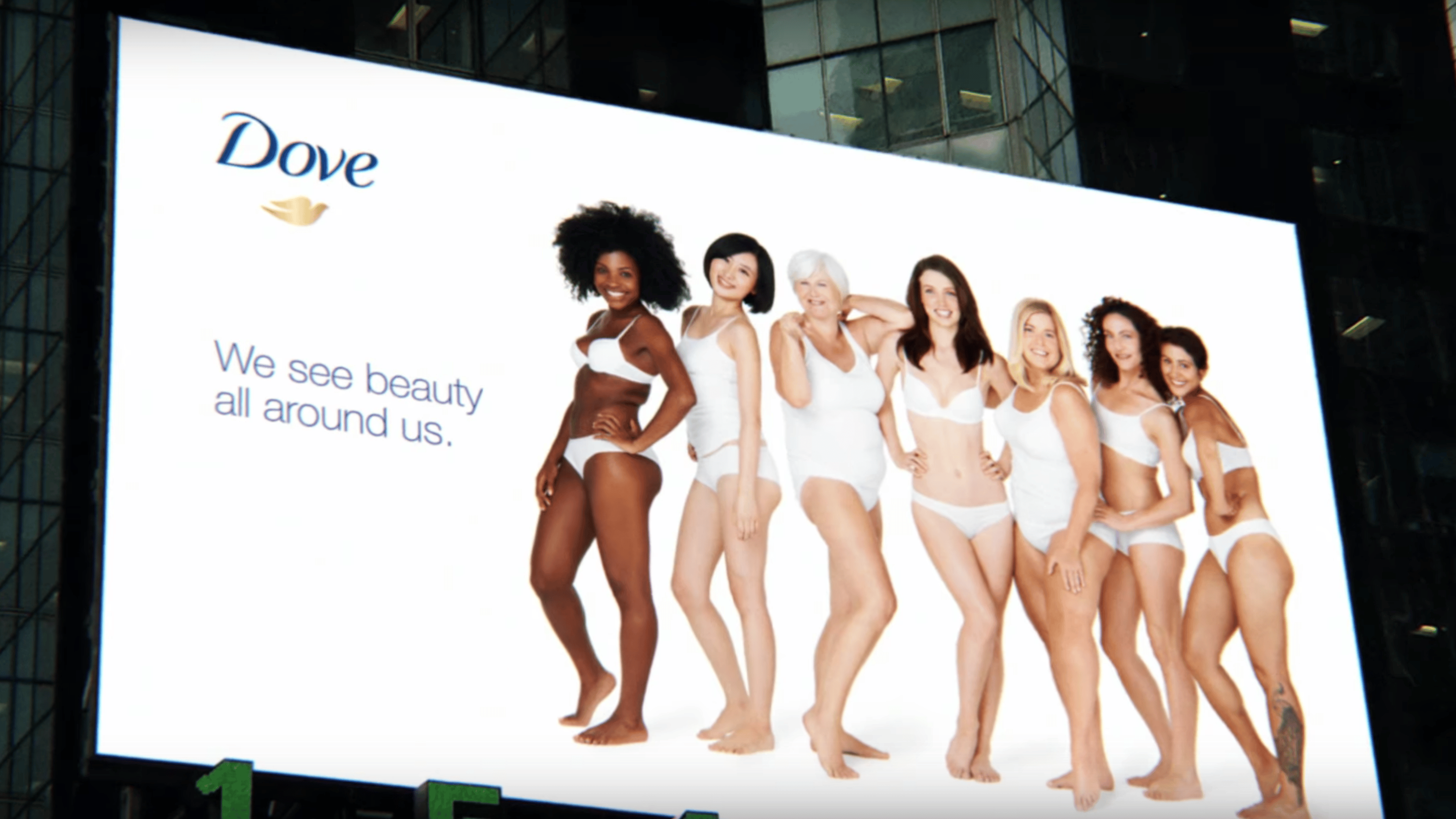
Most briefs substitute labeling for this. “Millennial women who value authenticity” is a label. It tells you almost nothing about the creative problem. Compare it to what Dove’s research actually produced before the Real Beauty campaign launched in 2004: only 2% of women worldwide described themselves as beautiful, and 68% agreed that advertising set an unrealistic standard of beauty that most women could never achieve. That is a current state. It names the specific cognitive and emotional position of the person the campaign needs to reach: a woman who has spent decades being told, by the very category Dove competes in, that she falls short of a standard that was manufactured to make her feel that way.
The difference between a label and a current state is the difference between knowing where someone lives and knowing what they think when they wake up. One is a data point. The other is a brief.
Takeaway: If the current state could apply to three different audiences without changing a word, it is a label, not a diagnosis. Rewrite it until it could only describe one specific type of person in one specific situation.
The Heart: Desired State
The heart has one job. It pumps in one direction. A brief with no clear desired state has the anatomy of a body with no heartbeat: technically assembled, going nowhere.
The desired state is not the campaign objective. This is the distinction that most briefs collapse, and it matters in practice.
An objective is what the organization wants measured: increased purchase intent, improved consideration scores, higher brand preference. A desired state is what would have to be true inside a specific human being for those metrics to move. One is a number the business tracks. The other is a change in a person.
Take Dove again. The objective was commercial: grow market share in a saturated category. The desired state was human: women who have been made to feel inadequate by beauty advertising their entire lives encounter a brand that reflects their actual appearance back at them without judgment, and as a result associate Dove with recognition rather than aspiration. That desired state names the cognitive shift. It gives the creative team a human target, not a spreadsheet cell.
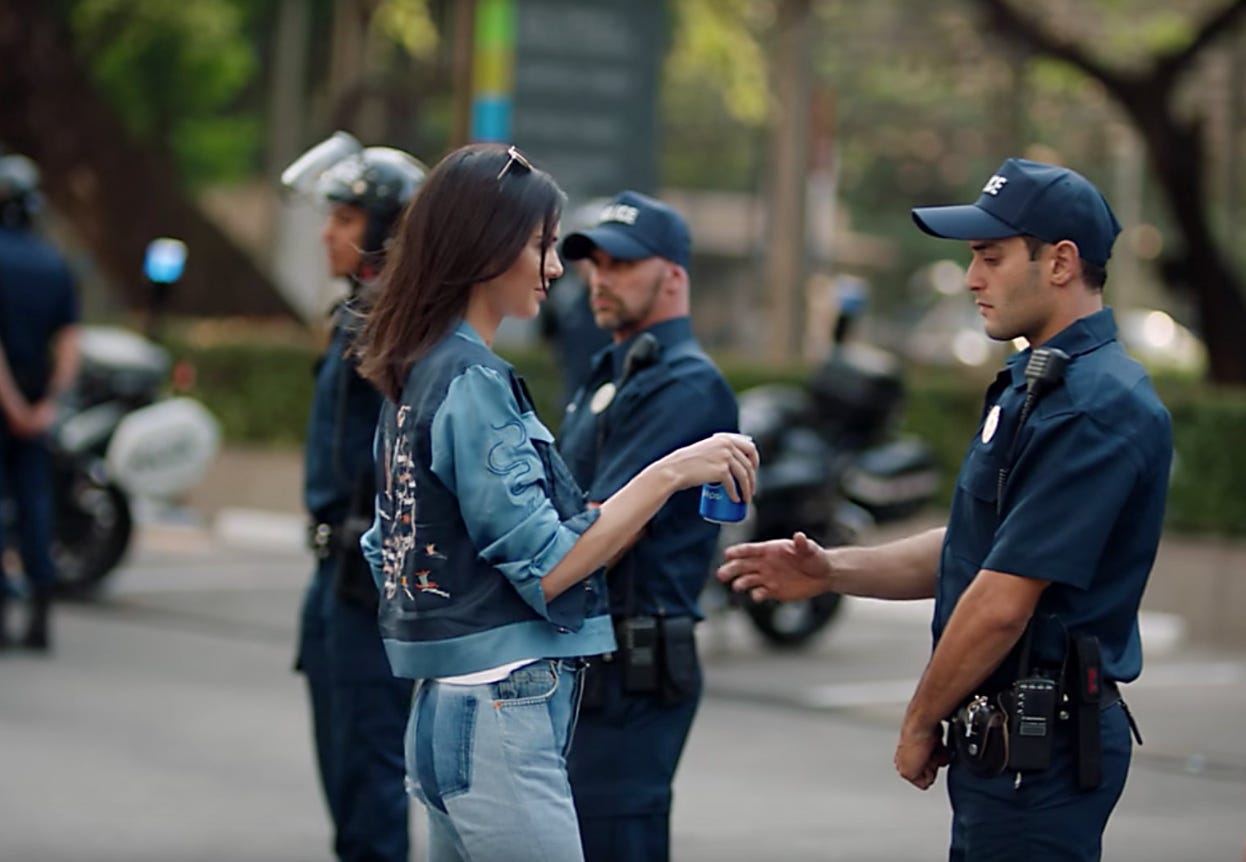
Pepsi’s 2017 Kendall Jenner campaign shows what happens when the desired state is skipped entirely. The brief, to the extent one existed, appears to have started from the brand’s preferred self-image: Pepsi as a symbol of unity, peace, and cultural relevance. That is an objective about the brand’s identity, not a desired state for any real human being. There was no named person, no specific current belief to shift, no honest account of what the audience would need to feel or understand for the campaign to work. The creative work had nowhere to anchor. It drifted straight into the brand’s self-flattery and had no mechanism to reach anyone outside it.
Takeaway: The desired state should complete this sentence with specificity: “A person who currently [current state] will, after encountering this campaign, [human change].” If the answer is “feel good about our brand,” the desired state is not finished.
(Some of you familiar with this campaign will be tempted to reach for "there is no such thing as bad publicity." That is a gross simplification that sounds clever until you stress-test it. Pepsi pulled the ad within 48 hours. Purchase consideration among millennials dropped measurably. The CEO went on record saying she watched the ad again and again trying to figure out what went wrong. If trending on social media while your stock takes a hit and your core audience actively distances themselves from you counts as good publicity, the bar for good has been set somewhere on the floor. Virality and value are not the same number.)
The Nervous System: The Barrier
The nervous system is where the body registers resistance. Pain, threat, friction: the nervous system carries the signal that tells the organism something is working against it. In a brief, the barrier is exactly that. It is the specific reason the shift from current state to desired state is unlikely without intervention.
This is the component most briefs omit entirely, and its absence is the single most expensive editorial decision in the document.
Naming the barrier honestly requires acknowledging that the audience has a legitimate reason not to do what the campaign is asking. That acknowledgment is treated inside most organizations as an admission of weakness. It implies that the brand has a problem, that previous campaigns failed to address it, that someone’s prior strategy was wrong. So the barrier gets softened into a “challenge” or an “opportunity area” until the sharp edge that made it useful is gone.
Dove named theirs with precision: the barrier was not competitors, and it was not price. It was the category itself. Every brand in beauty, including Dove before 2004, had spent decades conditioning women to feel that they needed improvement. The specific obstacle standing between Dove and a genuine emotional connection with its audience was Dove’s own prior behavior, and the industry convention it had followed. The brief was honest enough to name that. The campaign was designed specifically to dismantle it.
Pepsi named no barrier at all. The campaign proceeded as though the audience was already waiting to be united around a can of soda, as though there were no existing beliefs, no social context, no weight of real protest and real risk that the imagery would activate in the viewer’s mind. When a brief does not map the nervous system, the campaign discovers the resistance only when the audience feels it, which is after the work has been made and the budget spent.
Takeaway: If writing the barrier section does not produce any friction in the briefing meeting, it has been softened. The real barrier should make at least one person want to push back. That resistance is confirmation the diagnosis is accurate.
The Muscle: The Intervention
Muscle converts intent into movement. The skeleton provides structure, the heart provides purpose, the nervous system maps resistance, and the muscle is what actually produces motion. In a brief, the intervention is the strategic mechanism that moves the audience from current state to desired state by addressing the specific barrier that stands between them.
Here is where the most common objection to this anatomy surfaces: is the intervention not the agency’s job?
The answer requires a distinction the brief-writing process almost never makes. The brief names the strategic mechanism, the type of shift required and the nature of the move needed. The agency finds the creative expression of that mechanism. One is a prescription. The other is the medicine. A doctor does not let the pharmacist diagnose. The pharmacist executes the prescription with precision and craft. If the brief leaves the intervention blank, the agency is being asked to diagnose without access to the patient: without the research, the business context, the competitive history, or the honest account of what has already been tried and failed.
For Dove, the intervention was a specific strategic reframe: move beauty advertising from aspiration to recognition. Not “show real women” as an executional idea, but the underlying mechanism: if the barrier is that the category makes women feel inadequate, the intervention is a brand that refuses to participate in that system. That is a strategic instruction. The creative team took it and made billboards, films, forensic sketch experiments, and twenty years of work from it. The mechanism was in the brief. The expression was the agency’s entirely.
The intervention should be directly traceable to the barrier. If Dove’s barrier was “the category conditions women to feel they fall short of an unattainable standard,” the intervention is “become the brand that refuses to set that standard.” The line between them is straight. In a brief where the barrier has been softened or omitted, the intervention floats free, chosen because it sounds compelling rather than because it addresses anything specific. That is how campaigns end up technically brilliant and commercially inert.
Takeaway: The intervention in a brief is strategic, not executional. It names the mechanism of change. The creative team owns the expression. If you cannot draw a straight line from the barrier in the previous component to the intervention here, the strategy is not finished.
The Skin: The Proof
Skin is the interface between the body and the world. It is what the outside touches and what the outside uses to judge what lies beneath. In a brief, the proof is the specific, credible evidence that makes the intervention believable to the person the campaign is trying to reach.
Most briefs address this with product attributes or brand claims, which tend to produce advertising the brand finds satisfying and the audience ignores. Proof that works is proof from the audience’s frame of reference: the kind of evidence they would find convincing if they encountered it outside an advertisement, from a source they already trust.
Dove understood this. The proof was not a moisturizing claim or a dermatologist recommendation. It was research: real data about how women felt about beauty standards, made visible and undeniable. The Real Beauty Sketches film, which became the most-viewed online advertisement in history at the time, was essentially a proof mechanism. It showed, through a controlled demonstration, that women described themselves more harshly than strangers described them. The audience could not dismiss it as advertising because it was structured as evidence. It passed the test the nervous system applies to every claim: is this true, and does something independent of the brand confirm it?
Pepsi’s proof was the sight of a crowd cheering when a supermodel handed a police officer a soda. The claim it was meant to prove was that Pepsi brings people together. The audience, many of whom had watched footage of real protests and understood the weight of what was being borrowed and trivialized, rejected the proof immediately. Not because the execution was poor, but because the proof had no honest connection to the current state of any real person. It was chosen to serve the brand’s desired identity, not to address what the audience actually needed to believe.
Takeaway: Proof is not a list of product attributes. It is the evidence that makes the intervention credible to a specific skeptic. Write it for the audience’s standards of credibility, not the brand’s standards of pride.
The Ego Problem
Each of the five components has a predictable failure mode, and in every case the failure is the same: the organization’s political priorities overwriting the honest answer.
The skeleton gets softened because stating what the audience actually thinks implies the brand has a problem. The heart gets inflated because understating ambition feels like a lack of confidence. The nervous system gets removed because naming the barrier clearly assigns responsibility for its existence. The muscle gets expanded into a list because every stakeholder who reviewed the brief added the message they needed included. The skin gets replaced with brand claims because finding genuine audience-centric evidence requires honesty the briefing process rarely allocates time for.
Pepsi’s Kendall Jenner ad was made entirely in-house, by the company’s own content studio, without an external agency. That organizational fact is not incidental. When the brief-writing process, the approval process, and the creative execution all happen inside the same institution, there is no external voice to name what the nervous system already knows: that the audience will not accept what the brand is asking them to accept. Every component of the anatomy collapsed into a single question: does this reflect how we want to see ourselves? It did. The audience had a different answer.
The structural fix is a single test applied to every proposed addition to the brief: does this sentence help the creative team understand the skeleton, the heart, the nervous system, the muscle, or the skin? If it does not serve one of those five functions, it does not belong in the document, regardless of whose priority it represents.
That test will create conflict. The conflict is the point.
Value ∝ (Demand × Relevance) / Friction
Each component of the anatomy maps directly onto this equation, which I have used across my strategic work to compress complex relationships into something testable and honest.
You read it as: the value a campaign delivers scales with how much the audience already cares about what it addresses, multiplied by how precisely it meets them in their actual situation, divided by how much effort is required to act on it.
The skeleton and heart together establish demand: how close is the audience to wanting what the campaign offers? The nervous system and muscle together establish relevance: does the campaign address the specific obstacle rather than a comfortable approximation of it? And the discipline of ego removal across all five components is friction reduction by design. Every sentence added for political reasons rather than strategic ones is friction added to every piece of work that follows.
A brief built this way is shorter than most organizations produce. It contains less information and more thinking. Dove’s brief, had it been written down with this anatomy, would have fit on a single page. Pepsi’s brief, by contrast, likely contained many pages of brand aspiration, cultural trend analysis, and executional reference, and was missing the one thing that would have made any of it useful: an honest account of the person it was trying to reach and the specific obstacle standing between that person and the brand’s desired outcome.
The creative work does not save a bad brief. It inherits it.
STRATEX by Naz is a weekly publication on the cognitive, behavioral, and strategic forces that shape how people, organizations, and markets actually work. Subscribe if this is the kind of thinking you find useful.